Reina
Reina 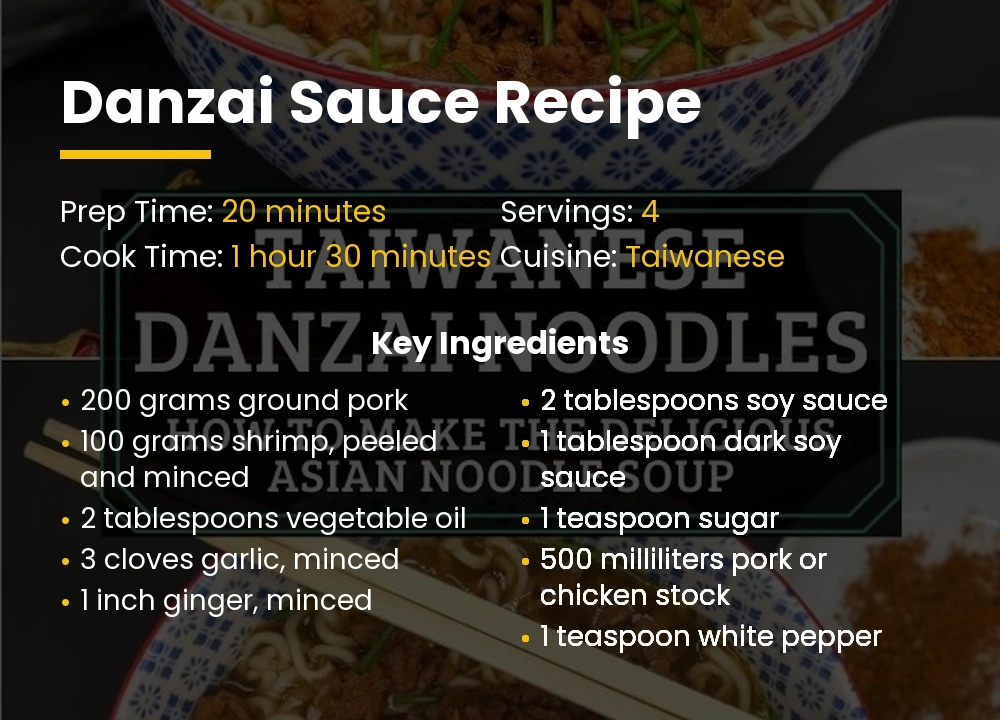
As an Amazon Associate, I may earn a small commission from qualifying purchases at no extra cost to you. This helps me create more valuable, tested content for you.
I first tasted Danzai noodles from a street vendor in Tainan. The rich sauce clinging to chewy wheat noodles left a lasting impression.
That experience inspired me to master this recipe at home. Now I want to share the method for creating authentic Danzai sauce.
This guide provides a detailed roadmap for the sauce. You will learn to build its deep umami flavor from scratch.
How to Make Danzai Sauce Recipe
Recipe Details
- Prep Time: 20 minutes
- Cook Time: 1 hour 30 minutes
- Servings: 4
- Course: Main Course
- Cuisine: Taiwanese
- Diet: Omnivore
Ingredients
- 200 grams ground pork
- 100 grams shrimp, peeled and minced
- 2 tablespoons vegetable oil
- 3 cloves garlic, minced
- 1 inch ginger, minced
- 2 tablespoons soy sauce
- 1 tablespoon dark soy sauce
- 1 teaspoon sugar
- 500 milliliters pork or chicken stock
- 1 teaspoon white pepper
- 1 tablespoon rice wine
- Salt to taste
Instructions
- Heat oil in a large pot over medium heat. Add garlic and ginger, sauté until fragrant.
- Add ground pork and minced shrimp. Cook until browned and crumbled.
- Pour in soy sauce, dark soy sauce, and rice wine. Stir to combine.
- Add sugar and white pepper, then pour in the stock. Bring to a simmer.
- Reduce heat to low, cover, and simmer for 1 hour, stirring occasionally.
- After an hour, uncover and simmer for another 30 minutes to reduce and thicken.
- Season with salt if needed. The sauce should be rich and cling to noodles.
Nutrition
- Calories: 250 kcal
- Protein: 15 g
- Fat: 18 g
- Carbohydrates: 5 g
- Sugar: 2 g
- Fiber: 0.5 g
- Sodium: 800 mg
- Cholesterol: 80 mg
Cooking Method
This sauce requires slow simmering to develop flavor. The process breaks down proteins and melds ingredients.
Consequently, the reduction phase thickens the sauce naturally. Stir occasionally to ensure even cooking.
Tools Needed
- Large pot or Dutch oven
- Wooden spoon for stirring
- Knife and cutting board
- Measuring spoons and cups
With the basic method clear, exploring each component’s role refines your approach. Let’s examine the ingredients closely.
Ingredient Roles and Selection
Pork and Shrimp
Ground pork provides fat and savory notes. Shrimp introduces a seafood umami layer.
Select pork with a moderate fat content for juiciness. Use fresh or high-quality frozen shrimp for best flavor.
Pork Selection Details
Choose pork shoulder or belly for its ideal marbling. These cuts maintain moisture during long cooking.
Avoid very lean meats like loin to prevent dryness. Ground pork should appear pink and fresh without gray areas.
Shrimp Preparation
Medium-sized shrimp balance texture and flavor efficiently. Peel and devein them thoroughly before mincing.
Pat shrimp dry to avoid watering down the sauce. Frozen shrimp work well if thawed in the refrigerator overnight.
Soy Sauce Varieties
Soy sauce provides saltiness and color through fermentation. Light soy sauce seasons, while dark soy sauce adds depth.
Choosing naturally brewed soy sauce enhances authenticity. This combination creates a balanced salty-sweet profile.
Light Soy Sauce
Light soy sauce is thinner and saltier than dark versions. It penetrates ingredients quickly during cooking.
Look for brands labeled “naturally brewed” for complex flavor. Avoid hydrolyzed vegetable protein products for better taste.
Dark Soy Sauce
Dark soy sauce is thicker and sweeter due to added molasses. It gives the sauce its characteristic dark brown color.
It caramelizes slightly during simmering, enriching the sauce. Use it sparingly to avoid overpowering the dish.
Aromatics and Seasonings
Garlic and ginger form the aromatic foundation. They are sautéed to release their essential oils.
White pepper offers a clean heat without bitterness. Rice wine deglazes the pot and adds acidity.
Garlic and Ginger
Fresh garlic should be firm and free of sprouts. Ginger must be plump with smooth skin for optimal zest.
Mince both finely to distribute flavor evenly. Sauté them until fragrant but not browned to avoid bitterness.
White Pepper and Rice Wine
White pepper comes from dried berries with the skin removed. It provides a sharp, distinct heat that black pepper lacks.
Rice wine, like Shaoxing wine, adds subtle sweetness and acidity. It helps dissolve fond from the pot for more flavor.
Understanding these elements leads to nutritional considerations. Analyzing the sauce’s health impact is crucial.
Nutritional Insights
Macronutrient Balance
This sauce offers protein from animal sources for muscle repair. Fat content provides energy and carries fat-soluble vitamins.
Carbohydrates are minimal, primarily from added sugar. Pair with noodles like wheat noodles for a complete meal.
Sodium Management
Soy sauce is a significant sodium source in this recipe. Monitor additional salt to control overall intake.
Using low-sodium soy sauce reduces sodium levels effectively. Incorporating vegetables balances the meal nutritionally.
Reducing Sodium
Replace regular soy sauce with low-sodium versions seamlessly. Increase aromatics like garlic for flavor without salt.
Add a dash of vinegar at the end to enhance perception. These adjustments suit those monitoring blood pressure.
Balancing the Meal
Serve the sauce with plenty of steamed greens or pickled radish. These sides add fiber and potassium to counter sodium.
They also provide freshness against the rich sauce. This balance makes the dish more wholesome and satisfying.
Nutritional knowledge connects to the dish’s cultural roots. Exploring its history enriches the cooking experience.
Historical and Cultural Background
Origins in Tainan
Danzai noodles began as street food in Tainan, Taiwan. Vendors carried pots on poles, hence the name “danzai” or shoulder-pole.
The traditional version featured pork broth and a long-simmered meat sauce. Shrimp was later added for complexity and umami.
Traditional Preparation
Early vendors used simple ingredients like pork and basic seasonings. They simmered the sauce for hours to serve quickly.
This method allowed for efficient service to busy market-goers. The dish became known for its hearty and comforting nature.
Modern Adaptations
Contemporary versions include chewy wheat noodles like 3D meteor noodles. Some recipes incorporate black vinegar or pickled radish for tang.
Commercial products such as A-Sha Meteor Noodles popularize this dish globally. Homemade recipes allow for personal tweaks and control.
Global Influence
You might find pre-packaged Danzai sauce in stores like Costco. However, homemade versions offer superior flavor and customization.
Online communities, including food forums on Reddit, share variations. These discussions inspire new takes on the classic recipe.
Cultural context informs practical execution in the kitchen. Applying specific techniques ensures perfect results every time.
Practical Kitchen Tips
Simmering Techniques
Long simmering at low heat extracts maximum flavor from ingredients. A heavy-bottomed pot prevents burning and distributes heat evenly.
Stir occasionally to ensure even cooking and prevent sticking. The sauce is ready when it coats a spoon thickly without dripping.
Heat Management
Maintain a gentle simmer with small bubbles breaking the surface. Avoid vigorous boiling, which can toughen proteins and evaporate liquid too quickly.
Use a lid partially covered to control reduction rate. This method preserves moisture while allowing some evaporation.
Storage and Reheating
Store cooled sauce in the refrigerator for up to 5 days. For longer storage, freeze it in portions for up to 3 months.
Reheat gently on the stovetop with a little water or stock. Avoid microwaving to maintain emulsion and texture.
Freezing Instructions
Portion the sauce into airtight containers or freezer bags. Leave some headspace for expansion during freezing.
Thaw overnight in the refrigerator before reheating. Stir well while reheating to reconstitute the sauce properly.
Practical skills extend to adapting the recipe for different needs. Modifications can accommodate various dietary preferences.
Dietary Adaptations
Vegetarian Alternatives
Replace meat with minced mushrooms and textured vegetable protein. Use vegetable stock and soy sauce for umami depth.
Add seaweed or miso paste to mimic seafood flavor. This version retains the savory character without animal products.
Plant-Based Protein Sources
Cremini or shiitake mushrooms provide a meaty texture when minced. Rehydrated dried mushrooms offer concentrated flavor.
Combine these with crumbled firm tofu for added protein. Simmer them similarly to develop a rich, hearty sauce.
Low-Sodium Versions
Use low-sodium soy sauce and omit added salt entirely. Increase aromatics like garlic and ginger for flavor without sodium.
Incorporate fresh herbs like basil or cilantro at the end for brightness. These changes suit sodium-restricted diets effectively.
Flavor Enhancers
Add a teaspoon of nutritional yeast for a cheesy, umami boost. A splash of citrus juice or zest can brighten the sauce naturally.
These adjustments maintain depth while reducing sodium content. They ensure the sauce remains flavorful and satisfying.
With these adaptations covered, common questions arise naturally. Addressing them directly helps clarify any remaining doubts.
Frequently Asked Questions
What is the best type of noodle to serve with Danzai sauce?
Chewy wheat noodles, such as Taiwanese danzai noodles or 3D meteor noodles, work best. Their texture holds the sauce well and provides a pleasant bite.
Can I make Danzai sauce without shrimp?
Yes, you can omit shrimp for a pork-only version, but it will lack the seafood umami. Consider adding dried shrimp or fish sauce for similar depth.
How long can I store homemade Danzai sauce?
Refrigerate it for up to 5 days or freeze for 3 months. Ensure it’s cooled completely before storing in airtight containers.
Is Danzai sauce gluten-free?
Traditional soy sauce contains wheat, so it’s not gluten-free. Use tamari or gluten-free soy sauce to make a gluten-free version.
What can I use if I don’t have dark soy sauce?
Combine regular soy sauce with a bit of molasses or sugar for color and sweetness. This substitute mimics dark soy sauce’s properties.
How do I prevent the sauce from becoming too oily?
Skim excess fat from the top during simmering, or use leaner ground pork. Chilling the sauce allows fat to solidify for easy removal.
Can I use chicken instead of pork?
Yes, ground chicken can substitute for pork, but it may result in a lighter flavor. Add extra shrimp or umami ingredients to compensate.
What are common side dishes to serve with Danzai noodles?
Pickled radish, steamed greens, or a simple tofu salad complement the rich sauce. These add freshness and balance to the meal.