Reina
Reina 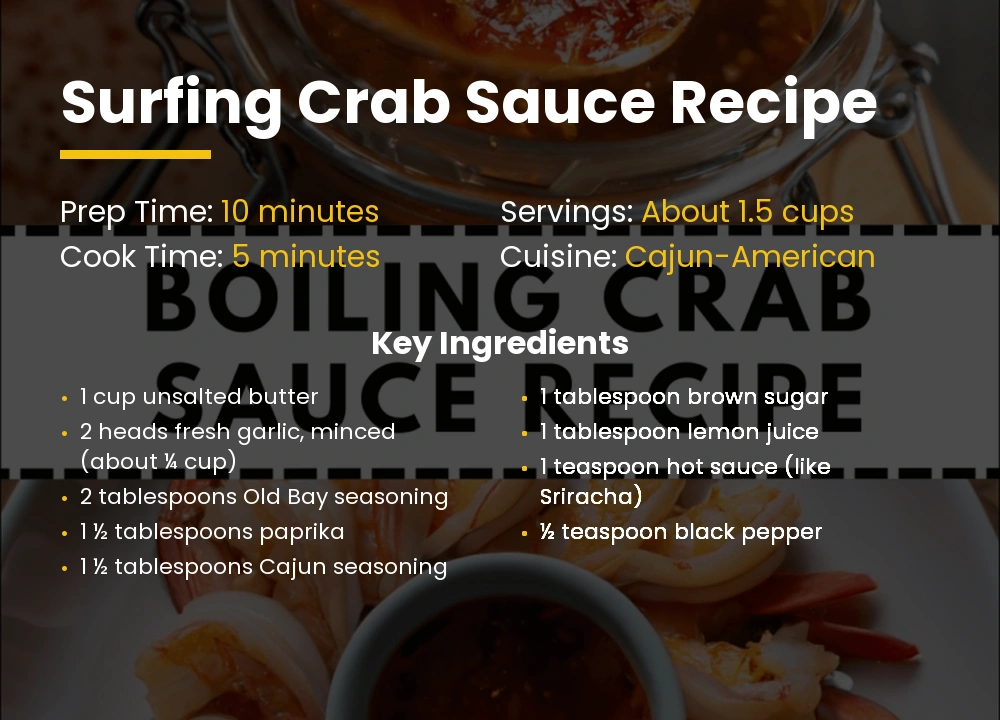
As an Amazon Associate, I may earn a small commission from qualifying purchases at no extra cost to you. This helps me create more valuable, tested content for you.
There’s a moment in every seafood feast when the sauce makes all the difference, turning simple crab legs into a memorable experience. I first encountered this magic at a coastal shack, where the bubbling pot held a secret I was determined to unlock.
After years of testing, I can guide you to create that same rich, spiced butter sauce at home. This recipe captures the essence of a seafood boil in a versatile dipping or coating sauce.
How to Make Surfing Crab Sauce Recipe
This section provides the complete blueprint for the signature sauce. Follow these steps to achieve the perfect balance of heat, spice, and richness.
Recipe Details
- Prep Time: 10 minutes
- Cook Time: 5 minutes
- Servings: About 1.5 cups
- Course: Sauce/Condiment
- Cuisine: Cajun-American
- Diet: Vegetarian (contains dairy)
Ingredients
- 1 cup unsalted butter
- 2 heads fresh garlic, minced (about ¼ cup)
- 2 tablespoons Old Bay seasoning
- 1 ½ tablespoons paprika
- 1 ½ tablespoons Cajun seasoning
- 1 tablespoon brown sugar
- 1 tablespoon lemon juice
- 1 teaspoon hot sauce (like Sriracha)
- ½ teaspoon black pepper
Instructions
- Melt the unsalted butter in a saucepan over medium-low heat.
- Add the minced garlic and sauté for 1-2 minutes until fragrant but not browned.
- Whisk in the Old Bay seasoning, paprika, Cajun seasoning, brown sugar, black pepper, hot sauce, and lemon juice.
- Continue to cook for 3-4 minutes, stirring constantly, until the sauce is fully combined and slightly thickened.
- Remove from heat and use immediately for dipping or pouring over cooked seafood.
Nutrition
- Calories: 220 kcal (per 2-tablespoon serving)
- Protein: 1 g
- Fat: 24 g
- Carbohydrates: 3 g
- Sugar: 1 g
- Fiber: 0 g
- Sodium: 350 mg
- Cholesterol: 60 mg
Cooking Method
This sauce uses a simple stovetop melting and infusion technique. The key is gentle heat to marry the flavors without burning the garlic or spices.
Tools Needed
- Medium saucepan
- Whisk
- Measuring cups and spoons
- Cutting board and knife for garlic
Now that you have the method, let’s explore why these specific ingredients create such a potent flavor profile. Understanding each component allows for informed substitutions and adjustments.
The Butter and Aromatics Foundation
Unsalted butter is the carrier for all other flavors, providing a rich, velvety base. Using unsalted butter lets you control the sodium level precisely.
Fresh garlic, minced finely, releases its pungent oils slowly into the warm fat. This process builds a deep aromatic layer that powdered garlic cannot replicate.
Building on this, the garlic should sizzle softly without browning to avoid bitterness. Your kitchen will fill with a welcoming scent indicating the foundation is ready.
Seasoning Science: Old Bay and Cajun Blends
Old Bay seasoning brings a classic celery salt, paprika, and bay leaf profile synonymous with East Coast seafood. Its complex blend includes mustard, ginger, and red pepper.
Cajun seasoning typically adds garlic powder, onion powder, oregano, and more cayenne for heat. Combining these two creates a layered spice base with both earthy and fiery notes.
Consequently, the brown sugar and lemon juice are not afterthoughts but crucial balancers. The sugar caramelizes slightly, mellowing the heat, while lemon juice cuts through the richness with acidity.
Nutritional Profile and Health Considerations
As a dietician, I analyze this sauce for its saturated fat and sodium content from butter and seasonings. One serving provides about 24 grams of fat, primarily from butter.
However, it also offers small amounts of Vitamin A from paprika and antioxidants from garlic. Using it as a condiment rather than a main component helps manage intake.
For those monitoring cholesterol, note that each serving has about 60 mg from the dairy. You can substitute plant-based butter for a vegan version, which I’ll discuss later.
Historical Roots of Seafood Boil Sauces
This style of sauce draws from Cajun and Creole traditions where communal seafood boils are central. These events use large pots with seasoned water or butter sauces.
The “Surfing Crab” style popularized in modern seafood restaurants amplifies the butter sauce for dipping. It reflects a fusion of Gulf Coast spices with American restaurant flair.
Adapting the Recipe for Different Diets
For a vegan surfing crab sauce, replace butter with an equal amount of vegan butter or refined coconut oil. Ensure your seasonings are plant-based, as some Cajun blends contain dairy derivatives.
To reduce sodium, use a low-sodium Cajun seasoning and halve the Old Bay, compensating with extra garlic powder and paprika. The hot sauce and lemon juice will maintain brightness.
Similarly, for a keto-friendly version, omit the brown sugar or use a sugar substitute. The sauce’s fat content aligns well with low-carb diets when used in moderation.
Perfect Pairings: What to Serve with Your Sauce
This sauce is designed for snow crab legs, lobster tails, shrimp, or mussels from a seafood boil. It also excels as a dip for boiled potatoes and corn on the cob.
For a complete meal, consider serving it alongside a fresh salad to balance the richness. The sauce can be stored in the refrigerator for up to a week and reheated gently.
Moreover, it can elevate simple proteins like grilled chicken or roasted vegetables. Its versatility makes it a staple for enhancing various dishes beyond traditional seafood.
Frequently Asked Questions
Can I make this sauce ahead of time?
Yes, you can prepare the sauce up to 3 days in advance and store it covered in the refrigerator. Reheat it slowly on the stovetop, stirring occasionally, to prevent separation.
What can I use instead of Old Bay seasoning?
If Old Bay is unavailable, combine 1 tablespoon paprika, 1 teaspoon celery salt, ½ teaspoon black pepper, and a pinch each of mustard powder and ground ginger. This mimics its core flavor profile.
How do I adjust the spice level?
Control the heat by reducing the Cajun seasoning and hot sauce for a milder version. For extra spice, add a pinch of cayenne pepper or more hot sauce to taste.
Is this sauce gluten-free?
Typically, yes, as the core ingredients are naturally gluten-free. Always check the labels of your seasonings and hot sauce to ensure no gluten-containing additives are present.
Can I freeze the surfing crab sauce?
Freezing is not recommended due to the high fat content of butter, which can separate upon thawing. For best quality, store it in the refrigerator and use within a week.
What type of butter works best?
Unsalted butter is essential for controlling saltiness, but any high-fat butter will work. European-style butter with higher fat content creates a richer, more emulsified sauce.
How can I use this sauce beyond seafood?
This versatile sauce adds flavor to roasted vegetables, grilled chicken, or even as a base for pasta dishes. Its spiced butter profile complements many savory foods.
Mastering this sauce allows you to bring the energy of a seafood restaurant boil to your kitchen. Keep experimenting with the balance of spices to make it your own.