Reina
Reina 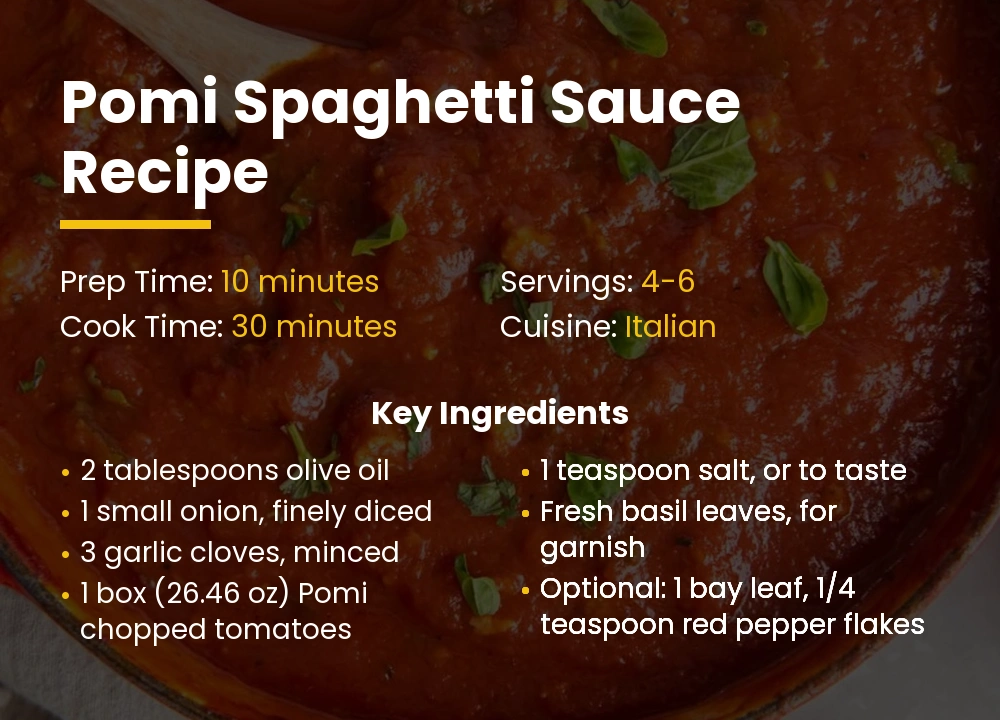
As an Amazon Associate, I may earn a small commission from qualifying purchases at no extra cost to you. This helps me create more valuable, tested content for you.
My grandmother’s spaghetti sauce was a Sunday staple, its depth coming from tomatoes she trusted. She would have appreciated Pomi for its pure, unadulterated quality.
This recipe replicates that honesty with minimal ingredients for maximum taste. You will discover how a box of chopped tomatoes can become a versatile pasta sauce.
Follow these steps to create a foundation for countless meals. We will examine each element to ensure your success in the kitchen.
How to Make pomi spaghetti Sauce recipe
Recipe Details
- Prep Time: 10 minutes
- Cook Time: 30 minutes
- Servings: 4-6
- Course: Main Course
- Cuisine: Italian
- Diet: Vegetarian
Ingredients
- 2 tablespoons olive oil
- 1 small onion, finely diced
- 3 garlic cloves, minced
- 1 box (26.46 oz) Pomi chopped tomatoes
- 1 teaspoon salt, or to taste
- Fresh basil leaves, for garnish
- Optional: 1 bay leaf, 1/4 teaspoon red pepper flakes
Instructions
- Heat olive oil in a large saucepan over medium heat.
- Add diced onion and cook until soft and translucent, about 5 minutes.
- Stir in minced garlic and cook for 1 minute until aromatic.
- Pour in the Pomi chopped tomatoes, and add salt and optional seasonings.
- Bring the mixture to a simmer, then reduce heat to low.
- Simmer uncovered for 20-25 minutes, stirring occasionally.
- The sauce is ready when it has thickened to your liking.
- Remove from heat, discard bay leaf if used, and garnish with basil.
Nutrition
- Calories: 80 kcal
- Protein: 2 g
- Fat: 5 g
- Carbohydrates: 8 g
- Sugar: 5 g
- Fiber: 2 g
- Sodium: 300 mg
- Cholesterol: 0 mg
Cooking Method
This sauce relies on a gentle simmer to meld flavors and reduce liquid. You begin by softening onions in oil to release their sweetness.
Adding garlic later prevents it from burning and becoming bitter. The tomatoes then cook slowly to break down and concentrate.
Stirring occasionally ensures even cooking and prevents sticking. Your sauce will thicken as water evaporates during the simmer.
Tools Needed
- Large saucepan or Dutch oven
- Wooden spoon for stirring
- Sharp knife and cutting board
- Measuring spoons
Why Pomi Tomatoes Matter
Pomi tomatoes are packed in BPA-free boxes to maintain a fresh, clean taste. They contain only tomatoes without added salts or preservatives.
This purity allows you to control the seasoning completely. You achieve a vibrant tomato flavor that forms the sauce’s backbone.
Boxed Versus Canned Tomatoes
Canned tomatoes often have metallic notes from the lining, while boxes avoid this issue. Pomi’s packaging also protects the tomatoes from light and air.
Consequently, the tomatoes retain a brighter, more natural acidity. This characteristic enhances the sauce’s overall balance and freshness.
No Preservatives Added
The absence of preservatives means you taste the tomato itself. Your sauce will have a shorter shelf life but superior flavor.
Always check the expiration date on the box before use. Store any leftover sauce properly to maintain its quality.
Building Flavor Layers
Good sauce starts with aromatics cooked in quality oil. These elements create a foundation that supports the tomatoes.
You will notice the onions become translucent and sweet over medium heat. This process, called sweating, extracts moisture and develops taste.
Choosing Your Oil
Olive oil is traditional, offering fruity notes that complement tomatoes. Grapeseed oil is a neutral alternative for a lighter profile.
Heat the oil until it shimmers but does not smoke. This ensures proper sautéing without burning the aromatics.
Onion and Garlic Techniques
Finely dicing the onion ensures it cooks evenly and dissolves into the sauce. Mincing garlic finely prevents large, harsh pieces in the final dish.
Cook garlic just until fragrant to preserve its pungent kick. Overcooking can make it bitter and diminish its aromatic quality.
Fresh Herbs and Seasonings
Fresh basil added at the end provides a bright, herbal note. Dried herbs like oregano can be added during simmering for depth.
Red pepper flakes introduce a subtle heat if desired. A bay leaf contributes earthy undertones that blend well during cooking.
Nutritional Insights
As a dietician, I value this sauce for its simple, whole ingredients. It provides essential nutrients without unnecessary additives.
Tomatoes are rich in lycopene, an antioxidant linked to heart health. Cooking tomatoes actually increases the bioavailability of lycopene.
Analyzing the Nutrition Facts
The listed values are estimates per serving based on the core recipe. Using olive oil adds healthy monounsaturated fats.
This sauce is low in cholesterol and can be part of a balanced diet. You can adjust salt to manage sodium intake for specific health needs.
Dietary Adaptations
For an oil-free version, sauté onions in a splash of vegetable broth. This reduces fat content while still building flavor.
To make the sauce vegan, ensure all optional ingredients align. The base recipe is naturally vegetarian and easily customizable.
Perfecting Your Sauce
Simmering is crucial for thickening and flavor concentration. Keep the heat low to prevent scorching and allow gradual reduction.
You should see small bubbles breaking the surface occasionally. Stir every few minutes to check consistency and prevent sticking.
Common Mistakes to Avoid
Rushing the process by using high heat can burn the sauce. Similarly, adding garlic too early may cause it to become acrid.
Underseasoning is common, so taste and adjust salt at the end. Remember the sauce will reduce, intensifying both flavor and saltiness.
Thickening Methods
Extended simmering is the natural way to achieve a thicker sauce. For a quicker fix, a teaspoon of tomato paste can add body.
Blending a portion of the sauce creates a smoother, densier texture. Avoid adding flour or cornstarch, which can alter the clean taste.
Storage and Reheating
Cool the sauce completely before transferring to an airtight container. It can be refrigerated for up to five days without quality loss.
For longer storage, freeze the sauce in portion-sized containers. Frozen sauce maintains its flavor for about three months.
Reheating Guidelines
Thaw frozen sauce overnight in the refrigerator for best results. Reheat gently on the stovetop over low heat, stirring occasionally.
Microwave reheating is possible but may require stirring to heat evenly. Add a splash of water if the sauce seems too thick upon reheating.
Serving and Variations
This sauce is classic over spaghetti but versatile for many dishes. Try it with baked ziti, meatballs, or as a pizza base.
For a richer version, stir in a tablespoon of butter before serving. You can also add cooked ground meat or lentils for protein.
Recipe Variations
Incorporate diced carrots or celery with the onions for added sweetness. A splash of red wine during simmering introduces complex notes.
For a creamier texture, blend in a handful of grated Parmesan cheese. Different herbs like thyme or rosemary can tailor the flavor profile.
Using Fresh Tomatoes
Fresh tomatoes can substitute for Pomi if peeled and chopped finely. You may need to cook them longer to achieve a similar consistency.
Start with about two pounds of ripe Roma tomatoes for one box. Adjust seasoning carefully, as fresh tomatoes vary in acidity and sweetness.
Frequently Asked Questions
Can I use fresh tomatoes instead of Pomi Chopped Tomatoes?
Yes, use two pounds of peeled and chopped Roma tomatoes for similar results. Cook them longer to reduce excess moisture and concentrate flavor.
What other seasonings can I add?
Consider dried oregano, thyme, or a pinch of sugar to balance acidity. Anchovies or capers can add umami depth for a more complex sauce.
How can I make this sauce thicker?
Simmer it longer to evaporate more liquid, or add a teaspoon of tomato paste. Blending part of the sauce also creates a thicker consistency without additives.
Can I make this sauce oil-free?
Absolutely, sauté the onions in a few tablespoons of vegetable broth or water. The sauce will be lighter but still flavorful from the tomatoes and aromatics.
Is this sauce good for canning?
No, this recipe is not designed for safe canning due to its low acidity and lack of preservatives. For canning, use tested recipes with proper acidification.
How do I store leftover sauce?
Store cooled sauce in an airtight container in the refrigerator for up to five days. For freezing, use freezer-safe containers for up to three months.
Can I double this recipe?
Yes, use a larger pot and increase cooking time slightly to ensure proper reduction. Adjust seasoning carefully as you scale up the ingredients.
What can I serve with this sauce besides spaghetti?
Try it with other pastas like penne or linguine, or use it for lasagna, chicken parmesan, or as a dipping sauce. It also works well as a base for shakshuka or stews.