Reina
Reina 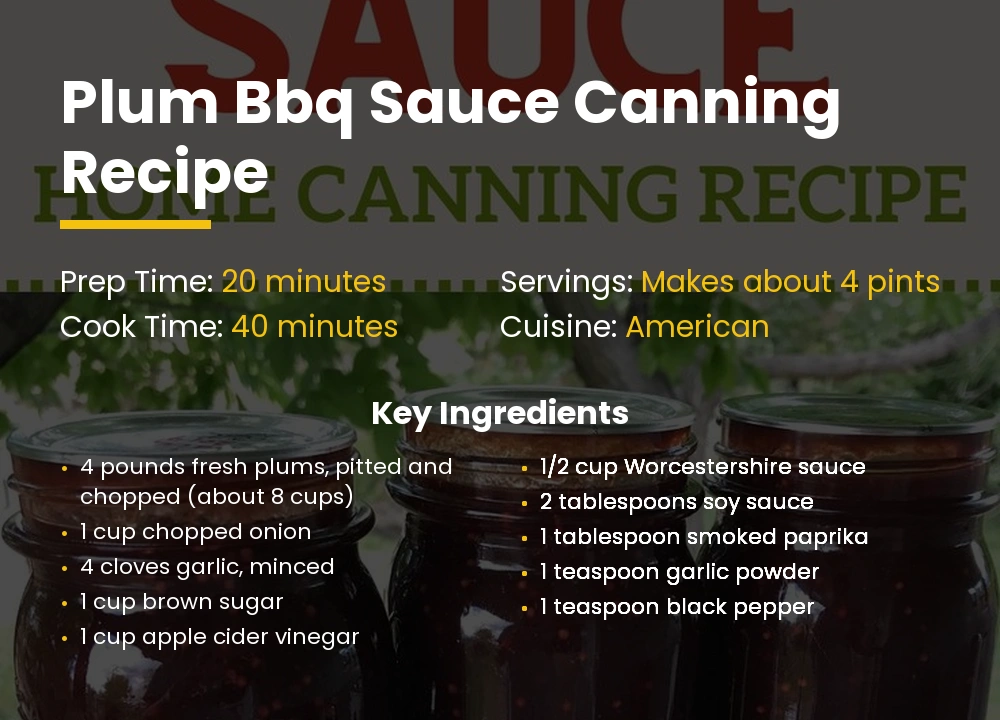
As an Amazon Associate, I may earn a small commission from qualifying purchases at no extra cost to you. This helps me create more valuable, tested content for you.
Finding ripe plums at the farmers market always reminds me of my grandmother’s kitchen, where preserving summer’s bounty was a ritual. This plum BBQ sauce recipe transforms those fleeting fruits into a tangy, sweet condiment you can enjoy all year.
Canning this sauce ensures you have a homemade, flavor-packed option ready for grilling season or weeknight meals. Let me guide you through the process I’ve refined over years of testing.
How to Make Plum BBQ Sauce Canning Recipe
Recipe Details
- Prep Time: 20 minutes
- Cook Time: 40 minutes
- Servings: Makes about 4 pints
- Course: Condiment
- Cuisine: American
- Diet: Vegetarian
Ingredients
- 4 pounds fresh plums, pitted and chopped (about 8 cups)
- 1 cup chopped onion
- 4 cloves garlic, minced
- 1 cup brown sugar
- 1 cup apple cider vinegar
- 1/2 cup Worcestershire sauce
- 2 tablespoons soy sauce
- 1 tablespoon smoked paprika
- 1 teaspoon garlic powder
- 1 teaspoon black pepper
- 1/2 teaspoon salt
- Optional: 1 canned chipotle pepper in adobo sauce for heat
Instructions
- Combine chopped plums, onion, and garlic in a large, heavy-bottomed pot.
- Place the pot over medium heat and cook, stirring occasionally, until the plums break down and release their juices, about 15 minutes.
- Add the brown sugar, apple cider vinegar, Worcestershire sauce, soy sauce, smoked paprika, garlic powder, black pepper, and salt to the pot.
- If using, finely chop the chipotle pepper and add it with a bit of adobo sauce.
- Bring the mixture to a simmer, then reduce the heat to low. Let it cook uncovered, stirring frequently to prevent sticking, for 25-30 minutes until thickened.
- Use an immersion blender to puree the sauce directly in the pot until smooth. Alternatively, carefully transfer the sauce in batches to a standard blender.
- While the sauce cooks, prepare your canning jars, lids, and boiling water bath according to safe canning procedures.
- Ladle the hot sauce into sterilized jars, leaving 1/2 inch of headspace. Wipe the rims, apply lids and bands, and process in a boiling water bath for 15 minutes.
- Remove the jars and let them cool on a towel. Check seals after 24 hours.
Nutrition
- Calories: 50 kcal
- Protein: 0.5 g
- Fat: 0.1 g
- Carbohydrates: 12 g
- Sugar: 10 g
- Fiber: 1 g
- Sodium: 150 mg
- Cholesterol: 0 mg
Cooking Method
This sauce uses a stovetop simmering method to concentrate flavors and achieve a thick, spreadable consistency. The key is slow cooking over low heat after an initial burst of medium heat to soften the fruit.
Constant stirring during the final stages prevents the natural sugars from burning on the bottom of the pot.
Tools Needed
- Large, heavy-bottomed pot or Dutch oven
- Immersion blender or standard countertop blender
- Canning jars (pint or half-pint), lids, and bands
- Jar lifter and canning funnel
- Large pot for boiling water bath
- Chopping board and knife
- Measuring cups and spoons
Ingredient Science and Selection
Plums contribute both pectin and natural acids, which are essential for the sauce’s body and preservation. Their sweetness balances the tang from vinegar and the umami from soy and Worcestershire sauce.
Choosing ripe but firm plums ensures a robust flavor without excessive wateriness. Varieties like Italian prune plums or black plums work exceptionally well due to their high sugar and deep color.
Building on this, the Maillard reaction from cooking onions and garlic adds a foundational savory note. This reaction occurs when amino acids and reducing sugars heat up, creating complex flavors.
Consequently, the slow simmer allows these flavors to meld, while the vinegar not only adds tang but also acts as a natural preservative by lowering the pH.
Brown sugar provides a deep, caramel-like sweetness that plain white sugar cannot replicate. This sweetness counteracts the acidity, creating a well-rounded barbeque sauce profile.
Smoked paprika delivers a subtle smokiness without needing a grill, enhancing the sauce’s versatility for indoor cooking.
Nutritional Profile and Dietary Considerations
Plums are a significant source of vitamin C and vitamin A, which contribute to the nutritional profile of this condiment. However, heat processing during canning reduces some vitamin content, though the sauce retains minerals and fiber.
The sugar content primarily comes from natural fruit sugars and added brown sugar, so portion control is advised for those monitoring intake. Each serving provides about 1 gram of fiber, aiding in digestion.
For vegan adaptations, ensure your Worcestershire sauce is anchovy-free, as many brands offer plant-based versions. This simple swap maintains the umami depth without animal products.
If reducing sodium is a goal, you can use low-sodium soy sauce or tamari. Remember that Worcestershire sauce also contributes to the overall salt content.
Safe Canning Practices
Water bath canning is safe for this high-acid sauce due to the combination of fruit and vinegar. The acid prevents the growth of harmful bacteria like botulism.
Always use tested recipes from reliable sources to ensure proper acidity levels for safe preservation. This recipe has been formulated to meet those safety standards.
Processing the jars in a boiling water bath for the specified time creates a vacuum seal. This seal keeps air out and preserves the sauce for up to a year when stored in a cool, dark place.
Before storage, check that each lid has a concave center and does not flex when pressed, indicating a proper seal. Any unsealed jars should be refrigerated and used within a few weeks.
Flavor Variations and Adjustments
For a milder flavor, omit the chipotle pepper and rely solely on smoked paprika for a subtle smokiness. You can also reduce the amount of garlic or use garlic powder instead of fresh.
If you prefer a spicier kick, add an extra chipotle pepper or include a teaspoon of crushed red pepper flakes during cooking.
For a lower-sugar option, you can reduce the brown sugar by half and compensate with a non-nutritive sweetener that holds up to heat. Note that this may slightly alter the texture and canning safety.
Experiment with different vinegars like white vinegar for a sharper tang or balsamic for a sweeter, more complex note. Each substitution will subtly shift the final flavor profile.
Serving Suggestions and Pairings
This plum BBQ sauce excels as a glaze for grilled chicken or pork during the last few minutes of cooking. The sugars caramelize quickly, so watch closely to avoid burning.
It also serves as a versatile dipping sauce for appetizers like meatballs or a stirring ingredient into baked beans for added depth.
Beyond meats, try brushing it on roasted vegetables like carrots or cauliflower for a sweet and tangy finish. The sauce’s complexity enhances simple dishes without overpowering them.
For a quick weeknight meal, mix a spoonful into ground meat for burgers or meatloaf. This incorporates the flavor directly into the dish rather than just as a topping.
Storage and Shelf Life
Properly canned jars should be stored without the rings to prevent moisture trapping and potential rust. Label each jar with the contents and date for easy inventory.
The ideal storage temperature is between 50-70°F, away from direct sunlight or heat sources which can degrade quality over time.
Once opened, refrigerate the sauce and use it within a month for best quality. The high acid content helps, but refrigeration slows any potential microbial growth.
If you notice any off odors, colors, or mold after storage, discard the entire jar immediately. Safety should always come first with home-canned goods.
Frequently Asked Questions
Can you water bath can this plum BBQ sauce?
Yes, this sauce is safe for water bath canning because its acidity from plums and vinegar is high enough to prevent botulism. Process pints for 15 minutes in a boiling water bath.
What type of plums works best for this recipe?
Firm, ripe plums like Italian prune plums or black plums are ideal due to their sweetness and flesh texture. Avoid overripe or bruised fruit as they can make the sauce too watery.
How can I make a smoother sauce without an immersion blender?
You can press the cooked sauce through a fine-mesh sieve or use a food mill to remove skins and achieve a smooth consistency. A standard blender also works but be careful with hot liquids.
Is this recipe suitable for a diabetic diet?
While plums have natural sugars, the added brown sugar increases carbohydrate content. For a diabetic-friendly version, reduce the brown sugar and use a sugar substitute, but note that canning safety relies on tested recipes.
Can I freeze this sauce instead of canning it?
Absolutely, freezing is a simpler preservation method. Cool the sauce completely, then store it in airtight containers or freezer bags for up to 6 months. Thaw in the refrigerator before use.
What is the shelf life of canned plum BBQ sauce?
Properly canned and sealed jars can be stored for up to 12 months. For best quality, use within a year, as flavors may diminish over time.
Can I substitute white vinegar for apple cider vinegar?
Yes, white vinegar can be used, but it will result in a sharper, less complex tang. Apple cider vinegar adds a fruity note that complements the plums better.
How do I adjust the recipe for a smaller batch?
Halve all ingredients precisely to maintain the flavor balance and safety ratios. Cooking time may be slightly reduced, so watch for the same thickened consistency.