Reina
Reina 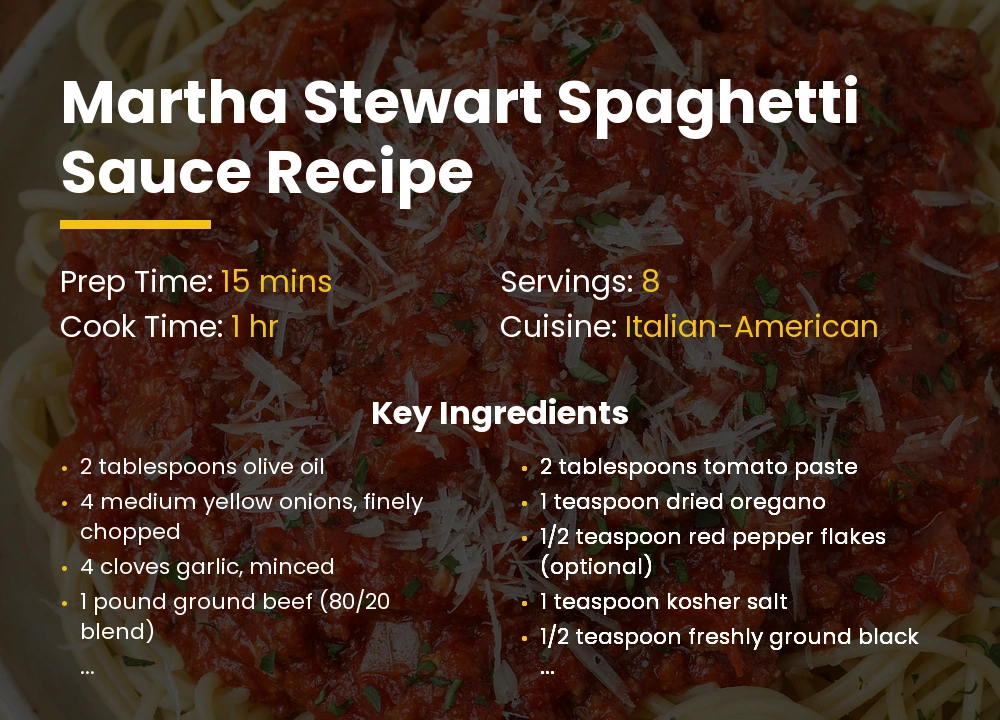
As an Amazon Associate, I may earn a small commission from qualifying purchases at no extra cost to you. This helps me create more valuable, tested content for you.
The aroma of sautéing onions always transports me to my grandmother’s kitchen on Sunday afternoons. She believed a great spaghetti sauce required patience and whole, canned tomatoes from her garden.
I found that same principle in Martha Stewart’s approach, which turns simple ingredients into a deeply flavorful foundation. This recipe delivers a reliable sauce that improves with a slow simmer.
You may have experienced bland or watery sauces that lack substance. Mastering this method ensures a rich, versatile result for countless meals.
How to Make Martha Stewart Spaghetti Sauce Recipe
This section provides the complete, actionable recipe for your cooking session. Follow each step sequentially for the best outcome.
Recipe Details
- Prep Time: 15 mins
- Cook Time: 1 hr
- Servings: 8
- Course: Main Course
- Cuisine: Italian-American
- Diet: Contains Meat
Ingredients
- 2 tablespoons olive oil
- 4 medium yellow onions, finely chopped
- 4 cloves garlic, minced
- 1 pound ground beef (80/20 blend)
- 2 cans (28 ounces each) whole peeled tomatoes
- 2 tablespoons tomato paste
- 1 teaspoon dried oregano
- 1/2 teaspoon red pepper flakes (optional)
- 1 teaspoon kosher salt
- 1/2 teaspoon freshly ground black pepper
- 1/4 cup fresh basil leaves, torn
Instructions
- Place a large, heavy-bottomed pot or Dutch oven over medium heat. Pour in the olive oil and let it warm until it shimmers slightly.
- Add the finely chopped onions to the pot, stirring to coat them in the oil. Cook for 10 to 12 minutes until they become translucent and soft.
- Stir in the minced garlic and cook for another minute until its fragrance is released. Be careful not to let the garlic burn.
- Push the onions and garlic to the sides of the pot, adding the ground beef to the center. Break the meat apart with a wooden spoon and cook until no pink remains.
- Add the tomato paste, dried oregano, and red pepper flakes to the pot. Stir everything together and cook for 2 minutes to deepen the flavors.
- Pour in the canned tomatoes with their juices, using your spoon to gently crush them against the pot’s side. Season with salt and black pepper.
- Bring the sauce to a gentle bubble, then reduce the heat to low. Let it simmer uncovered for at least 45 minutes, stirring occasionally.
- Remove the pot from the heat and stir in the torn fresh basil leaves. Taste and adjust seasoning with more salt if needed.
Nutrition
- Calories: 280 kcal
- Protein: 18 g
- Fat: 14 g
- Carbohydrates: 18 g
- Sugar: 10 g
- Fiber: 4 g
- Sodium: 520 mg
- Cholesterol: 55 mg
Cooking Method
This sauce uses a straightforward stovetop simmering method. The extended cooking time allows flavors to meld and the liquid to reduce properly.
Tools Needed
- Large Dutch oven or heavy-bottomed pot
- Wooden spoon
- Chef’s knife and cutting board
- Can opener
- Measuring spoons and cups
The Onion Foundation
Martha Stewart’s recipe notably starts with about four onions for a large batch. This quantity forms the savory-sweet base that defines the sauce’s character.
Yellow onions are ideal here due to their balanced flavor and high sugar content. Building on this, their slow cooking in oil is the first critical step.
You should hear a soft sizzle as they hit the warm oil, not a loud crackle. Consequently, this gentle heat encourages caramelization without burning.
Properly cooked onions will turn translucent and become deeply fragrant. This process lays the groundwork for all subsequent layers of flavor.
Selecting and Preparing Onions
Choose firm, dry onions with papery skins for the best results. Store them in a cool, dark place away from potatoes to prevent sprouting.
Finely chopping the onions ensures they melt into the sauce during simmering. However, a uniform dice is more important than a perfect mince for texture.
Tomato Selection and Preparation
Canned whole peeled tomatoes are the preferred choice for their consistent quality and depth. They often outperform fresh tomatoes outside of peak summer season.
Look for brands packed in juice, not puree, for a brighter flavor. The standard 28-ounce can size is perfect for doubling batches.
Crushing the tomatoes by hand in the pot offers superior texture. This method creates irregular pieces that break down further during cooking.
Understanding Canned Tomato Labels
San Marzano tomatoes, a type of plum tomato, are prized for their sweet taste and low acidity. They are certified when grown in the volcanic soil of Italy’s Campania region.
Regular plum tomatoes provide excellent results at a more accessible price point. Either choice will yield a robust sauce when simmered adequately.
Tomato Paste’s Role
Tomato paste is a concentrated flavor booster added after the meat browns. Cooking it for two minutes removes any tinny taste and sweetens its profile.
This step, known as “toasting,” deepens the sauce’s red color and umami notes. It acts as a bridge between the fresh tomatoes and the sautéed aromatics.
Meat Integration and Variations
Ground beef introduces richness and body, making this a hearty meat sauce. An 80/20 fat ratio provides flavor without making the sauce overly greasy.
You can substitute ground pork, veal, or a blend for a different character. For a leaner option, ground turkey or chicken works but may require added olive oil.
Brown the meat thoroughly to develop fond, the browned bits on the pot’s bottom. Subsequently, deglazing with the tomato juices lifts this fond for added complexity.
Creating a Simple Marinara
Omit the ground beef entirely for a classic marinara or tomato sauce. Begin by sautéing the onions and garlic, then proceed directly with adding tomatoes.
This vegetarian version cooks faster, needing only 30 minutes of simmering. It is a lighter alternative that still benefits from the onion foundation.
Simmering Science and Flavor Development
A slow, uncovered simmer is non-negotiable for a concentrated sauce. The liquid reduces, thickening the texture and intensifying every ingredient’s contribution.
Acids in the tomatoes mellow, and sugars caramelize during this hour. Therefore, the result is a balanced sauce where no single element overpowers another.
Stir occasionally to prevent sticking, especially in the final stages. The sauce is ready when it coats the back of a spoon without immediately running off.
Herb Timing and Impact
Dried oregano is added early to withstand the long cooking time. Its earthy notes infuse the entire pot as it simmers.
Fresh basil, in contrast, is stirred in at the end to preserve its bright, floral aroma. This two-stage herb use creates a dynamic flavor profile.
Nutritional Perspective
As a dietician, I analyze this sauce for its protein, lycopene, and fiber content. The ground beef provides essential amino acids and iron.
Tomatoes are a significant source of the antioxidant lycopene, which becomes more bioavailable when cooked. The onions and tomatoes contribute soluble fiber, aiding digestion.
You can manage sodium levels by using no-salt-added canned tomatoes. Additionally, draining excess fat after browning the meat reduces saturated fat content.
Dietary Adaptations
For a gluten-free meal, serve the sauce over gluten-free pasta or zucchini noodles. A dairy-free diet is naturally accommodated, as the recipe contains no cheese or cream.
To make it low-carb, consider using the sauce as a topping for spiralized vegetables or grilled meats. Each adaptation maintains the core flavor principles of the original recipe.
Storage and Freezing Guidelines
Cool the sauce completely before transferring it to airtight containers. It will keep in the refrigerator for up to five days.
For longer storage, freeze portions in freezer-safe bags or containers for up to three months. This makes preparing a pasta dinner on a busy weeknight effortless.
Thaw frozen sauce overnight in the refrigerator before reheating. Gently warm it on the stove over low heat, stirring occasionally.
Defining Sauce Styles
This recipe produces a basic meat sauce, often called “Sunday Gravy” in Italian-American families. That term typically refers to a richer, longer-simmered sauce with multiple meats.
Bolognese is a distinct meat-based sauce from Italy that includes milk or wine. Marinara is a quick, herb-forward tomato sauce without any meat.
Understanding these differences helps you choose the right sauce for your pasta. Martha Stewart’s version sits comfortably between a quick marinara and a complex Sunday gravy.
Martha Stewart’s Culinary Influence
Martha Stewart revolutionized home cooking by emphasizing technique and quality ingredients. Her television shows and magazine, Martha Stewart Living, popularized this spaghetti sauce recipe.
Her philosophy from her Bedford farm encourages using homegrown produce when possible. This aligns with the recipe’s note about using onions from your own garden.
Stewart’s success as a bestselling author and lifestyle expert lends authority to this method. Her focus on achievable elegance makes this sauce a mealtime home run.
Frequently Asked Questions
Can I use fresh tomatoes instead of canned?
Yes, substitute about 3 pounds of fresh, ripe plum tomatoes for the canned ones. You will need to peel, seed, and crush them, which adds significant prep time.
How can I make this sauce vegetarian?
Omit the ground beef and use a extra tablespoon of olive oil. Consider adding a cup of finely chopped mushrooms for a savory, meaty texture.
Why is my sauce acidic or bitter?
This often results from under-simmered tomatoes or low-quality canned products. Simmer the sauce for the full hour and add a pinch of sugar if needed to balance acidity.
What is the best way to crush the tomatoes?
Use your hands or a wooden spoon to crush them directly in the pot. This gives you control over the texture and avoids cleaning a separate tool.
Can I double this recipe?
Absolutely, double all ingredients and use a very large pot. The cooking time may increase slightly to allow for proper reduction of the extra liquid.
How do I store leftover sauce?
Store cooled sauce in airtight containers in the refrigerator for up to five days. For longer storage, freeze it in portions for up to three months.
What type of pasta pairs best with this sauce?
Sturdy, long pasta like spaghetti, bucatini, or fettuccine holds the meat sauce well. Short shapes like rigatoni or penne also capture the sauce effectively.
Can I add other vegetables to the sauce?
Yes, finely diced carrots or celery can be sautéed with the onions for added sweetness and nutrition. This is a common base in many Italian sauces.