Reina
Reina 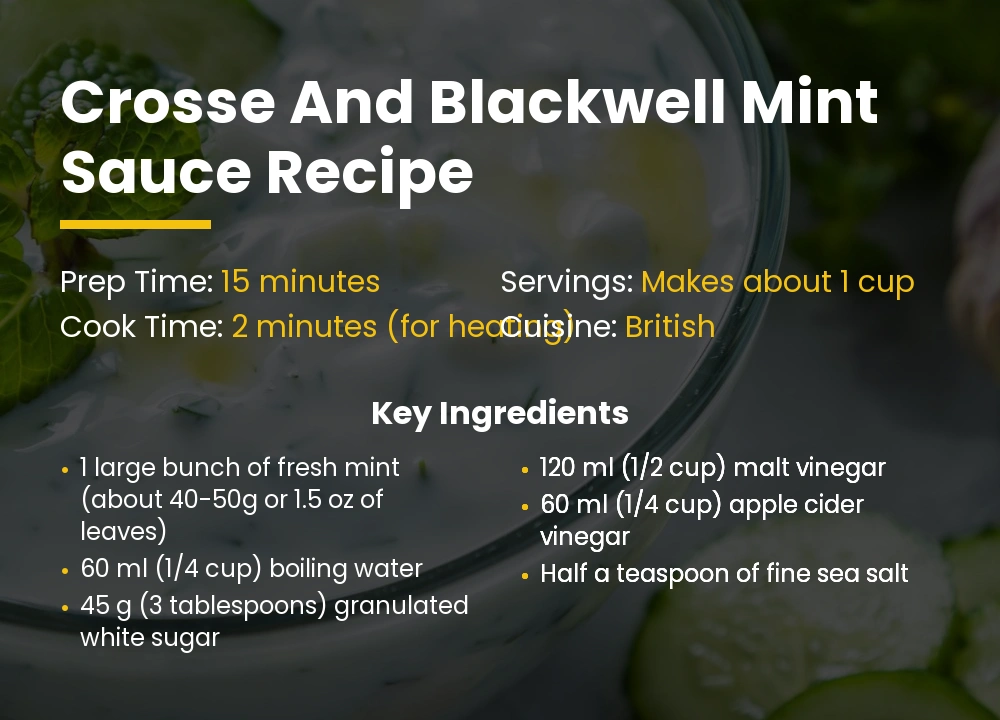
As an Amazon Associate, I may earn a small commission from qualifying purchases at no extra cost to you. This helps me create more valuable, tested content for you.
Finding a true match for that discontinued Crosse and Blackwell mint sauce can feel impossible. Many homemade versions lack the specific balance that made the original so memorable, often ending up too sharp or too sweet.
After testing numerous formulas and consulting vintage culinary texts, I’ve refined a recipe that captures its unique character. This guide provides the exact method to recreate that sauce and explains the science and tradition behind every step.
How to Make Crosse and Blackwell Mint Sauce
This process is straightforward but hinges on precision. The goal is a sauce with a vibrant green hue, a finely chopped but not pureed texture, and a perfect sweet-sour balance that cuts through rich meats.
Building on this, you must treat the mint correctly to avoid bitterness and allow the flavors to marry fully. Following these instructions will yield a condiment that surpasses any supermarket attempt.
Recipe Details
- Prep Time: 15 minutes
- Cook Time: 2 minutes (for heating)
- Servings: Makes about 1 cup
- Course: Condiment
- Cuisine: British
- Diet: Vegan, Gluten-Free
Ingredients
- 1 large bunch of fresh mint (about 40-50g or 1.5 oz of leaves)
- 60 ml (1/4 cup) boiling water
- 45 g (3 tablespoons) granulated white sugar
- 120 ml (1/2 cup) malt vinegar
- 60 ml (1/4 cup) apple cider vinegar
- Half a teaspoon of fine sea salt
Instructions
- Wash the mint thoroughly and pat it completely dry with a kitchen towel. Strip the leaves from the tough stems, discarding the stems.
- Finely chop the mint leaves by hand. You want a consistent, small mince, not a paste, to preserve texture.
- In a small bowl, combine the chopped mint, sugar, and salt. Pour the boiling water over this mixture and stir until the sugar dissolves completely.
- Add both the malt vinegar and apple cider vinegar to the bowl. Stir everything together vigorously for about a minute.
- Transfer the sauce to a sterilized glass jar or bottle. Seal it with an airtight lid and let it mature at room temperature for 4 hours, then refrigerate overnight before using.
Nutrition
- Calories: 15 kcal
- Protein: 0 g
- Fat: 0 g
- Carbohydrates: 4 g
- Sugar: 3.5 g
- Fiber: 0.1 g
- Sodium: 60 mg
- Cholesterol: 0 mg
These values are per tablespoon, as the sauce is used sparingly. The nutritional profile is primarily from the sugar, with negligible fat or protein.
Consequently, its role is to add flavor, not significant calories, to a meal. This makes it a suitable condiment for various dietary approaches when used in moderation.
Cooking Method
This is a no-cook infusion method. The hot water helps to wilt the mint slightly, release its oils, and dissolve the sugar and salt effectively.
Heating the mixture further would dull the mint’s bright, aromatic flavors and darken its color. The vinegar is added cold to preserve its sharp acidity.
Tools Needed
- Sharp chef’s knife
- Cutting board
- Small mixing bowl
- Measuring cups and spoons
- A 250ml (8-10 oz) sterilized glass jar with an airtight lid
- A fine-mesh strainer (optional, for washing mint)
The History of a Classic Condiment
Crosse & Blackwell was a hallmark of British pantry staples for over 300 years. Their mint sauce represented a standardized, reliable flavor that home cooks could depend on year-round.
The company’s discontinuation of the product left a notable gap, sparking discussions on forums like Reddit where users express a genuine longing for its specific taste. This recipe aims to fill that gap authentically.
Mint sauce itself has roots in British culinary tradition as a pairing for rich, fatty roasted meats. Its primary role was always to cut through the fat and aid digestion.
Building on this, the choice of vinegar and the mint-to-sugar ratio defined commercial brands. The original likely used a specific malt vinegar blend to create its signature depth.
Ingredient Deep Dive
Each component in this short list plays a critical, non-negotiable role. Deviations will alter the final result, moving it away from the Crosse & Blackwell profile.
Selecting Your Mint
You must use fresh mint, never dried. A “large bunch” typically yields 1 to 1.5 cups of packed leaves once stems are removed. Spearmint is the traditional and most authentic choice.
Its flavor is sweet and slightly less pungent than peppermint, which can be too medicinal. Ensure the leaves are vibrant green without black spots or wilting for the best aromatic flavors.
The Vinegar Balance
The combination of malt vinegar and apple cider vinegar is essential. Malt vinegar provides a deep, malty, and robustly sour base that is traditional in British recipes.
Apple cider vinegar introduces a fruity, slightly softer acidity that rounds out the harshness. Using only one type will result in a one-dimensional sauce.
Sweetness and Seasoning
Granulated white sugar dissolves cleanly, providing pure sweetness without adding color. The half a teaspoon of salt is not for taste alone; it acts as a flavor enhancer, balancing the sharp vinegar and brightening the mint.
This small amount is what separates a good sauce from a great one, making all the other ingredients taste more of themselves.
Serving and Pairing Your Sauce
This condiment’s primary purpose is to accompany roasted meats. Its sharp, sweet, and herbal notes act as a palate cleanser and digestive aid.
Traditional Pairings
Roasted lamb is the classic partner. The sauce cuts through the lamb’s distinct fat and rich flavor, creating a balanced bite. It is also excellent with roast beef, especially a fatty cut like ribeye.
For roast chicken or pork, it offers a refreshing contrast. Serve it on the side in a small bowl or jar, allowing guests to apply it as they wish.
Modern and Creative Uses
Think of this mint sauce as a vibrant herb condiment. Stir a spoonful into plain yogurt to create a quick yogurt sauce for grilled vegetables or kebabs.
You can use it as a baste for grilled lamb chops in their final minutes of cooking. A small drizzle over roasted potatoes or peas can transform a simple side dish.
Storage and Practical Tips
Proper storage is key to longevity and safety. Always use a clean, sterilized airtight container for your finished sauce.
Consequently, you will prevent microbial growth and preserve the fresh flavor for an extended period. A glass jar is ideal as it does not retain odors.
Making it Ahead and Freezing
This sauce absolutely benefits from being made ahead of time. The flavors need at least 12 to 24 hours in the refrigerator to fully meld and mature.
You can store it in the refrigerator for up to 3 weeks. For longer storage, freeze it in small portions in an ice cube tray, then transfer the cubes to a freezer bag for up to 3 months.
Handling Leftover Mint Sauce
Leftover mint sauce should always be returned to the fridge promptly. Beyond meat, consider it a secret ingredient for salad dressings or a swirl into soups like pea or carrot.
You can also mix it with olive oil and brush it on vegetables before roasting. This ensures no part of your careful preparation goes to waste.
Common Questions Answered
Many home cooks have similar concerns when attempting this recipe for the first time. These answers address the most frequent points of confusion.
Mint Sauce vs. Mint Jelly
Mint sauce is a loose, vinegar-based condiment with chopped herbs, while mint jelly is a clear, set preserve using pectin. They serve a similar purpose but have completely different textures and sweetness levels.
The sauce offers a more direct, sharp flavor and integrates more readily with meat juices on the plate. Jelly tends to hold its form and is often served sliced.
Why Lamb Purchased in the US Smells Different
This is a common point of discussion, often noted online. The aroma some find objectionable in lamb relates to compounds in the fat, which can be influenced by the animal’s diet and age at processing.
A robust mint sauce is particularly effective at complementing and balancing these stronger flavors, which is why the pairing became so entrenched in culinary tradition.
Dietary and Flavor Adaptations
While the recipe above is definitive, you can make adjustments for specific needs or preferences. Each change will create a different final product.
For a Clearer Sauce
If you prefer a clear, smooth sauce without small leaf pieces, you can blend the ingredients as mentioned in some methods. Combine all ingredients in a blender and process until smooth.
However, this will create a more homogeneous, slightly paler green sauce that lacks the textural interest of the hand-chopped version. Let it still mature overnight for best flavor.
Sweetener and Vinegar Substitutions
For a liquid sweetener like honey or agave, use an equal amount by volume and ensure it dissolves fully. Brown sugar will add a molasses note, darkening the sauce.
You can use all malt vinegar for a stronger, more traditional British taste, or all apple cider vinegar for a fruitier profile. White wine vinegar is another acceptable, cleaner-tasting alternative.
Frequently Asked Questions
What is mint sauce made of?
Authentic mint sauce is made from fresh mint, sugar, boiling water, vinegar, and salt. The specific types of vinegar and the mint variety define its final character.
Why is mint sauce served with lamb?
Mint sauce is served with lamb because its acidity cuts through the meat’s rich fat, while its herbal flavor complements the meat’s taste, creating a balanced and digestible combination.
Can you use mint sauce as a marinade?
You can use mint sauce as a marinade base, particularly for lamb, but its high acidity means you should limit marinating time to 2-4 hours to avoid altering the meat’s texture.
How long does homemade mint sauce keep?
Homemade mint sauce keeps for up to 3 weeks when stored in a sterilized airtight container in the refrigerator, as the vinegar acts as a natural preservative.
Are mint sauce and mint jelly the same?
Mint sauce and mint jelly are not the same; sauce is a loose, vinegar-based condiment with chopped mint, while jelly is a sweet, gelled preserve, resulting in different textures and uses.
Can I make this mint sauce ahead of time?
You should make this mint sauce ahead of time, as its flavor improves significantly after maturing in the refrigerator for 12 to 24 hours before serving.
What can I do with leftover mint sauce?
Use leftover mint sauce as a dressing for grain salads, a topping for baked potatoes, a stir-in for mayonnaise, or a glaze for roasted carrots or parsnips.