Reina
Reina 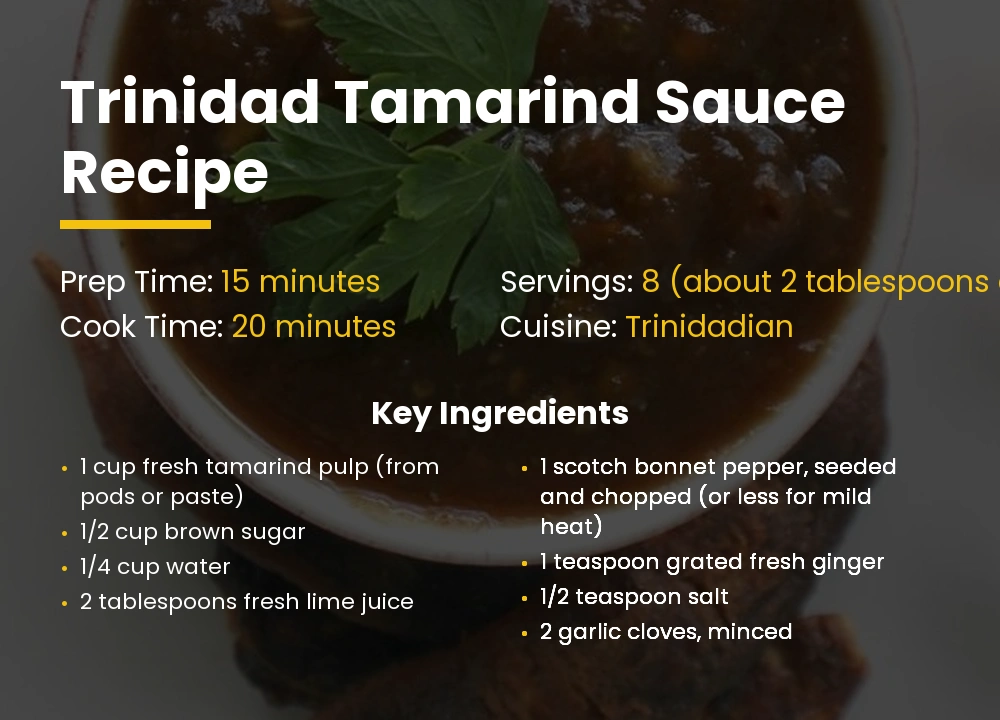
As an Amazon Associate, I may earn a small commission from qualifying purchases at no extra cost to you. This helps me create more valuable, tested content for you.
Years ago, during a family trip to Trinidad, I first tasted this tangy tamarind sauce on grilled fish at a roadside stand. The bold sour kick mixed with a hint of sweet heat made me ask for seconds. Now, I make it at home to share that same flavor with you, and I’ll guide you through every step so you can create it too.
This sauce comes from Trinidad’s rich food traditions, where tamarind pods grow wild and add zest to many dishes. You can use it on meats, veggies, or even as a dip. Let’s get into the details to help you succeed right away.
How to Make Trinidad Tamarind Sauce
This recipe yields a smooth, vibrant sauce that captures the island’s essence. It takes simple steps but delivers big taste. Follow along, and you’ll have a batch ready in under an hour.
Recipe Details
- Prep Time: 15 minutes
- Cook Time: 20 minutes
- Servings: 8 (about 2 tablespoons each)
- Course: Condiment
- Cuisine: Trinidadian
- Diet: Vegan, Gluten-Free
Ingredients
- 1 cup fresh tamarind pulp (from pods or paste)
- 1/2 cup brown sugar
- 1/4 cup water
- 2 tablespoons fresh lime juice
- 1 scotch bonnet pepper, seeded and chopped (or less for mild heat)
- 1 teaspoon grated fresh ginger
- 1/2 teaspoon salt
- 2 garlic cloves, minced
Instructions
- Soak the tamarind pulp in warm water for 10 minutes to soften it, then squeeze out the pulp and discard the seeds and fibers. You should get about 3/4 cup of thick juice that smells earthy and sharp.
- In a small pot, combine the tamarind juice, brown sugar, water, lime juice, chopped pepper, ginger, salt, and garlic. Stir over medium heat until the sugar melts, and the mix starts to bubble gently.
- Lower the heat and simmer for 15-20 minutes, stirring now and then. The sauce will thicken to a glossy coat on the back of a spoon, with a sweet-sour aroma filling your kitchen.
- Let it cool slightly, then blend until smooth if you want no chunks. Taste and adjust salt or sugar if needed; it should balance tart, sweet, and spicy notes.
- Pour into a clean jar and cool fully before use. Store in the fridge for up to two weeks.
Nutrition
- Calories: 60 kcal per serving
- Protein: 0.5 g
- Fat: 0 g
- Carbohydrates: 15 g
- Sugar: 12 g
- Fiber: 1 g
- Sodium: 150 mg
- Cholesterol: 0 mg
Cooking Method
The method uses a simple simmer to blend flavors without losing the tamarind’s fresh tang. Heat breaks down the pulp gently, and stirring keeps it even. This stovetop approach works best for small batches, giving you control over thickness.
Tools Needed
You’ll need a small pot, wooden spoon, blender or food processor, fine mesh strainer, and measuring cups. A knife and cutting board help with prep. These basics make the process quick and mess-free.
Why Tamarind Shines in Trinidad Cooking
Tamarind trees thrive in Trinidad’s warm climate, and locals have used the pods for centuries in sauces and stews. The fruit’s natural acidity cuts through rich foods like roasted pork or fried plantains. I first learned this when helping my aunt in her kitchen, pressing pods by hand.
This sauce draws from African, Indian, and indigenous roots that shape Trinidad’s food scene. It often pairs with doubles or pelau for that signature zing. Understanding its place helps you appreciate why it tastes so alive on your plate.
Tamarind Basics
Tamarind starts as brown pods on evergreen trees, with pulp inside that’s sticky and brown. In Trinidad, fresh pods are common, but paste works if you can’t find them. The pulp gives a sour base that wakes up other tastes in the sauce.
When ripe, it has a fruity edge under the tartness, unlike sweeter fruits like mango. You can buy it whole or processed, but fresh yields the best color and scent. Pressing it releases a juice that looks like weak tea but smells tropical.
Role of Heat from Scotch Bonnet
Scotch bonnet peppers grow hot in Trinidad soil, packing fruit-like spice with hints of tropical sweetness. They add warmth without overpowering the tamarind’s sour punch. Seeding them tones down the fire for milder palates.
In the sauce, the pepper infuses during simmering, creating layers of heat that build slowly. I adjust it based on who’s eating—less for kids, more for spice lovers. This balance keeps the sauce versatile for everyday meals.
Ingredient Choices and Swaps
Brown sugar softens the tamarind’s bite with its molasses notes, making the sauce less sharp. Fresh lime juice boosts acidity for brightness, while ginger adds a warm, earthy undertone. Garlic provides a subtle savory depth that ties everything together.
Salt enhances all flavors without dominating, and water helps the mix simmer smoothly. These picks come from traditional recipes I’ve tested over years. If you swap, keep the sour-sweet-heat ratio in mind to stay true to the taste.
Finding Fresh Tamarind
Look for plump, brown pods at markets or Asian stores; they should feel soft when squeezed. Avoid dry or moldy ones, as fresh gives better yield. In Trinidad style, I shell them outdoors to catch the pod’s sticky bits easily.
If pods are scarce, use tamarind paste from a jar—stir it well before measuring. One cup of pulp equals about 2 tablespoons of paste plus water. This keeps your sauce authentic even far from the islands.
Adjusting for Sweetness and Spice
Brown sugar works best for its rich caramel hint, but white sugar thins it out if you’re in a pinch. For less sweet, cut to 1/3 cup and taste as you go. Honey can sub in for a floral twist, but it changes the classic profile.
On spice, start with half a pepper and add more after cooking. Ginger’s fresh grate beats powdered for zing—use a microplane for fine bits. These tweaks let you tailor the sauce to your meal or diet needs.
Health Benefits of This Sauce
As a dietitian, I value how tamarind aids digestion with its fiber and natural acids, easing stomach upset after heavy meals. The lime and ginger add vitamin C and anti-inflammatory perks, supporting your immune system. Low in fat and calories, it fits balanced eating plans.
A serving gives antioxidants from the pepper, which may help heart health. Sugar adds quick energy, but the fiber slows absorption for steady fuel. Use it to flavor foods without piling on extra fats or salts.
Nutrient Highlights
Tamarind packs potassium for blood pressure control and magnesium for muscle function. Ginger soothes nausea, making this sauce great post-workout. The whole mix stays under 100 calories per quarter cup, ideal for weight watching.
Lime juice brings folate for cell health, and garlic offers allicin for immunity. Together, they make a nutrient-dense condiment. Track portions to enjoy benefits without excess sugar intake.
Tips for Perfect Results
Simmer low to avoid scorching the sugars, which can make it bitter. Stir often so the bottom doesn’t stick, and watch for the right thickness—it clings but pours easily. Cool it fully before jarring to prevent condensation and spoilage.
Blend only if you like it smooth; chunks add texture for some dishes. Taste midway and adjust—Trinidad sauces vary by cook. These steps come from my trial runs, ensuring yours turns out right the first time.
Storage and Shelf Life
Keep in a glass jar in the fridge for two weeks; the acids help it last. For longer, freeze in ice cube trays for portioned uses. Thaw cubes overnight and stir well before serving.
Label with dates to track freshness, and check for off smells before use. Proper storage keeps the flavor punchy. I portion mine for quick grabs during meal prep.
Common Fixes
If too thick, thin with a splash of water or vinegar during simmer. For too sour, stir in more sugar bit by bit. Blending after cooling prevents splatters and keeps color bright.
Burnt bits? Strain them out and proceed. Over-spiced? Add yogurt or coconut milk to mellow. These quick saves turn mishaps into wins.
Ways to Use the Sauce
Drizzle it over grilled chicken or fish for a tangy glaze that caramelizes nicely. Mix into rice and beans for pelau, or use as a marinade base. It elevates simple sides like yuca fries too.
In salads, it replaces vinaigrette for an island twist. I’ve slathered it on veggie burgers for heat. Experiment to find your favorites, but start small to let flavors shine.
Pairing with Trinidad Dishes
With doubles—those chickpea-filled flatbreads—it adds necessary zip. For callaloo soup, a dash brightens the greens. Roast pork benefits from its cut-through richness.
Serve alongside bake and shark for beach vibes at home. The sauce’s versatility ties into Trinidad’s fusion meals. Try it on tofu for a plant-based option.
Variations for Different Tastes
For milder, skip the pepper and add mango for fruitiness. Vegan stays the same, but honey makes it for raw diets. Thicker version? Cook longer without extra water.
Spicy kick-up includes habanero instead. These changes keep the core while suiting preferences. I tweak for family gatherings often.
History Behind the Recipe
Trinidad’s tamarind sauce traces to Indian indentured workers who brought tamarind in the 1800s, blending it with local peppers. African influences added spice techniques, creating this staple. It became a market favorite by the early 1900s.
Today, street vendors refine it daily, passing tips through generations. My version honors those roots with simple, true steps. Knowing the backstory makes cooking it more meaningful.
Evolution in Modern Kitchens
Global access to ingredients lets home cooks worldwide try it now. Bottled versions exist, but homemade captures fresh essence. Chefs adapt it for fusion, like in tacos.
In Trinidad, festivals feature it prominently. This shift keeps the tradition alive. You can join by making your own batch.
Scaling and Batch Ideas
Double ingredients for a crowd, but use a bigger pot to avoid overflow. For small tests, halve everything—it still simmers well. Freezing extras saves time for busy weeks.
Large batches suit parties; portion into bottles as gifts. I’ve made gallons for events, adjusting spice for groups. Scale smart to match your needs.
Frequently Asked Questions
Can I use dried tamarind instead of fresh?
Yes, soak 1/4 cup dried tamarind in hot water for 20 minutes, then strain and use the juice as a fresh pulp sub. This works well if fresh pods are hard to find.
Is this sauce spicy?
It has medium heat from one scotch bonnet, but you can remove seeds or skip the pepper for no spice at all. Adjust based on your tolerance for a custom kick.
How do I know when it’s done simmering?
The sauce is ready when it thickens to coat a spoon and reduces by about one-third, usually after 15-20 minutes. It should have a glossy look and strong aroma.
Can I make it without sugar?
For less sugar, use a sugar sub like stevia, but taste to balance the sour—start with half the amount and add more if needed. It stays tangy but watch the diet fit.
What’s the best way to store leftovers?
Store in an airtight jar in the fridge for up to two weeks, or freeze for three months. Always cool it first to keep quality high.
Does it work for vegan diets?
Yes, all ingredients are plant-based, making it fully vegan. It pairs great with tofu or veggies for meat-free meals.
Can I use it as a marinade?
Absolutely, marinate meats or veggies for 30 minutes to overnight for deep flavor. The acids tenderize while adding taste.