Reina
Reina 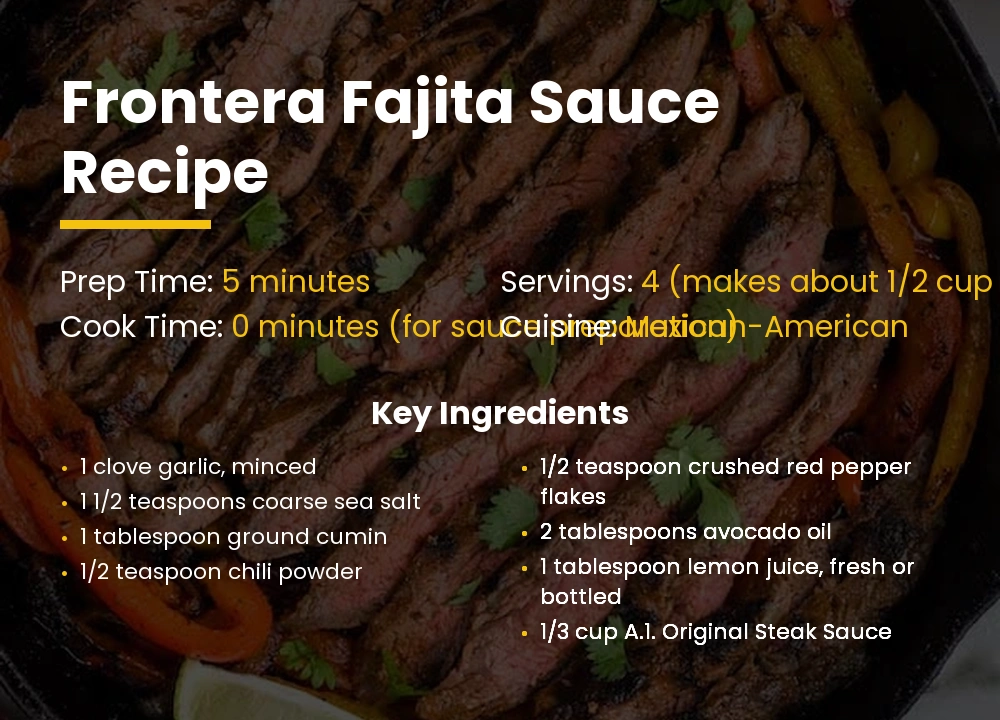
As an Amazon Associate, I may earn a small commission from qualifying purchases at no extra cost to you. This helps me create more valuable, tested content for you.
I reached for the familiar bottle of Frontera Fajita Sauce last Tuesday, but the shelf was empty. My plan for a quick dinner was suddenly in jeopardy. Instead of abandoning fajitas, I spent an hour in my kitchen experimenting. The result was a homemade fajita sauce so good, my family asked if I’d bought a new brand. This recipe captures that elusive, tangy-savory flavor you’ve been looking for.
It works as both a marinade for raw meat and a instant sauce for leftovers. Let me guide you through making it.
How to Make frontera fajita Sauce recipe
This recipe is about building layers of flavor with minimal effort. You simply combine a handful of pantry staples. The magic happens when the ingredients meld together, creating a sauce that is far greater than the sum of its parts.
Recipe Details
- Prep Time: 5 minutes
- Cook Time: 0 minutes (for sauce preparation)
- Servings: 4 (makes about 1/2 cup of sauce)
- Course: Main Course
- Cuisine: Mexican-American
- Diet: Gluten-Free
Ingredients
- 1 clove garlic, minced
- 1 1/2 teaspoons coarse sea salt
- 1 tablespoon ground cumin
- 1/2 teaspoon chili powder
- 1/2 teaspoon crushed red pepper flakes
- 2 tablespoons avocado oil
- 1 tablespoon lemon juice, fresh or bottled
- 1/3 cup A.1. Original Steak Sauce
Instructions
- Mince one fresh clove of garlic finely. You should smell its pungent, sharp aroma as you crush it.
- In a medium mixing bowl, combine the minced garlic, coarse sea salt, ground cumin, chili powder, and crushed red pepper flakes.
- Pour in the avocado oil and lemon juice. The oil will coat the dry spices, creating a fragrant paste.
- Add the A.1. Original Steak Sauce to the bowl. Use a whisk or fork to vigorously mix everything until the sauce is completely smooth and uniform in color. You will hear a gentle slurping sound as you stir.
- Your fajita sauce is now ready. Use it immediately as a marinade or store it in a sealed jar in the refrigerator.
Nutrition
- Calories: 88 kcal
- Protein: 0.5 g
- Fat: 7 g
- Carbohydrates: 5 g
- Sugar: 2 g
- Fiber: 0.5 g
- Sodium: 1202 mg
- Cholesterol: 0 mg
Cooking Method
This sauce serves two primary functions. For raw meat like chicken breast or skirt steak, combine 1.5 pounds of meat with the sauce in a zip-top bag. Let it marinate in the refrigerator for at least two hours, or up to overnight. Then, cook the meat on a hot grill or in a skillet until seared and cooked through. For instant fajitas, take two cups of leftover cooked meat such as rotisserie chicken or pot roast. Heat a tablespoon of oil in a skillet, add sliced bell peppers and onions, and cook until they begin to soften. Add the cooked meat and the fajita sauce, stirring until everything is heated through and coated evenly.
Tools Needed
- A sharp knife and cutting board for mincing garlic.
- A medium mixing bowl.
- A whisk or fork for combining.
- Measuring spoons and a liquid measuring cup.
- A jar with a lid for storage.
- A skillet or grill if you are cooking meat.
The Origins of Fajita Flavor
Fajitas have a rich history rooted in Texas ranch culture, where skirt steak was a common cut. The word “fajita” itself refers to the meat. The accompanying sauce, however, is a more modern invention designed to tenderize and flavor. Commercial sauces like Frontera’s aimed to bottle this essence. My version taps into the same principle using accessible ingredients. The goal is a balance of acidity, salt, umami, and heat that complements grilled meat without overpowering it.
Decoding the Ingredient List
Each component in this sauce plays a specific role. Understanding why they are there helps you make smart substitutions and adjustments.
Garlic and Salt
Fresh garlic provides a pungent, aromatic base that mellows when mixed with other ingredients. Coarse sea salt does more than season; its crystals help break down meat proteins in a marinade, leading to better texture. If you only have fine table salt, use about 1 teaspoon instead.
The Spice Foundation
Ground cumin is non-negotiable for authentic fajita flavor. It offers an earthy, warm note. Chili powder adds depth and a mild sweetness, while crushed red pepper flakes introduce a adjustable level of heat. For a smokier profile, you could add a pinch of smoked paprika.
Liquid Elements
Avocado oil is my choice for its high smoke point and neutral taste, but any vegetable oil works. Lemon juice brings necessary acidity to brighten the rich flavors. The real conversation starter is the A.1. steak sauce. It contributes a complex umami base from ingredients like tomato puree, vinegar, and raisin paste, mirroring the depth found in harder-to-find sauces.
Nutritional Profile Explained
As a dietitian, I always look at what a recipe provides. This sauce is low in calories and contains no cholesterol. The primary nutritional consideration is sodium, which comes from the steak sauce and added salt. If you are monitoring sodium intake, you can use a reduced-sodium steak sauce and cut the added salt in half. The fat content is primarily from heart-healthy monounsaturated fats if you use avocado oil. The small amount of sugar comes naturally from the ingredients in the A.1. sauce.
Mastering the Two-Way Technique
The best part of this recipe is its dual purpose. This solves the common problem of meal planning versus last-minute cooking.
As a Marinade for Raw Meat
When used as a marinade, the acid from the lemon juice and the enzymes in the A.1. sauce help tenderize tougher cuts like skirt steak or chicken thighs. For the best results, marinate for at least two hours. Do not exceed 24 hours, as the acid can begin to break down the meat too much, giving it a mushy texture.
As a Skillet Sauce for Leftovers
This is my personal favorite use. It transforms leftover cooked meat into a new meal in under 10 minutes. The sauce clings to the meat and vegetables, creating a glossy, flavorful coating. It works beautifully with leftover rotisserie chicken, carne asada, pot roast, or even cooked shrimp. Simply heat everything in a pan until sizzling.
Customizing Your Fajita Experience
Your kitchen, your rules. This recipe is a template. For a thicker, more paste-like consistency ideal for marinating, reduce the avocado oil to 1 tablespoon. If you prefer a saucier texture for bowls or nachos, add an extra tablespoon of lemon juice or a splash of water. To make it spicier, increase the red pepper flakes or add a minced chipotle pepper in adobo sauce. For a vegetarian version, use it to marinate portobello mushrooms or tofu before grilling.
Essential Cooking Tips
Always preheat your skillet or grill until it is very hot before adding marinated meat. This ensures a good sear and prevents sticking. When cooking the meat, do not crowd the pan; cook in batches if necessary to achieve proper caramelization. If using the sauce with leftovers, add it towards the end of heating to prevent the sugars from burning.
Storage and Shelf Life
Store your homemade fajita sauce in a clean, airtight jar in the refrigerator. It will keep well for up to two weeks. The oil may solidify slightly when cold; simply let the jar sit at room temperature for a few minutes and stir before using. I do not recommend freezing this sauce, as the emulsion can break and the texture may change.
Frequently Asked Questions
What can I use instead of A.1. steak sauce?
You can substitute A.1. sauce with an equal amount of Worcestershire sauce mixed with one tablespoon of tomato paste to replicate the tangy, umami base.
How long should I marinate chicken in this sauce?
Marinate chicken in this fajita sauce for a minimum of two hours and up to 12 hours for optimal flavor and tenderness without the meat becoming mushy.
Can I make this fajita sauce less spicy?
To make a milder fajita sauce, simply omit the crushed red pepper flakes entirely, as the chili powder provides very little heat on its own.
Is this homemade fajita sauce gluten-free?
Yes, this specific recipe is gluten-free, but always check the label of your A.1. steak sauce, as some brands may contain gluten.
What is the best meat to use for fajitas?
Skirt steak or flank steak are traditional and excellent choices for beef fajitas, while chicken thighs or breasts work perfectly for chicken fajitas due to their ability to stay juicy.
Can I use this sauce for ground beef fajitas?
Absolutely, this sauce works very well with ground beef; simply brown the meat, drain excess fat, and stir in the sauce to heat through.
Why is my sauce separating?
If your sauce separates, it is likely due to the oil not being fully emulsified; simply whisk it vigorously again before use to recombine the ingredients.