Reina
Reina 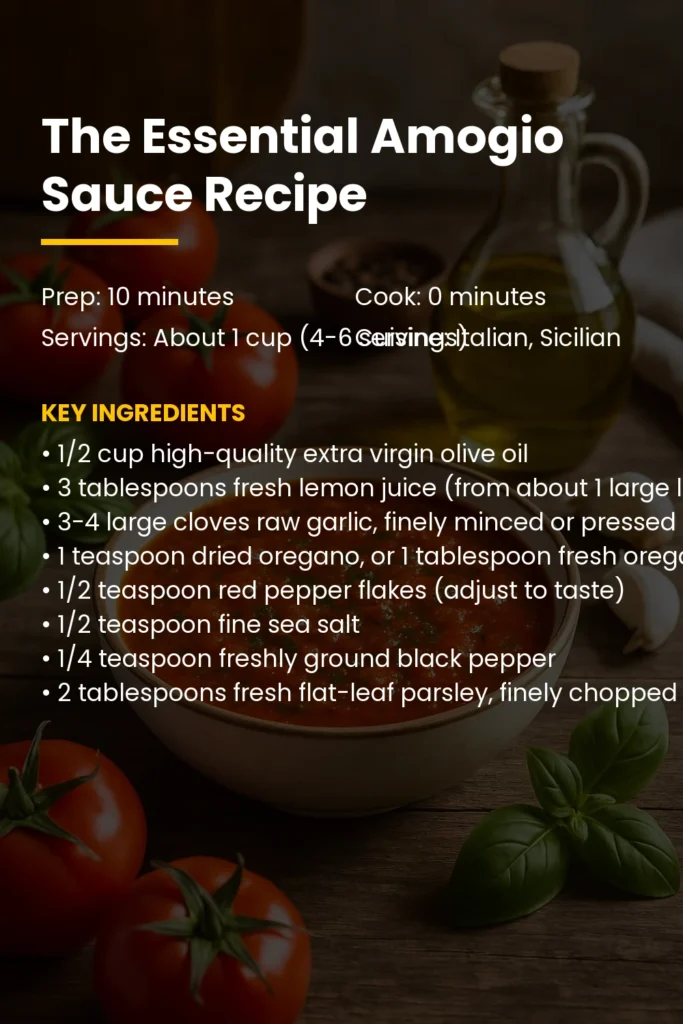
As an Amazon Associate, I may earn a small commission from qualifying purchases at no extra cost to you. This helps me create more valuable, tested content for you.
A simple Italian sauce with olive oil, lemon, and garlic sat on every table at a local restaurant I frequented years ago. The waiter would bring it with bread before the meal, a ritual I always anticipated.
I watched chefs in open kitchens prepare it with a confidence that suggested something foundational. This was Amogio, also called Ammoglio or Amogiu, a foundational condiment from Sicily. Its power lies in its simplicity and its ability to transform basic proteins and vegetables.
Today, I will guide you through the authentic recipe I learned to make and respect. We will examine each component, understand its nutritional impact, and explore its versatile applications. This is more than a list of steps; it is a complete guide to mastering this essential sauce.
How to Make Amogio Sauce
This is the core method for a classic, fresh Amogio. It requires no cooking and comes together in minutes. The key is using the best ingredients you can source and treating them with care.
We will build the sauce in a specific order to layer flavors properly. Having all your ingredients prepped and ready before you start is the best approach for a seamless process.
Recipe Details
- Prep Time: 10 minutes
- Cook Time: 0 minutes
- Servings: About 1 cup (4-6 servings)
- Course: Sauce, Condiment
- Cuisine: Italian, Sicilian
- Diet: Vegan, Vegetarian, Gluten-Free
Ingredients
- 1/2 cup high-quality extra virgin olive oil
- 3 tablespoons fresh lemon juice (from about 1 large lemon)
- 3-4 large cloves raw garlic, finely minced or pressed
- 1 teaspoon dried oregano, or 1 tablespoon fresh oregano, minced
- 1/2 teaspoon red pepper flakes (adjust to taste)
- 1/2 teaspoon fine sea salt
- 1/4 teaspoon freshly ground black pepper
- 2 tablespoons fresh flat-leaf parsley, finely chopped
Instructions
- Prepare all your ingredients. Mince the garlic finely, juice the lemon, and chop the fresh herbs. This mise en place makes the assembly quick.
- In a medium mixing bowl, combine the minced raw garlic and the fresh lemon juice. Let this sit for 2-3 minutes. The acid begins to mellow the garlic’s sharp bite.
- Whisk in the extra virgin olive oil slowly until the mixture is well combined and slightly emulsified.
- Add the dried oregano (or fresh), red pepper flakes, salt, and black pepper. Whisk again to incorporate.
- Just before serving, stir in the fresh chopped parsley. This preserves its bright color and fresh flavor.
- Taste the sauce. Adjust seasoning if needed—perhaps more salt, another pinch of pepper flakes, or a final squeeze of lemon.
- Use immediately for the brightest flavor, or let it sit for 30 minutes to allow the flavors to meld.
Nutrition
- Calories: 170 kcal
- Protein: 0.2 g
- Fat: 18 g
- Carbohydrates: 1.5 g
- Sugar: 0.3 g
- Fiber: 0.2 g
- Sodium: 195 mg
- Cholesterol: 0 mg
Values are approximate per 2-tablespoon serving.
Cooking Method
This preparation uses the “cold method” or “raw method.” There is no application of heat. The sauce is built through the process of emulsification and maceration. The acid and oil are combined, and the ingredients steep in this base.
This technique preserves the volatile compounds in the garlic, herbs, and olive oil that are often lost with cooking. It results in a sauce with a vibrant, pungent, and fresh character that is distinctly different from a cooked tomato sauce.
Tools Needed
- Sharp chef’s knife
- Cutting board
- Citrus juicer or reamer
- Microplane or garlic press (optional, for finer garlic)
- Medium mixing bowl
- Whisk or fork
- Measuring spoons and cups
The Ingredients, Analyzed
Every component in Amogio has a purpose. Understanding these elements allows you to make informed choices and troubleshoot your results.
Extra Virgin Olive Oil
This is the foundation, comprising about 70% of the sauce. A robust, fruity, and slightly bitter oil works best. It needs character to stand up to the raw garlic and lemon.
Look for oils labeled “cold-pressed” with a harvest date. Avoid “light” olive oil. The peppery finish of a good oil is a desired attribute here, adding complexity.
Fresh Lemon Juice
Acidity is the counterbalance to the rich oil. Fresh juice is non-negotiable. Bottled juice contains preservatives that impart a flat, metallic taste.
The citric acid performs a chemical function by slightly “cooking” or denaturing the proteins in the garlic, softening its harshness. The flavor is bright and clean.
Raw Garlic
The soul of the sauce. Raw garlic provides a potent, spicy kick that defines Amogio. The finer you mince or press it, the more dispersed and intense its flavor becomes.
Letting it sit with the lemon juice first is a crucial step. This brief maceration tames the allicin compound responsible for extreme sharpness, creating a more rounded garlic flavor.
Red Pepper Flakes
These provide a slow-building warmth, not immediate heat. The capsaicin oils infuse into the sauce over time. For a milder version, use 1/4 teaspoon; for more punch, use 3/4 teaspoon or add a small whole dried pepper to infuse.
Herbs: Oregano and Parsley
Dried oregano is traditional in many Sicilian versions. Its concentrated, earthy flavor holds up well in the oil. If using fresh, the flavor is greener but more delicate.
Fresh parsley is added last as a final aromatic lift. It contributes freshness and color without competing with the oregano’s deeper notes.
Nutritional Science of a Simple Sauce
While used in modest quantities, this condiment delivers significant nutritional benefits. Its profile is a case study in the health advantages of the Mediterranean diet.
The primary fat source is monounsaturated fat from olive oil, which supports heart health. Raw garlic contains allicin, a compound studied for its potential antioxidant and antimicrobial properties.
Fresh lemon juice provides a dose of vitamin C, which aids iron absorption from foods you pair with the sauce. The herbs, though used in small amounts, contribute trace minerals and phytonutrients.
A 2-tablespoon serving offers approximately 41 mg of calcium from the olive oil and herbs, along with small amounts of iron and potassium. It is naturally free from cholesterol, low in carbohydrates, and fits into many dietary plans.
The sauce’s richness means a little goes a long way in adding flavor, which can help reduce reliance on salt or heavier cream-based sauces in your cooking.
Variations and Adaptations
The classic formula is a blueprint. Regional preferences and modern diets have inspired several common adaptations you can easily implement.
Tomato-Based Amogio
Some versions, often seen with Chicken Spiedini, incorporate cooked tomatoes. In a small saucepan, melt 2 tablespoons of butter with 2 tablespoons of olive oil. Add minced garlic and red pepper flakes, then stir in 2 cups of diced San Marzano tomatoes. Simmer until saucy. This creates an excellent topping for baked or grilled proteins.
Vegan and Dairy-Free Adaptations
The core recipe is inherently vegan. For the tomato-butter version, substitute a high-quality vegan butter or use all olive oil. The result will be different but equally flavorful, relying on the fruity notes of the oil.
Herb Substitutions
While oregano and parsley are standard, fresh basil, marjoram, or mint can be used. For a more complex dried herb profile, a pinch of dried rosemary or thyme can be added with the oregano.
Acid Swaps
White wine vinegar or red wine vinegar can replace lemon juice. The flavor profile becomes less bright and more sharp and winey. Start with 2 tablespoons and adjust to taste.
Historical and Cultural Roots
This sauce originates from Sicily, an island with a history of conquest by Greeks, Arabs, Normans, and Spaniards. Each culture left its mark on the cuisine.
The name “Ammoglio” or “Amogio” is believed to derive from the Sicilian word “ammughiari,” meaning to anoint or to dress. This perfectly describes its use—a liquid seasoning poured over food.
It is a quintessential “cucina povera” or “poor kitchen” recipe, making abundant use of Sicily’s staples: olives (for oil), wild herbs, garlic, and citrus. It requires no expensive ingredients or complex technique, yet it elevates everything it touches.
Traditionally, it was and remains a table condiment for grilled fish, a dressing for boiled vegetables, or a sauce for simple pasta. Its journey to American menus, often as a pairing for Chicken Spiedini, shows its adaptable, travel-ready nature.
Common Mistakes and How to Avoid Them
Avoiding a few key errors will ensure your version is balanced and flavorful, not harsh or dull.
Using Low-Quality Olive Oil
This is the most common error. A bland or rancid oil will make a bland sauce. Taste your oil on a piece of bread first. It should have a distinct olive fruit flavor and a peppery sensation in the back of your throat.
Skipping the Garlic Maceration
Adding raw garlic directly to the full mixture without the lemon bath can result in an overwhelmingly sharp, unpleasant garlic flavor that dominates all other elements. The brief soak is essential for harmony.
Over-Processing the Herbs
If you add delicate fresh herbs like parsley too early, they wilt and lose their vibrant color and fresh taste. They should be the final addition, stirred in just before serving.
Impatience with Flavor Development
While you can use it immediately, the sauce improves if left to sit for 30 minutes to an hour at room temperature. This allows the dried herbs to rehydrate and the flavors to marry. Do not refrigerate it immediately, as the olive oil will solidify.
Serving, Pairing, and Storage Guidance
Think of this as your secret weapon for weeknight meals and impressive dinners alike. Its applications are nearly limitless.
Classic Pairings
It is an excellent topping for grilled or roasted chicken, steak, pork chops, and firm white fish like swordfish or halibut. Drizzle it over cooked shrimp or scallops.
As a dressing, toss it with warm boiled potatoes, steamed green beans, roasted cauliflower, or a simple pasta like busiate or spaghetti. Use it as a dip for crusty bread.
Make Ahead and Storage
You can prepare the base (oil, lemon, garlic, dried herbs, spices) up to 24 hours in advance. Store it covered at cool room temperature or in the refrigerator.
If refrigerated, the olive oil will become cloudy and thick. Bring the sauce to room temperature for at least 30 minutes and whisk vigorously before serving. Always add the fresh parsley just before you serve.
The sauce is best consumed within 2-3 days. The raw garlic flavor will intensify over time. Freezing is not recommended, as it will separate and the texture of the fresh ingredients will degrade.
Frequently Asked Questions
Can I use bottled lemon juice?
I do not recommend it. Fresh lemon juice provides a clean, bright acidity essential to the sauce’s character. Bottled juice often contains additives and has a muted, sometimes bitter flavor that will negatively impact the final result.
Is this the same sauce served with Chicken Spiedini?
It is a close relative. The classic Amogio is often served raw or cold. The version commonly paired with Chicken Spiedini, like at Garozzo’s, is typically a warm, butter-based sauce that may include tomatoes. The recipe in the “Variations” section above replicates that style.
My sauce tastes too sharp or bitter. What went wrong?
A pronounced bitter note usually comes from the olive oil or over-macerated garlic. Ensure your olive oil is fresh and fruity, not bitter. Next time, reduce the garlic maceration time with the lemon to just 2 minutes. A pinch of sugar can balance excessive bitterness in a finished batch.
How can I make a larger batch for a crowd?
Simply multiply the ingredients proportionally. The key is to still combine the garlic and lemon juice first in the correct ratio before whisking in the larger volume of oil. Mix in a very large bowl to allow room for proper emulsification.
Is there a way to make it less oily?
The emulsion of oil and acid is fundamental to the sauce. You can slightly increase the lemon juice, but this will make it very tart. Instead, focus on using it as a condiment—a light drizzle over food—rather than a pouring sauce. You can also whisk in a tablespoon of warm water to loosen the texture slightly.
Can I use other types of oil?
Extra virgin olive oil is non-negotiable for authenticity and flavor. Its distinct taste is a primary component. Using a neutral oil like canola or vegetable oil will create a bland sauce that misses the point entirely.
What’s the best way to mince the garlic?
For the most integrated flavor, use a microplane to grate the garlic cloves. This creates a fine paste that disperses evenly. A garlic press is a good second choice. Finely mincing with a knife works perfectly but may leave slightly larger pieces.
How do I know if my olive oil is high quality?
Look for a dark glass bottle, a harvest date within the last 18 months, and a designation like “PDO” or “First Cold Press.” Taste it. Good oil should smell and taste like fresh olives, grass, or artichokes, with a peppery sensation in the back of your throat after swallowing.