Reina
Reina 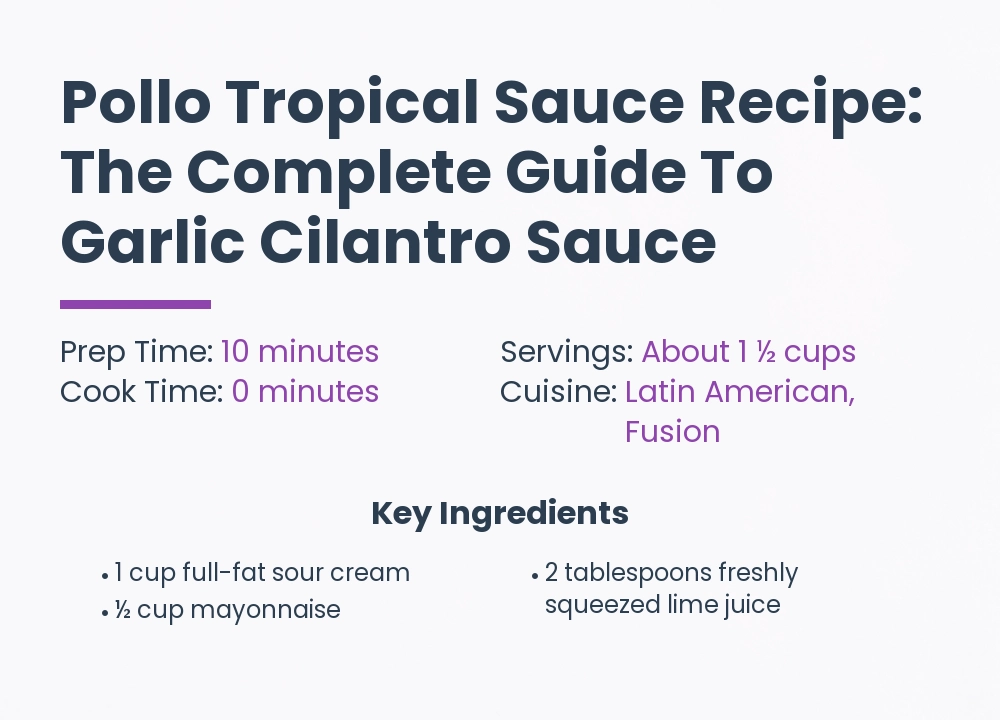
As an Amazon Associate, I may earn a small commission from qualifying purchases at no extra cost to you. This helps me create more valuable, tested content for you.
There is a specific joy in recreating a restaurant condiment that you have missed. For many, the bright, herby sauce from Pollo Tropical is that condiment. It is the perfect accompaniment to grilled poultry, a transformative dip for tostones, and the soul of a TropiChop bowl.
When I first tried to make it at home, my results were close but not quite right. The balance was off, or the texture was wrong. This led me down a path of research and testing, comparing every version I could find, including the elusive official formula. I am here to save you that effort.
This guide provides the definitive method for making Pollo Tropical’s Garlic Cilantro Sauce, often called Poyo Poyo Sauce. We will cover the authentic recipe, the science behind its emulsion, detailed nutritional analysis, and every variation you could need.
You will learn not just how to mix the ingredients, but how each component works and how to adapt the formula for your dietary preferences. Let us begin with the core preparation method.
How to Make Pollo Tropical Sauce Recipe
This foundational recipe yields a sauce that mirrors the flavor profile of the restaurant’s classic offering. The key is in the balance of creamy richness, sharp garlic, and fresh cilantro, all brightened with citrus.
Recipe Details
- Prep Time: 10 minutes
- Cook Time: 0 minutes
- Servings: About 1 ½ cups
- Course: Condiment, Sauce
- Cuisine: Latin American, Fusion
- Diet: Vegetarian
Ingredients
- 1 cup full-fat sour cream
- ½ cup mayonnaise
- ⅓ cup roughly chopped fresh cilantro leaves and tender stems, lightly packed
- 2 to 3 medium garlic cloves, peeled
- 2 tablespoons freshly squeezed lime juice
- ¼ teaspoon fine sea salt
- 1-2 tablespoons cold water (optional, for consistency)
Instructions
- Prepare your ingredients. Ensure the cilantro is washed and dried thoroughly. Excess water can thin your sauce prematurely. Peel the garlic cloves.
- In a food processor or high-powered blender, combine the chopped cilantro, garlic cloves, lime juice, and salt. Pulse 5-7 times until the cilantro and garlic are finely minced, scraping down the sides as needed.
- Add the sour cream and mayonnaise to the processor. Blend on low speed for 15-20 seconds, just until the mixture is completely smooth and uniformly green. Do not over-blend, as this can heat the sauce and affect the texture.
- Stop and scrape the sides with a spatula. Taste for seasoning. You may want to add an extra pinch of salt or a few more drops of lime juice.
- If the sauce is thicker than you prefer, add cold water one tablespoon at a time with the processor running, until your desired consistency is reached. Transfer to an airtight container.
- For optimal flavor, refrigerate the sauce for at least 30 minutes before serving. This allows the flavors to meld and the garlic’s sharpness to mellow slightly.
Nutrition
- Calories: 85 kcal
- Protein: 0.8 g
- Fat: 8.8 g
- Carbohydrates: 1.2 g
- Sugar: 0.5 g
- Fiber: 0.1 g
- Sodium: 105 mg
- Cholesterol: 12 mg
Values are per 2-tablespoon serving and are estimates. Actual numbers can vary based on specific ingredient brands and measurements.
Cooking Method
This is a no-cook, emulsified sauce. The primary technique involves mechanical blending. The goal is to create a stable, smooth mixture where the water-based components (lime juice, cilantro moisture) are uniformly suspended within the fat-based matrix of the sour cream and mayonnaise.
Using a machine like a food processor or blender is non-negotiable for the authentic texture. It breaks down the fibrous cilantro and garlic completely, which a hand chop and stir method cannot achieve.
Tools Needed
- Food Processor or High-Speed Blender: Essential for achieving the correct smooth, creamy texture.
- Spatula: For scraping down the sides of the processor bowl.
- Measuring Cups and Spoons
- Juicer or Fork: For extracting fresh lime juice.
- Airtight Container: For storage.
Understanding the Ingredients
To master this formula, you must understand the role of each component. Altering one element changes the final product’s flavor, texture, and stability.
Sour Cream: The Tangy Base
Full-fat sour cream provides the signature tang and luxurious mouthfeel. It is a cultured dairy product, meaning beneficial bacteria have fermented the cream.
This fermentation creates lactic acid, which gives sour cream its distinctive sharpness that balances the richness of the mayo. The fat content, typically around 20%, contributes to a stable emulsion and prevents a watery sauce.
Using a low-fat version introduces more water and stabilizers, which can lead to a thinner, less creamy result that may separate more easily.
Mayonnaise: The Emulsifier and Richness
Mayonnaise is not just for richness; it is the primary emulsifying agent. It is already a permanent emulsion of oil, egg yolk, and an acid (like vinegar or lemon juice).
When you add it to the processor, its lecithin-rich egg yolk helps bind the new liquids from the lime and cilantro into the fat network. Standard, full-fat mayonnaise works best.
Miracle Whip is a salad dressing, not a mayonnaise. It contains additional sweeteners and spices that will significantly alter the intended flavor profile of this sauce.
Cilantro: The Fresh, Controversial Herb
You must use both the leaves and the tender stems. The stems near the top contain immense flavor and blend smoothly. The key phrase in the recipe is “lightly packed.” Do not force it into the cup, as this can yield an overpowering amount.
For those who detect a soapy flavor from cilantro due to a genetic trait, replacing it with flat-leaf parsley will give a different but still pleasant green herbal note.
Garlic and Lime: The Bright Accents
Fresh garlic is mandatory. The pungent, spicy compounds in raw garlic mellow slightly as the sauce rests, blending into the creaminess. Start with two cloves; you can always add more.
Fresh lime juice is equally critical. Bottled juice often contains preservatives and lacks the vibrant, floral acidity of fresh fruit. The acid cuts through the dairy fats and prevents the herbs from oxidizing as quickly.
Nutritional Profile and Dietary Considerations
As a creamy condiment, this sauce is energy-dense, meaning it provides a high number of calories from fat per serving. A two-tablespoon portion is a standard condiment serving and fits into many eating patterns when used mindfully.
Breaking Down the Macros
The majority of the calories come from the fats in sour cream and mayonnaise. These are primarily unsaturated fats from the oils used in mayo, with some saturated fat from the dairy.
The carbohydrate and sugar content is very low, coming almost exclusively from the lactose in the dairy and the minimal sugars in lime juice and cilantro. The protein content is negligible. The main consideration for many will be the sodium level, which you can control by adjusting the added salt.
Adaptations for Common Dietary Needs
Many people seek alternatives for health, allergy, or preference reasons. Each swap changes the final product, so adjust expectations accordingly.
Lighter and High-Protein Version
Replace the full-fat sour cream with an equal amount of plain, full-fat Greek yogurt. It provides a similar tang with nearly double the protein and often less fat. The texture will be thicker, so you may need to adjust with water or extra lime juice.
Using a light mayonnaise can reduce fat and calories, but check the label for added sugars or stabilizers that might affect flavor.
Dairy-Free and Vegan Adaptation
For a dairy-free sauce, replace the sour cream with a plant-based sour cream alternative made from cashews or oats. Vegan mayonnaise is now widely available and works perfectly as a one-to-one substitute.
Ensure your vegan mayo uses soybean or sunflower oil for the best emulsifying properties. The flavor will be very close to the original.
Lower-Sodium and Keto-Friendly Notes
This sauce is inherently keto-friendly, being very low in carbohydrates. To make it lower in sodium, simply omit the added salt. The other ingredients contain minimal natural sodium.
For Whole30 or paleo diets, you would need to find compliant mayonnaise made with approved oils and without sugar, and use a dairy-free sour cream alternative.
The Story Behind the Sauce: A Condiment’s Journey
Pollo Tropical, a chain founded in Miami in 1988, built its identity on citrus-marinated, flame-grilled chicken. In such a cuisine, a vibrant, cooling sauce is not just a side; it is a necessary counterpoint.
The Garlic Cilantro Sauce, often affectionately or confusedly called “Poyo Poyo” sauce by fans, became a hallmark. The term “Poyo Poyo” itself is a bit of a mystery, potentially a playful misspelling or mishearing of “pollo.”
For a long time, the official recipe was guarded. A PDF file of the actual recipe circulated among enthusiasts online, was lost, and then rediscovered, creating a minor legend in the world of copycat recipes. This guide synthesizes that official approach with tested home-kitchen refinements.
It represents a fusion tradition: using a European technique of an emulsified, dairy-based cold sauce to complement bold, tropical grilled flavors. It is a contemporary classic in its own right.
Expert Techniques and Common Errors
Small details separate a good homemade sauce from a great one. Here are the insights gained from repeated testing.
Maximizing Flavor and Texture
Always start by processing the garlic, cilantro, lime, and salt together first. This ensures they are broken down to a fine paste before the dairy is added, preventing large chunks of herb or garlic.
Use ice-cold sour cream and mayo straight from the refrigerator. A cool emulsion is more stable. If your kitchen is very warm, you can even chill the processor bowl beforehand.
Do not skip the resting time. Thirty minutes to four hours in the fridge allows the flavors to integrate fully and the garlic’s harsh edge to soften.
Mistakes to Avoid
The most common error is using a weak blending tool. A small, low-power chopper may leave the cilantro stringy and the sauce uneven. A food processor or powerful blender is the right tool for the job.
Over-blending is the second error. Once the mixture is smooth and green, stop. Prolonged blending can warm the fats, causing the emulsion to break and become greasy or thin.
Adding wet cilantro will introduce too much water, diluting the flavor and threatening the emulsion’s stability. Wash it early and dry it thoroughly with a salad spinner or towels.
Serving, Pairing, and Storage Guidelines
This sauce’s versatility is its greatest strength. It transcends its original purpose as a chicken dip.
What to Serve It With
Of course, it is perfect with any grilled or roasted poultry. Try it as a dressing for a TropiChop-style bowl with rice, black beans, and sautéed vegetables. It makes an outstanding dip for fried plantains, yuca fries, or tortilla chips.
Use it as a spread for a wrap or sandwich in place of mayo, or as a topping for grilled fish or shrimp. It can even be thinned out with a little buttermilk to make a unique salad dressing.
Storage and Shelf Life
Store the sauce in an airtight container in the coldest part of your refrigerator, usually the back of a shelf. Properly stored, it will maintain best quality for 3 to 4 days.
The fresh herbs and dairy mean it is not a candidate for long-term freezing, as freezing will break the emulsion and cause the herbs to wilt and discolor upon thawing. Always give it a quick stir after storage, as a slight separation of liquid is normal.
For smaller volumes, you can easily halve the recipe. The ratios remain the same, but processing times in a large processor may be shorter, so watch it closely.
Exploring Variations and Related Concepts
Once you master the classic, consider these riffs on the theme. Each offers a different flavor adventure.
The Curry Mustard Sauce
Another Pollo Tropical favorite is their Curry Mustard Sauce. It is a simpler, pungent blend. Whisk together ½ cup mayonnaise, two teaspoons of yellow mustard, and one teaspoon of curry powder.
The type of curry powder matters greatly. A standard Madras blend offers warmth, while a Trinidadian curry powder might include more turmeric and fenugreek. Experiment to find your favorite.
Building a Complete Tropical Meal
This sauce is the centerpiece of a flavor experience. Pair it with simply seasoned black beans, cilantro-lime rice, and a fresh pico de gallo.
For a true feast, serve it alongside other Pollo Tropical-inspired items like mojo-marinated grilled chicken, sweet fried plantains (tostones or maduros), and a side of Ropa Vieja, the classic Cuban shredded beef dish.
Consider the sauce as part of a larger condiment strategy, offering this green sauce, a red salsa, and a creamy avocado crema for a build-your-own bowl night at home.
Frequently Asked Questions
Is this Pollo Tropical sauce recipe the same as Poyo Poyo sauce?
Yes, they refer to the same condiment. “Poyo Poyo” appears to be a colloquial or mistaken name that fans use for the Garlic Cilantro Sauce served at the restaurant. The recipe provided here replicates that primary green sauce.
Can I use Greek yogurt instead of sour cream?
Absolutely. Full-fat plain Greek yogurt is an excellent substitute. It will yield a thicker, tangier sauce with more protein. You may need to add a tablespoon or two of water or milk to achieve the same drizzling consistency.
Why did my sauce turn out watery?
Wateriness usually comes from two sources: not drying the cilantro after washing, or over-blending which can heat and break the emulsion. Using low-fat dairy products, which contain more water and stabilizers, can also contribute to a less creamy result.
How long does homemade cilantro sauce last in the fridge?
For safety and best quality, consume it within 3 to 4 days. The fresh herbs will gradually lose their vibrant color and flavor, and the garlic’s sharpness will continue to mellow over time.
I don’t have a food processor. Can I make this by hand?
You can make a version by hand, but the texture will differ. Mince the cilantro and garlic as finely as possible, almost to a paste. Then, whisk them thoroughly into the combined sour cream and mayonnaise. The sauce will be flecked rather than uniformly smooth and green.
What is the best way to juice a lime for this recipe?
Roll the lime firmly on your countertop with the palm of your hand to break the internal membranes. Cut it in half and use a handheld citrus juicer or reamer. Strain the juice through a small sieve to catch any seeds or pulp for the smoothest sauce.
Is this sauce considered keto-friendly?
Yes, a standard two-tablespoon serving contains only about 1-2 grams of net carbohydrates, making it suitable for a ketogenic diet. Always verify the labels on your specific mayonnaise and sour cream brands to confirm no added sugars.
Can I freeze the cilantro garlic sauce?
I do not recommend it. Freezing will cause the emulsion to separate irreparably. The dairy may become grainy, and the cilantro will wilt and darken upon thawing, resulting in an unappealing texture and color.