Reina
Reina 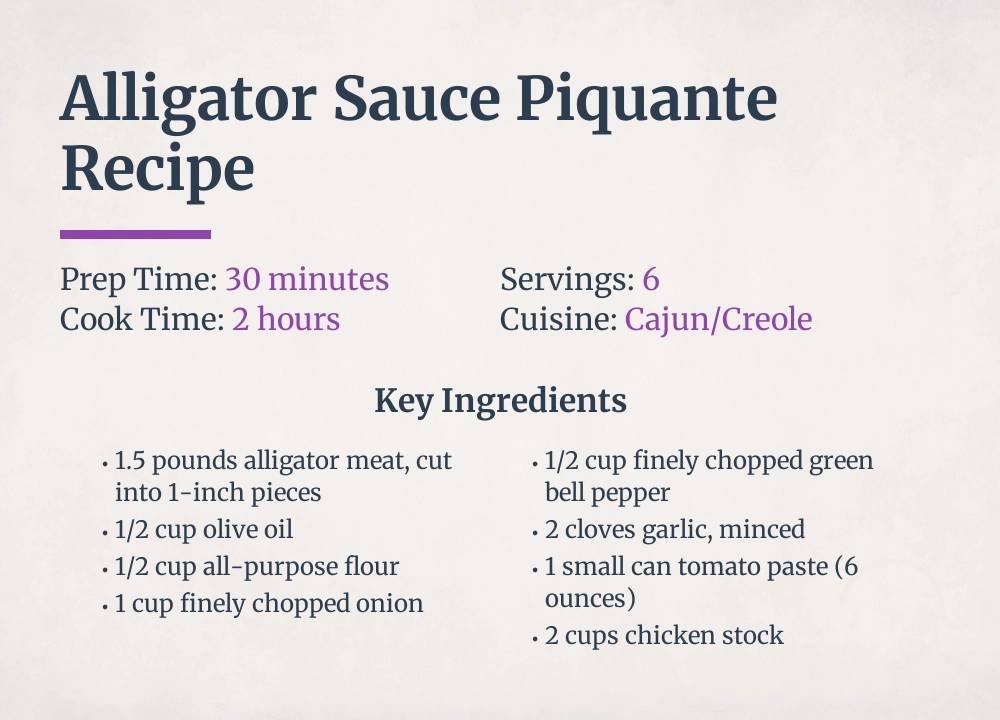
As an Amazon Associate, I may earn a small commission from qualifying purchases at no extra cost to you. This helps me create more valuable, tested content for you.
My first taste of alligator sauce piquante came during a humid evening in a small Louisiana kitchen, where the scent of simmering tomatoes and spices wrapped around me like a warm blanket.
That dish, with its tender alligator meat and zesty sauce, left a lasting impression and sparked my curiosity about its origins and nutrition.
Now, I want to share a version I’ve refined over years, blending culinary history with dietary science to help you recreate this classic at home.
This guide covers every step, from selecting ingredients to understanding its health benefits, ensuring you achieve a flavorful result.
How to Make Alligator Sauce Piquante
This recipe balances the robust flavor of alligator with a tangy, well-spiced sauce, using techniques common in Cajun cooking.
Follow these steps for a dish that serves as a hearty main course, perfect for family dinners or special occasions.
Recipe Details
- Prep Time: 30 minutes
- Cook Time: 2 hours
- Servings: 6
- Course: Main Course
- Cuisine: Cajun/Creole
- Diet: High-Protein
Ingredients
- 1.5 pounds alligator meat, cut into 1-inch pieces
- 1/2 cup olive oil
- 1/2 cup all-purpose flour
- 1 cup finely chopped onion
- 1/2 cup finely chopped celery
- 1/2 cup finely chopped green bell pepper
- 2 cloves garlic, minced
- 1 small can tomato paste (6 ounces)
- 2 cups chicken stock
- 2 tablespoons Worcestershire sauce
- 1 teaspoon red pepper sauce (such as Emeril’s brand)
- 2 teaspoons Creole seasoning
- 1 teaspoon dried thyme leaves
- 1 teaspoon dried oregano
- 2 bay leaves
- 1/2 cup red wine (optional)
- Salt and black pepper to taste
- Fresh parsley for garnish
- 6 cups hot cooked rice for serving
Instructions
- Begin by preparing the alligator meat. Pat it dry with paper towels and cut it into uniform pieces to ensure even cooking.
- Heat the olive oil in a large Dutch oven over medium heat. Once hot, gradually whisk in the flour to form a roux.
- Cook the roux, stirring constantly, for about 10-12 minutes until it turns a dark brown color, being careful not to burn it.
- Add the chopped onion, celery, and green bell pepper to the roux. Sauté for 5-7 minutes until the vegetables soften.
- Stir in the minced garlic and tomato paste, cooking for another 2 minutes to deepen the flavors.
- Slowly pour in the chicken stock while stirring to combine smoothly with the roux and vegetables.
- Add the Worcestershire sauce, red pepper sauce, Creole seasoning, thyme, oregano, and bay leaves. Bring the mixture to a gentle simmer.
- Place the alligator meat into the sauce, ensuring it’s fully submerged. Cover the Dutch oven and reduce the heat to low.
- Simmer for 1.5 to 2 hours, stirring occasionally, until the alligator meat becomes tender and easily shreds with a fork.
- If using red wine, stir it in during the last 30 minutes of cooking to add acidity and depth.
- Season with salt and black pepper to taste. Remove the bay leaves before serving.
- Serve the sauce piquante over hot cooked rice, garnished with fresh parsley for a fresh contrast.
Nutrition
- Calories: 350 kcal
- Protein: 25 g
- Fat: 15 g
- Carbohydrates: 20 g
- Sugar: 5 g
- Fiber: 3 g
- Sodium: 800 mg
- Cholesterol: 80 mg
Cooking Method
This dish uses braising, a slow-cooking method that tenderizes the alligator meat by simmering it in liquid.
The process allows the flavors to meld together, resulting in a rich, cohesive sauce that coats the meat evenly.
Tools Needed
- Large Dutch oven or heavy-bottomed pot
- Cutting board and sharp knife
- Measuring cups and spoons
- Wooden spoon or whisk for stirring
- Medium bowl for prepping ingredients
Understanding the Ingredients
Each component in this recipe plays a specific role in building the dish’s flavor and texture.
Knowing why certain items are used can help you make informed substitutions if needed.
Alligator Meat
Alligator meat is lean and firm, with a mild flavor similar to chicken or rabbit, making it ideal for slow-cooking methods like braising.
It’s high in protein and low in fat, which contributes to the dish’s nutritional profile without overpowering other ingredients.
When selecting alligator, look for fresh or frozen cuts from reputable sources to ensure quality and sustainability.
The Holy Trinity: Onion, Celery, Bell Pepper
This combination forms the base of many Cajun dishes, providing sweetness, crunch, and aromatic depth.
Onion adds a savory note, celery contributes earthiness, and green bell pepper offers a slight bitterness that balances the sauce.
Chopping them finely ensures they dissolve into the roux, creating a smooth foundation for the sauce.
Roux: Flour and Oil
A roux made from flour and oil acts as a thickening agent and flavor base, with a dark brown roux adding a nutty taste.
The cooking time affects the color and flavor; longer cooking results in a deeper hue and richer taste, essential for authentic sauce piquante.
Using olive oil provides a healthier fat option compared to traditional butter, without sacrificing texture.
Spices and Seasonings
Creole seasoning typically includes paprika, garlic powder, and cayenne, offering a balanced heat that enhances the alligator.
Herbs like thyme and oregano add earthy notes, while bay leaves contribute a subtle bitterness that rounds out the sauce.
Adjust the amount of red pepper sauce based on your preference for spiciness, as it can vary between brands.
Nutritional Benefits of Alligator Sauce Piquante
This dish is a nutrient-dense option, providing high-quality protein from the alligator meat, which supports muscle maintenance and repair.
The vegetables in the holy trinity offer vitamins A and C, along with dietary fiber that aids digestion and promotes satiety.
Using olive oil as the fat source introduces heart-healthy monounsaturated fats, which can help reduce bad cholesterol levels.
Overall, the recipe is relatively low in carbohydrates if served without rice, making it adaptable for various dietary goals.
Adapting the Recipe for Different Diets
For a gluten-free version, replace all-purpose flour with a gluten-free blend or cornstarch to thicken the roux.
To make it dairy-free, ensure that any optional ingredients like Worcestershire sauce are free from animal-based additives.
If alligator meat is unavailable, substitute with chicken, turkey, or lean beef, adjusting cooking times as needed for tenderness.
For a lower-sodium option, use low-sodium chicken stock and reduce added salt, relying more on herbs for flavor.
The Roots of Sauce Piquante in Cajun Cuisine
Sauce piquante originated in Louisiana’s Acadian communities, where cooks used local game and spices to create hearty, one-pot meals.
The term “piquante” refers to the spicy, tangy character of the sauce, often achieved with tomatoes and hot peppers.
This dish reflects the resourcefulness of Cajun culture, utilizing ingredients like alligator that are abundant in the region’s wetlands.
Over time, it has evolved but remains a staple at gatherings, symbolizing community and tradition.
Avoiding Pitfalls in Making Sauce Piquante
One common mistake is rushing the roux, which can lead to a burnt taste; cook it slowly over medium heat for best results.
Another issue is overcrowding the pot with meat, which prevents even cooking; ensure pieces are spaced adequately.
If the sauce becomes too thick, thin it with additional broth or water during simmering to achieve the desired consistency.
Always taste and adjust seasonings at the end, as flavors intensify over the cooking process.
How to Serve and Store Alligator Sauce Piquante
Serve this dish hot over rice to absorb the sauce, with a side of crusty bread for dipping.
It pairs well with a crisp green salad or steamed vegetables to balance the richness of the meal.
Store leftovers in an airtight container in the refrigerator for up to 3 days, or freeze for longer storage.
Reheat gently on the stovetop, adding a splash of broth if needed to revive the sauce’s texture.
The Chemistry Behind a Perfect Roux
A roux works by gelatinizing starch molecules in flour when heated with fat, creating a thickening agent for sauces.
The Maillard reaction during browning produces complex flavors, enhancing the overall depth of the dish.
Controlling the heat is crucial to prevent the roux from breaking, which can result in a greasy or lumpy sauce.
Frequently Asked Questions
What is alligator sauce piquante?
Alligator sauce piquante is a traditional Cajun stew made with alligator meat simmered in a spicy, tomato-based sauce, often served over rice.
Why is alligator sauce piquante important?
It represents a key part of Louisiana’s culinary heritage, showcasing the use of local ingredients and slow-cooking techniques passed down through generations.
How does alligator sauce piquante work?
The slow braising process tenderizes the tough alligator meat while allowing the flavors of the sauce to penetrate, resulting in a harmonious and flavorful dish.
Can I use other meats instead of alligator?
Yes, chicken, rabbit, or turtle meat can be substituted, though cooking times may vary based on the meat’s tenderness.
Is alligator meat healthy?
Alligator meat is low in fat and high in protein, making it a nutritious choice that fits into balanced diets when prepared with healthy ingredients.
How can I make the sauce less spicy?
Reduce or omit the red pepper sauce and cayenne, and use a mild Creole seasoning to control the heat level to your preference.
What type of rice is best for serving?
Long-grain white rice is traditional, as its neutral flavor complements the robust sauce without overpowering it.
Can I prepare this dish in advance?
Yes, the flavors often improve after sitting for a day; simply reheat it gently before serving to maintain texture.