Reina
Reina 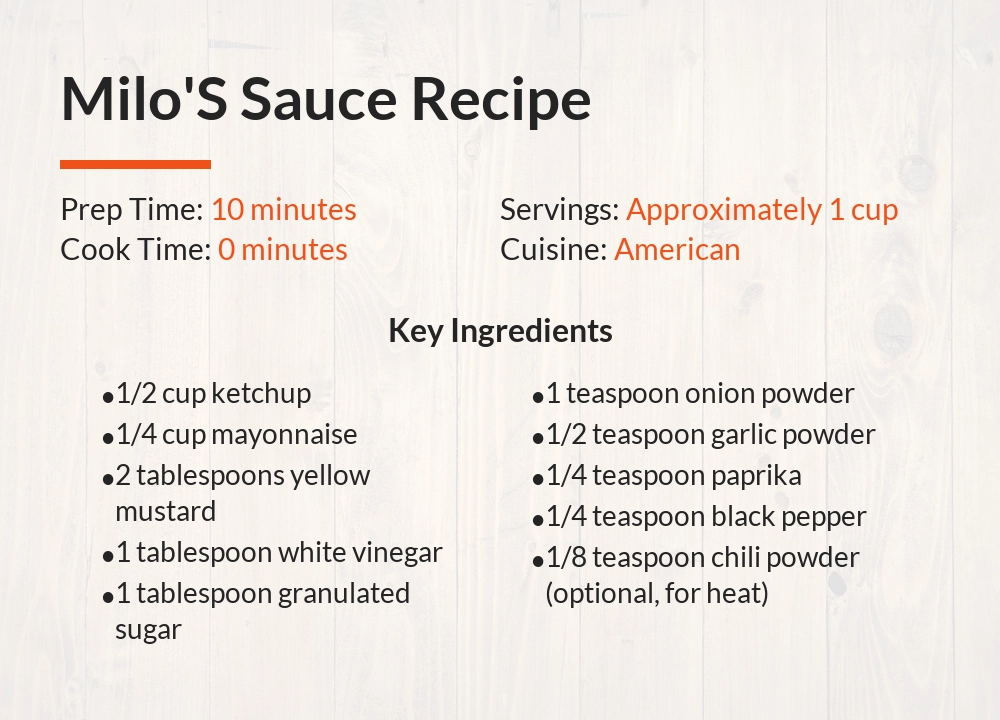
As an Amazon Associate, I may earn a small commission from qualifying purchases at no extra cost to you. This helps me create more valuable, tested content for you.
There is a unique satisfaction in recreating a beloved condiment from scratch, especially one that holds a special place in many memories. For those who have experienced the distinct taste of Milo’s Sauce, the idea of making it at home can feel both exciting and necessary. This guide provides a thorough method for preparing this signature sauce, along with insights into its components and uses.
You might have encountered this sauce in various settings, from local diners to family barbecues. Its versatility as a dip or a topping makes it a valuable addition to any kitchen. By following this recipe, you can achieve a flavor profile that closely mirrors the original, allowing for customization based on personal preference.
This article covers every aspect of the sauce, from its historical roots to detailed nutritional information. Whether you are new to this condiment or a long-time admirer, you will find comprehensive guidance here. The goal is to equip you with the knowledge to make, adapt, and enjoy this sauce confidently.
How to Make Milo’s Sauce Recipe
This section outlines the step-by-step process for creating Milo’s Sauce from common ingredients. The method is straightforward, requiring minimal equipment and time. Focus on measuring accurately to ensure a balanced flavor from the start.
You can adjust the consistency and taste as you mix the components. Letting the sauce rest after preparation allows the flavors to meld together properly. This resting period is crucial for achieving the depth associated with the original version.
Recipe Details
- Prep Time: 10 minutes
- Cook Time: 0 minutes
- Servings: Approximately 1 cup
- Course: Condiment
- Cuisine: American
- Diet: Vegetarian
Ingredients
- 1/2 cup ketchup
- 1/4 cup mayonnaise
- 2 tablespoons yellow mustard
- 1 tablespoon white vinegar
- 1 tablespoon granulated sugar
- 1 teaspoon onion powder
- 1/2 teaspoon garlic powder
- 1/4 teaspoon paprika
- 1/4 teaspoon black pepper
- 1/8 teaspoon chili powder (optional, for heat)
Instructions
- Gather all ingredients and ensure they are at room temperature for easy mixing.
- In a medium-sized bowl, combine the ketchup and mayonnaise. Whisk them together until smooth.
- Add the yellow mustard and white vinegar to the mixture. Stir thoroughly to incorporate.
- Sprinkle in the granulated sugar, onion powder, garlic powder, paprika, black pepper, and chili powder if using. Mix well until all dry ingredients are fully dissolved.
- Taste the sauce and adjust seasonings if necessary. For a thinner consistency, add a teaspoon of water or more vinegar.
- Transfer the sauce to an airtight container and refrigerate for at least 30 minutes before serving. This allows the flavors to develop fully.
Nutrition
- Calories: 35 kcal
- Protein: 0.3 g
- Fat: 2.5 g
- Carbohydrates: 3 g
- Sugar: 2.5 g
- Fiber: 0.1 g
- Sodium: 120 mg
- Cholesterol: 2 mg
Cooking Method
This recipe involves no heat application, making it a simple mix-and-chill process. The key is emulsifying the wet ingredients properly to avoid separation. Use a whisk or fork to blend everything into a homogeneous mixture.
If you prefer a cooked version for deeper flavor, gently heat the ingredients in a saucepan over low heat for 5 minutes. Stir continuously to prevent burning, then cool before refrigerating. This step can enhance the spice notes but is optional.
Tools Needed
- Medium mixing bowl
- Whisk or fork
- Measuring spoons and cups
- Airtight container for storage
The Origins of Milo’s Sauce
Milo’s Sauce traces its roots to Birmingham, Alabama, where it became a staple in local eateries. The sauce gained popularity through Milo’s Hamburgers, a chain known for its distinctive condiments. It embodies a blend of Southern culinary traditions, emphasizing simplicity and robust flavor.
Over time, this sauce evolved from a restaurant exclusive to a homemade favorite. Its ability to complement various dishes, from crispy appetizers to grilled meats, contributed to its widespread appeal. Understanding this background adds context to why certain ingredients are used.
In cities like Bessemer and Alexander City, variations of the sauce emerged, each adding a local twist. The basic formula remained consistent, focusing on a balance of tangy, sweet, and savory elements. This history highlights the sauce’s role in community gatherings and everyday meals.
Breaking Down the Ingredients
Each component in Milo’s Sauce plays a specific role in building its signature taste. Analyzing these elements helps in making informed substitutions or adjustments. Start with the base ingredients and consider how they interact.
Tomato Base
Ketchup serves as the primary tomato component, providing sweetness and acidity. The quality of ketchup affects the final outcome, with brands varying in sugar and salt content. Opt for one with minimal additives for a cleaner flavor.
Tomato paste can be used as an alternative for a more concentrated taste. Adjust the liquid components accordingly to maintain the desired consistency. This base contributes to the sauce’s versatility as a dip or topping.
Mayonnaise and Emulsification
Mayonnaise adds creaminess and helps bind the ingredients together. Its fat content carries flavors effectively, making the sauce richer. For a lighter version, Greek yogurt or sour cream can be substituted.
The emulsification process is key to preventing separation. Whisking vigorously ensures a smooth texture. If the sauce breaks, adding a teaspoon of hot water while mixing can often re-emulsify it.
Mustard and Acidity
Yellow mustard introduces a tangy note and acts as an emulsifier. Its vinegar base enhances the overall acidity, which balances the sweetness. Dijon mustard can be used for a sharper flavor profile.
Vinegar amplifies this acidity and acts as a preservative. White vinegar is standard, but apple cider vinegar offers a fruity undertone. The acid level can be tuned to personal preference for brightness.
Sweeteners and Spices
Sugar counters the acidity and rounds out the flavor. Granulated sugar dissolves easily, but honey or maple syrup are viable alternatives. Be mindful of how liquid sweeteners might alter the thickness.
Onion and garlic powders provide savory depth without raw texture. Paprika and black pepper add subtle heat and complexity. Chili powder introduces a optional kick, making the sauce adaptable to different palates.
Nutritional Insights
From a dietary perspective, Milo’s Sauce contains moderate calories primarily from fats and sugars. The mayonnaise contributes saturated fat, while ketchup adds simple carbohydrates. Understanding this helps in managing portion sizes.
The sauce is low in protein and fiber, so pair it with protein-rich foods like chicken or beans for a balanced meal. The sodium content can be reduced by using low-sodium ketchup and omitting added salt.
For those monitoring sugar intake, consider reducing the sugar or using a sugar substitute. The optional chili powder can boost metabolism slightly due to capsaicin, but the effect is minimal in small quantities.
Adapting for Dietary Needs
This sauce can be modified to suit various dietary restrictions without sacrificing flavor. Start by identifying the core elements that need alteration, such as allergens or specific nutritional goals.
Vegan and Dairy-Free Options
Replace mayonnaise with vegan alternatives made from soy or avocado oil. Ensure the mustard and ketchup are free from animal-derived ingredients. The result is a plant-based version that retains the creamy texture.
Low-Sugar and Low-Sodium Versions
Use no-sugar-added ketchup and reduce or omit the granulated sugar. Stevia or erythritol can provide sweetness without calories. For sodium, select low-sodium condiments and spices.
Gluten-Free Considerations
Most ingredients are naturally gluten-free, but check labels on processed items like ketchup and mustard. Cross-contamination is rare in homemade preparations, making this a safe option for those with celiac disease.
Achieving the Best Results
Common pitfalls include over-mixing or under-seasoning the sauce. To avoid a watery consistency, measure ingredients precisely and add liquids gradually. Taste as you go to adjust seasonings before chilling.
For a smoother texture, blend the sauce briefly with an immersion blender. If the flavor is too sharp, a pinch of sugar can mellow it out. Storing the sauce properly in the refrigerator maintains its quality for up to a week.
When serving, bring the sauce to room temperature for optimal flavor release. Stir it well if separation occurs after storage. These small steps ensure a consistent outcome every time.
Serving and Pairing Ideas
Milo’s Sauce excels as a dipping sauce for crispy foods like french fries or onion rings. It also complements grilled meats such as chicken or burgers, adding moisture and flavor. For a hearty meal, try it with a sloppy joe or as a topping for baked beans.
As an appetizer, serve it with vegetable sticks or breaded items. The sauce can transform a simple side dish into a standout component. Experiment with different pairings to discover new favorites.
For larger gatherings, double the recipe to ensure abundance. The sauce’s versatility makes it a guaranteed crowd-pleaser, whether used as a dip, marinade, or spread.
The Flavor Science
The combination of umami from tomatoes, fat from mayonnaise, and acid from vinegar creates a balanced profile. Sugar reduces the perception of acidity, while spices stimulate multiple taste receptors. This interplay makes the sauce universally appealing.
Emulsification stabilizes the mixture, preventing ingredient separation. The resting period allows flavors to diffuse evenly, enhancing depth. Understanding these principles helps in troubleshooting and customization.
Frequently Asked Questions
What is Milo’s Sauce recipe?
Milo’s Sauce is a condiment originating from Alabama, known for its tangy and slightly sweet flavor. It typically includes ketchup, mayonnaise, mustard, vinegar, and spices, used as a dip or topping.
Why is Milo’s Sauce recipe important?
This sauce is important for its cultural significance in Southern cuisine and its versatility. It enhances a wide range of dishes, from appetizers to main courses, and allows for homemade customization.
How does Milo’s Sauce recipe work?
The recipe works by emulsifying ingredients to create a stable mixture. The balance of acidic, sweet, and savory components produces a complex flavor that complements various foods.
Can I make Milo’s Sauce ahead of time?
Yes, preparing it ahead is recommended. Refrigerate the sauce for at least 30 minutes to allow flavors to meld. It can be stored for up to a week in an airtight container.
What are common variations of Milo’s Sauce?
Variations include adding hot sauce for spice, using different mustards for flavor, or incorporating relish for texture. Some versions adjust sweetness or acidity to suit regional tastes.
Is Milo’s Sauce suitable for vegetarians?
Yes, the basic recipe is vegetarian. Ensure that all condiments used are free from animal products if adhering to a strict vegetarian or vegan diet.
How can I thin out Milo’s Sauce if it’s too thick?
Add a small amount of water, vinegar, or lemon juice gradually until the desired consistency is reached. Mix well after each addition to avoid over-diluting.
What dishes pair well with Milo’s Sauce?
It pairs excellently with burgers, grilled chicken, fries, and as a dip for vegetables. It can also be used in sandwiches or as a marinade for meats.
Can I freeze Milo’s Sauce?
Freezing is not recommended due to the mayonnaise base, which can separate upon thawing. For best quality, store in the refrigerator and consume within a week.
How do I adjust the spice level in Milo’s Sauce?
Increase or decrease the amount of chili powder or black pepper. For more heat, add a dash of hot sauce or cayenne pepper during mixing.