Reina
Reina 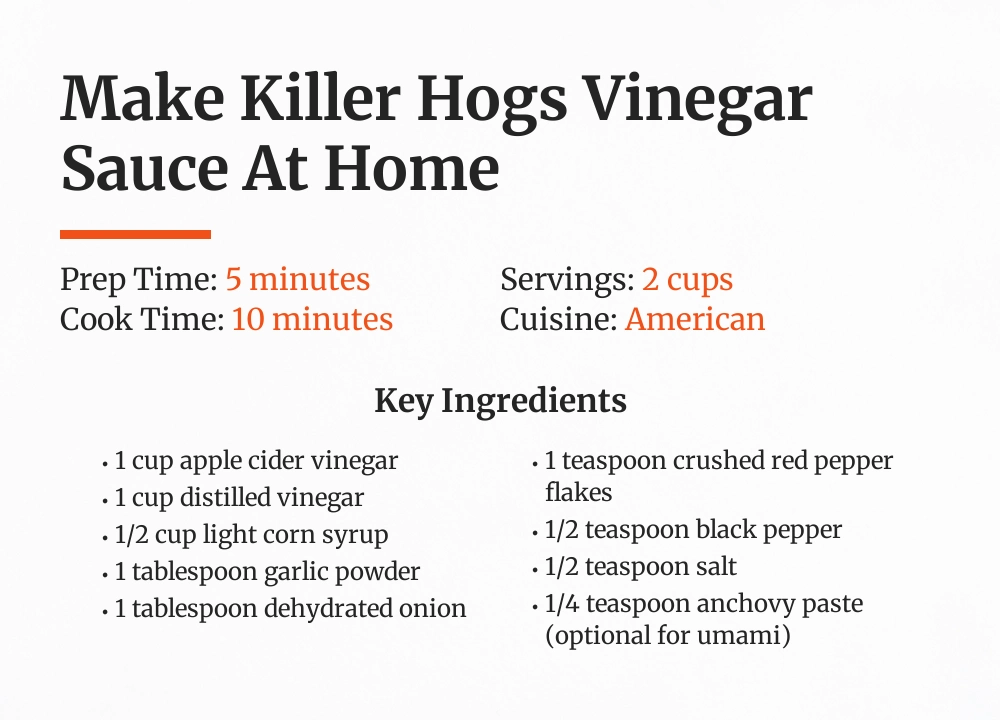
As an Amazon Associate, I may earn a small commission from qualifying purchases at no extra cost to you. This helps me create more valuable, tested content for you.
Barbecue sauces often lean heavy on sugar and thickeners, masking the natural flavors of smoked meats. A vinegar-based alternative cuts through the richness, enhancing rather than overpowering. This approach dates back generations in Southern barbecue culture.
I developed this recipe after years of studying traditional methods and modern adaptations. It replicates the tangy, balanced profile of commercial versions without unnecessary additives. You can achieve restaurant-quality results in your own kitchen with minimal effort.
This guide covers every aspect from ingredient selection to storage techniques. Whether you are new to vinegar sauces or a seasoned pitmaster, these insights will elevate your barbecue game.
How to Make killer hogs vinegar Sauce recipe
Creating this sauce involves simple mixing and heating to meld flavors. The process takes less than 15 minutes from start to finish. Always taste and adjust seasoning to match your preference for acidity and spice.
Recipe Details
- Prep Time: 5 minutes
- Cook Time: 10 minutes
- Servings: 2 cups
- Course: Condiment
- Cuisine: American
- Diet: Gluten-Free, Vegan
Ingredients
- 1 cup apple cider vinegar
- 1 cup distilled vinegar
- 1/2 cup light corn syrup
- 1 tablespoon garlic powder
- 1 tablespoon dehydrated onion
- 1 teaspoon crushed red pepper flakes
- 1/2 teaspoon black pepper
- 1/2 teaspoon salt
- 1/4 teaspoon anchovy paste (optional for umami)
Instructions
- Combine apple cider vinegar and distilled vinegar in a medium saucepan.
- Add corn syrup, garlic powder, dehydrated onion, red pepper flakes, black pepper, and salt.
- If using, mix in anchovy paste for a deeper flavor profile.
- Heat the mixture over medium heat, stirring constantly until ingredients dissolve.
- Reduce heat to low and simmer for 5 minutes to allow flavors to integrate.
- Remove from heat and let cool to room temperature before use.
- Transfer to an airtight container and refrigerate for up to two weeks.
Nutrition
- Calories: 25 kcal
- Protein: 0 g
- Fat: 0 g
- Carbohydrates: 6 g
- Sugar: 5 g
- Fiber: 0 g
- Sodium: 75 mg
- Cholesterol: 0 mg
Cooking Method
This sauce uses a stovetop simmering technique. Gentle heating helps dissolve solid ingredients without boiling away volatile acids. It preserves the sharpness of the vinegar while mellowing harsh notes.
Stirring frequently prevents scorching and ensures even distribution. Cooling before storage allows the sauce to thicken slightly as it rests. This method mirrors commercial production scales adapted for home use.
Tools Needed
You will need a medium saucepan, a whisk or spoon for stirring, and a glass jar or bottle for storage. A fine mesh strainer can remove any undissolved particles if a smoother texture is desired. Measuring cups and spoons ensure accuracy in ratios.
The Roots of Vinegar-Based Barbecue
Vinegar sauces originated in Eastern North Carolina as a practical solution for preserving and flavoring meats. They predate tomato-based versions by decades. These sauces were designed to complement slow-cooked pork without overwhelming its natural taste.
Memphis barbecue competitions in 2016 highlighted vinegar sauces like this one for their complexity and balance. They earned accolades for enhancing rather than masking the meat’s quality. This tradition continues in modern barbecue culture across the Southern United States.
North Carolina Style Influence
North Carolina variations typically use apple cider vinegar as a base. They incorporate spices like red pepper and black pepper for heat. This style avoids sweeteners beyond a touch of sugar or syrup, focusing on acidity.
Dehydrated garlic and onion provide shelf stability and consistent flavor. These elements distinguish it from thicker, sweeter sauces found in other regions. The result is a thin, pungent liquid that penetrates meat deeply.
Breaking Down the Ingredients
Each component in this recipe serves a specific purpose in flavor and function. Understanding these roles helps in making informed substitutions. Quality ingredients yield a superior final product.
Apple Cider Vinegar
Apple cider vinegar contributes fruity acidity and subtle sweetness. It contains acetic acid, which tenderizes meat and aids digestion. Unfiltered varieties offer more complex flavors due to residual apple particles.
This ingredient also provides probiotics when unpasteurized. It balances pH levels in the sauce, enhancing preservation. Always shake the bottle before use to distribute sediments evenly.
Garlic and Onion Powders
Dehydrated garlic and onion deliver concentrated umami without moisture. They rehydrate in the vinegar, releasing essential oils. Garlic powder should have a fine texture to prevent grittiness.
These powders avoid the spoilage risks of fresh equivalents. They ensure a consistent taste batch after batch. Storage in a cool, dark place maintains their potency.
Corn Syrup and Alternatives
Light corn syrup adds viscosity and mild sweetness. It counters the vinegar’s sharpness without crystallizing. This makes the sauce smoother and more palatable for various applications.
For a less processed option, honey or maple syrup can substitute. Adjust quantities since these are sweeter than corn syrup. They may darken the sauce slightly but add unique flavor notes.
Nutritional Perspective
Vinegar-based sauces are lower in calories and sugar compared to ketchup-based versions. They contain no fat and minimal protein. The primary concerns are sodium levels and acidity for those with dietary restrictions.
Apple cider vinegar may help with blood sugar regulation due to its acetic acid content. It also promotes satiety, which can aid in weight management. Always consult a healthcare provider for personalized advice.
This recipe uses moderate salt to enhance flavor without excess. The red pepper flakes provide capsaicin, which has anti-inflammatory properties. Overall, it is a healthier condiment choice when used in moderation.
Caloric Density
Each tablespoon contains approximately 25 calories, mainly from carbohydrates. The sugar comes from corn syrup and natural sources in vinegar. This makes it suitable for low-fat diets but requires monitoring in low-carb plans.
Compared to commercial barbecue sauces, this version has 30% less sugar per serving. You can reduce it further by using sugar substitutes. Be aware that texture and preservation may change.
Adapting for Dietary Needs
This sauce naturally fits gluten-free and vegan diets. Check individual ingredient labels to confirm compliance. For other needs, simple swaps maintain the core profile.
Low-Sodium Version
Omit added salt and rely on garlic and onion powders for seasoning. Use low-sodium vinegar if available. Taste and adjust with salt-free spice blends after cooking.
This modification reduces sodium to under 10 mg per serving. It is ideal for hypertension management. The tanginess of vinegar remains prominent without salt.
Sugar-Free Option
Replace corn syrup with erythritol or stevia-based sweeteners. Use about 1/4 cup to match sweetness levels. These alternatives do not caramelize, so avoid heating beyond dissolving.
The sauce may be thinner but still effective as a marinade or topping. Store in the refrigerator and use within one week for best quality.
Avoiding Common Errors
Many home cooks over-sweeten or under-season vinegar sauces. Balance is key to achieving the signature tang. Measure ingredients precisely rather than eyeballing.
Heating the sauce too quickly can cause separation or bitter flavors. Maintain a low simmer and stir constantly. Do not boil, as this diminishes the vinegar’s brightness.
Using stale spices results in a flat taste. Check expiration dates on garlic and onion powders. Store them in airtight containers away from light and heat.
Storage Mistakes
Leaving the sauce at room temperature invites bacterial growth. Always refrigerate after cooling. Glass containers prevent plastic odors from leaching into the liquid.
If mold appears or the smell changes, discard immediately. Properly stored, it lasts up to two weeks. For longer storage, freeze in ice cube trays and thaw as needed.
Serving and Pairing Ideas
This sauce excels with pulled pork, smoked chicken, or grilled fish. Its acidity cuts through fatty meats, cleansing the palate. Use it as a marinade, finishing sauce, or table condiment.
For vegetables, drizzle over roasted Brussels sprouts or grilled corn. It adds zest without heaviness. Combine with olive oil for a simple salad dressing.
In barbecue competitions, apply during the last stages of cooking. This prevents burning from high sugar content. Brush generously on ribs or brisket for a glossy finish.
Complementary Dishes
Pair with coleslaw made with a similar vinegar base for cohesion. Serve alongside baked beans or potato salad for a balanced meal. The sauce’s versatility extends to tacos and sandwiches.
For beverages, match with iced tea or light beers. Their bitterness contrasts the sauce’s acidity. Avoid sweet drinks that might clash with the tangy profile.
The Science of Flavor Development
Vinegar’s acetic acid breaks down proteins in meat, increasing tenderness. It also enhances perception of other flavors by stimulating taste receptors. This is why the sauce seems to brighten entire dishes.
Dehydrated ingredients rehydrate in liquid, releasing soluble compounds. Heat accelerates this process, deepening the flavor integration. Corn syrup inhibits crystallization, maintaining smoothness.
The optional anchovy paste adds glutamates, which amplify umami. This creates a more complex taste without a fishy note. Understanding these interactions allows for better recipe customization.
Frequently Asked Questions
What is killer hogs vinegar sauce?
It is a tangy, thin barbecue sauce originating from Southern traditions. It uses vinegar as a base instead of tomatoes, with spices for heat and sweetness for balance. This recipe mimics the commercial product with accessible ingredients.
Why use vinegar in barbecue sauce?
Vinegar tenderizes meat, adds brightness, and preserves the sauce. It contrasts rich, smoky flavors without adding heaviness. Historically, it prevented spoilage in warm climates.
Can I make this sauce without corn syrup?
Yes, substitute honey, maple syrup, or sugar-free alternatives. Adjust quantities to taste, as sweetness levels vary. The texture may change slightly, but the core flavor remains.
How long does homemade vinegar sauce last?
Refrigerated in an airtight container, it stays fresh for up to two weeks. Freezing extends this to three months. Always check for off odors or mold before use.
What meats pair best with this sauce?
Pork shoulder, chicken thighs, and fatty fish like salmon work well. The acidity complements their richness. Avoid delicate meats that might be overpowered.
Is this sauce suitable for marinades?
Yes, its acidity helps break down muscle fibers, tenderizing meat. Marinate for 2-4 hours for poultry and 4-8 hours for tougher cuts. Do not exceed 12 hours to prevent mushiness.
Can I use fresh garlic instead of powder?
Fresh garlic adds a sharper taste but may spoil faster. Use 2 cloves minced finely per tablespoon of powder. Cook thoroughly to mellow the raw edge.
How can I reduce the sodium content?
Omit added salt and use low-sodium spices. Increase black pepper or red pepper flakes for flavor. Taste after mixing and adjust with salt-free seasonings.
What if my sauce is too acidic?
Add more corn syrup or a pinch of sugar to balance. You can also dilute with a tablespoon of water. Simmer for an additional 2-3 minutes to integrate.
Can I bottle this sauce for gifts?
Yes, sterilize glass bottles and fill while hot for better preservation. Seal tightly and label with date and contents. Refrigerate after opening and consume within two weeks.