Reina
Reina 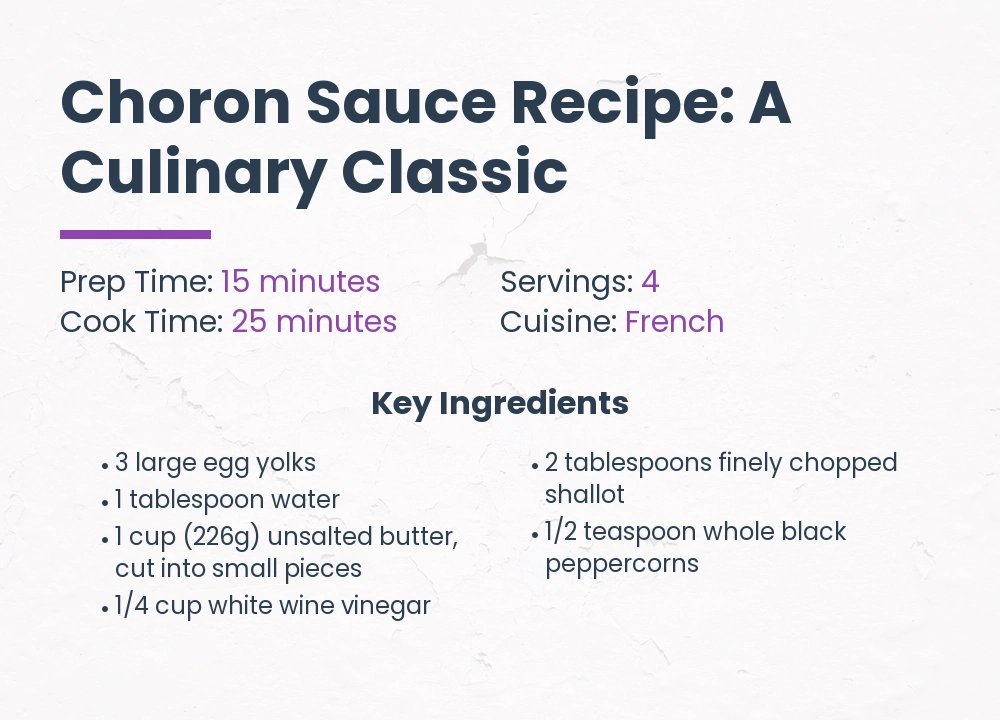
As an Amazon Associate, I may earn a small commission from qualifying purchases at no extra cost to you. This helps me create more valuable, tested content for you.
There is a moment in every cook’s development when a sauce stops being a condiment and becomes the centerpiece of the plate. For me, that moment arrived with a perfectly seared fillet of beef, its surface glistening, resting beside a pool of vibrant, coral-pink sauce. This was my first encounter with Sauce Choron, a derivative of the classic béarnaise, and it fundamentally changed how I view the power of an emulsion.
This guide provides a complete method for preparing this classic French sauce. We will walk through each step with precision, ensuring you achieve the perfect consistency and flavor balance. You will learn not just the technique, but the history and science that make this preparation so rewarding.
Beyond the recipe itself, we will explore its nutritional profile, its ideal pairings, and how to troubleshoot common issues. My goal is to provide you with all the knowledge required to master this sauce and confidently add it to your culinary repertoire.
What Is Choron Sauce?
Choron sauce is a classic French condiment belonging to the family of emulsified butter sauces. It is essentially a béarnaise sauce, which is itself a derivative of hollandaise, with the key addition of tomato.
The result is a rich, tangy, and slightly acidic sauce with a beautiful pink-orange hue. It is often described as a tomato-spiked béarnaise, though the tomato component is typically a smooth purée or paste, not chunky pieces.
Its primary function is to complement rich proteins without overpowering them. The acidity from the reduction and the tomato cuts through the fat of a steak, while the creamy, buttery base provides a luxurious mouthfeel.
Understanding its place in the sauce family tree is helpful. The mother sauce here is hollandaise, an emulsion of egg yolks and melted butter, seasoned with lemon juice. Béarnaise takes that base and infuses it with a reduction of white wine vinegar, shallots, tarragon, and peppercorns.
Choron sauce then builds upon the béarnaise foundation by incorporating tomato. This seemingly simple addition creates a entirely new dimension of flavor and visual appeal.
Historical Background
The sauce is named after Alexandre Étienne Choron, a French chef from the late 19th and early 20th centuries. He was the chef de cuisine at the famous Voisin restaurant in Paris during a tumultuous period, the Siege of Paris in 1870.
Legend suggests that during the siege, traditional food supplies were scarce. Chef Choron, needing to create luxurious dishes for his clientele with limited ingredients, innovated by adding tomato purée to the classic béarnaise sauce.
This adaptation not only provided a new flavor profile but also gave the sauce its distinctive color. It was an instant success and has remained a staple in classic French cooking ever since.
His creation demonstrates a key principle of great cuisine: constraint often breeds creativity. He did not invent a new mother sauce, but rather created a brilliant variation on an existing one, proving that mastery lies in understanding the rules before you bend them.
The Man Behind the Sauce: Alexandre Choron
Alexandre Choron was more than just the creator of a single sauce. He was a respected figure in the Parisian culinary scene, known for his skill and innovation. His work at Voisin cemented his reputation during a challenging historical event.
His contribution highlights how classic dishes are often born from practical necessity. The sauce that carries his name is a testament to his ability to elevate simple ingredients into something extraordinary.
How to Make Choron Sauce Recipe
This section provides the complete, step-by-step formula for creating a perfect Choron sauce. Read through all instructions before you begin, as the process requires your attention once started.
Recipe Details
- Prep Time: 15 minutes
- Cook Time: 25 minutes
- Servings: 4
- Course: Condiment, Sauce
- Cuisine: French
- Diet: Vegetarian
Ingredients
- 3 large egg yolks
- 1 tablespoon water
- 1 cup (226g) unsalted butter, cut into small pieces
- 1/4 cup white wine vinegar
- 1/4 cup dry white wine (like Chardonnay)
- 2 tablespoons finely chopped shallot
- 1/2 teaspoon whole black peppercorns
- 1 tablespoon fresh tarragon, chopped, plus more for garnish
- 1 teaspoon fresh chervil, chopped (optional)
- 3 tablespoons tomato paste
- 1/4 teaspoon coarse sea salt, or to taste
- 1 pinch cayenne pepper (optional)
Instructions
- Begin by making the tarragon reduction. In a small saucepan, combine the white wine vinegar, white wine, chopped shallot, black peppercorns, and half of the chopped tarragon. Place over medium heat.
- Bring the mixture to a simmer and allow it to reduce until you have about 2 tablespoons of liquid remaining. This will take approximately 8-10 minutes. The strong, acidic vapors will be noticeable.
- Strain this reduction through a fine-mesh sieve (a chinois is ideal) into a small bowl, pressing on the solids to extract all the liquid. Discard the shallot, peppercorns, and herb solids. Set the strained reduction aside to cool slightly.
- While the reduction cools, prepare your double boiler, or bain-marie. Bring about 2 inches of water to a gentle simmer in the bottom pot. The top bowl should fit snugly without touching the water.
- In the top bowl of your double boiler, off the heat, whisk together the egg yolks and 1 tablespoon of water until the mixture becomes pale and slightly thickened.
- Place the bowl over the gently simmering water. Whisk the egg yolks constantly and vigorously. You must not stop whisking, or the eggs will scramble. Cook until the yolks thicken, become pale, and hold a ribbon trail when the whisk is lifted. This is the sabayon stage.
- Remove the bowl from the heat. Begin adding the pieces of unsalted butter very slowly, one or two pieces at a time, while whisking continuously. Ensure each addition is fully incorporated before adding the next. This slow, steady process is crucial for a stable emulsion.
- Once all the butter has been incorporated, whisk in the reserved tarragon reduction. The sauce should be thick, smooth, and creamy.
- Now, whisk in the tomato paste until the sauce is uniformly pink. Stir in the remaining fresh tarragon, chervil (if using), sea salt, and a pinch of cayenne for a subtle kick.
- Taste and adjust seasoning. The sauce is best served immediately, but it can be kept warm for a short period in a thermos or a bowl placed over warm (not hot) water.
Nutrition
- Calories: 250 kcal
- Protein: 3 g
- Fat: 26 g
- Carbohydrates: 2 g
- Sugar: 1 g
- Fiber: 0 g
- Sodium: 105 mg
- Cholesterol: 185 mg
Cooking Method
The primary cooking method for Choron sauce is emulsification using indirect heat. The egg yolks are first cooked over a bain-marie to a sabayon, which partially coagulates the proteins and allows them to absorb the fat.
The butter is then incorporated while whisking vigorously. This action breaks the fat into microscopic droplets that are suspended in the water-based component of the egg yolks and reduction, creating a stable, thick emulsion.
The final step is simply folding in the tomato product and remaining herbs. No further cooking is applied after the butter is emulsified, as high heat will cause the sauce to break.
Tools Needed
- A small saucepan for the reduction
- A fine-mesh sieve (chinois)
- A double boiler or a heatproof bowl set over a pot of simmering water
- A balloon whisk
- A flexible rubber spatula
- Measuring cups and spoons
Ingredient Analysis and Selection
Understanding the role of each component is the first step toward mastery. The quality of your ingredients directly impacts the final flavor and texture of your sauce.
Egg Yolks
Egg yolks are the foundational emulsifier in this recipe. They contain lecithin, a powerful phospholipid that bonds with both water and fat molecules. This creates the stable network that holds the butter in suspension.
Use fresh, high-quality eggs for the best flavor and emulsifying power. The yolks should be bright orange and stand tall. Older eggs have weaker protein structures and may not create as stable an emulsion.
Butter
Unsalted butter is non-negotiable. It allows you to control the salt level precisely. The butter must be melted slowly and added warm, but not hot. Clarified butter is sometimes used for an even more stable, richer sauce, as the milk solids are removed.
Using cold butter or adding it too quickly is a common point of failure. The temperature shock can cause the emulsion to break before it has a chance to form properly.
Tomato Product
The classic choice is tomato paste or a very smooth tomato purée. This provides a concentrated tomato flavor and a smooth texture that integrates seamlessly into the emulsion.
Some modern variations use a concassé of fresh, diced tomatoes that have been seeded and peeled. However, this introduces more water and can make the sauce less stable. Tomato paste offers the most control and consistent results.
The Aromatic Reduction
The combination of white wine vinegar, white wine, shallots, and peppercorns creates the acidic, aromatic base of the sauce. The reduction process concentrates these flavors and mellows the sharpness of the vinegar.
Do not skip the straining step. Leaving the solid ingredients in the final sauce would create an unpleasant, gritty texture. The goal is to capture only their essence.
Fresh Herbs: Tarragon and Chervil
Tarragon is the definitive herb of béarnaise and, by extension, Choron sauce. Its slight anise-like flavor is irreplaceable. Fresh tarragon is essential; the dried herb lacks the necessary brightness and can taste dusty.
Chervil, a milder herb also in the parsley family, is a traditional addition but can be omitted if difficult to find. Its delicate flavor complements the tarragon without competing with it.
Nutritional Perspective
As a dietitian, it is important to view this sauce in the context of a balanced diet. Choron sauce is an energy-dense food due to its high fat content, primarily from the butter and egg yolks.
The fats are a mix of saturated and monounsaturated types. While it should be consumed in moderation, it provides fat-soluble vitamins like Vitamin A from the egg yolks and tomato, and Vitamin E from the butter.
The sauce is low in carbohydrates and protein. Its role is not to be a significant source of macronutrients, but to provide flavor and satiety. A small amount can make a simple piece of grilled chicken or fish feel like a decadent meal, which can support dietary adherence by preventing feelings of deprivation.
For those monitoring sodium intake, using unsalted butter and controlling the added salt allows you to keep the sodium content manageable. The tomato paste also contributes a small amount of lycopene, an antioxidant.
Dietary Adaptations
This classic recipe can be modified to suit various dietary needs without sacrificing its essential character.
Vegan Variation
Creating a vegan Choron sauce is challenging but possible. The base can be made from silken tofu or raw cashews that have been soaked and blended until perfectly smooth.
For the buttery flavor, refined coconut oil or a high-quality vegan butter substitute can be used. The emulsification will rely on the natural lecithin in the tofu or the fat content of the cashews.
The tarragon reduction remains the same. Tomato paste is naturally vegan. The key is to achieve a similar richness and mouthfeel through plant-based fats and thickeners like xanthan gum, used sparingly.
Dairy-Free Version
This follows a similar path as the vegan adaptation, but you could choose to retain the egg yolks for emulsification if your diet allows. You would simply replace the butter with a dairy-free fat source like ghee (if tolerated) or a neutral-tasting oil.
Avoiding Common Mistakes
Many potential issues can be avoided with careful technique. Here are the most frequent pitfalls and how to prevent them.
Broken or Separated Sauce
A broken sauce, where the fat separates from the egg, is the most common failure. This happens due to excessive heat or adding the butter too quickly.
If your sauce breaks, do not discard it. You can often rescue it. Take a fresh bowl with a tablespoon of cold water or a single egg yolk. Whisk the broken sauce into this new base very slowly, drop by drop at first, to re-establish the emulsion.
Scrambled Eggs
If the heat under your bain-marie is too high, the egg yolks will cook into curds rather than forming a smooth sabayon. The water should be at a bare simmer, not a rolling boil.
If you see bits of cooked egg, you can strain the sauce through a fine sieve to remove them before proceeding with the butter. However, prevention is the best strategy.
Too Acidic or Weak Flavor
An overpowering vinegar taste usually means the reduction was not cooked long enough. Ensure you reduce it to about two tablespoons to concentrate and mellow the flavors.
A weak flavor often stems from using dried herbs instead of fresh, or inferior tomato paste. Invest in high-quality, double-concentrated tomato paste for the best result.
Serving and Pairing Suggestions
Choron sauce is incredibly versatile. While classically paired with beef, its application extends far beyond.
Classic Pairings
It is magnificent with grilled or pan-seared steak, particularly leaner cuts like fillet mignon, where its richness complements the meat. It is also a traditional accompaniment to roasted or grilled chicken and many types of fish, such as salmon or sea bass.
For a classic French presentation, serve it with a tournedos of beef, a small, tender filet mignon, often topped with an artichoke bottom.
Modern Applications
Do not limit this sauce to meat. It is excellent with sturdy vegetables like grilled asparagus, roasted broccolini, or even a baked potato instead of sour cream.
It can transform a simple egg dish. Imagine a poached egg on an English muffin with Choron sauce instead of hollandaise for a twist on Eggs Benedict.
Storage and Make-Ahead Tips
Choron sauce is best served immediately. However, you can hold it for about an hour in a thermos or a bowl set over a pot of warm water (not exceeding 140°F or 60°C).
Storing it in the refrigerator is not ideal, as it will solidify and is very difficult to reheat without breaking. The emulsion is fragile and does not withstand cooling and reheating well.
For advance preparation, you can make the tarragon reduction a day ahead and store it in an airtight container in the refrigerator. Having this component ready streamlines the final sauce-making process.
Understanding the Emulsion Science
The success of this sauce hinges on a stable oil-in-water emulsion. The water phase consists of the water from the egg yolks and the tarragon reduction.
The oil phase is the melted butter. Lecithin from the egg yolks acts as the emulsifier, a molecule with a water-loving (hydrophilic) head and a fat-loving (lipophilic) tail.
These molecules surround the tiny droplets of fat, forming a protective barrier that prevents them from coalescing and separating out. The constant whisking during the butter incorporation is what creates these millions of tiny, stable fat droplets.
Heat assists in the initial protein denaturation in the yolks, but too much heat causes the proteins to coagulate too tightly, squeezing out the water and fat and breaking the emulsion.
Frequently Asked Questions
What is the difference between béarnaise and Choron sauce?
Béarnaise sauce is the base, made from emulsified butter, egg yolks, and a tarragon-shallot-vinegar reduction. Choron sauce is a specific variation of béarnaise where tomato purée or paste is added, giving it a pink color and a slightly sweeter, fruitier flavor profile.
My sauce is too thin. How can I thicken it?
A thin sauce is often the result of undercooked sabayon or butter that was too cool when added. You can sometimes thicken it by returning the bowl to the bain-marie and whisking constantly over very low heat for a minute. Be extremely careful, as too much heat will cause it to break.
Can I use a blender to make Choron sauce?
Yes, a blender method can be used, similar to making blender hollandaise. You would blend the warm tarragon reduction with the egg yolks, then with the blender running, slowly drizzle in hot, melted butter. Finally, pulse in the tomato paste and herbs. This method is more foolproof against breaking but can yield a lighter, frothier texture.
Is there a substitute for fresh tarragon?
Fresh tarragon is integral to the authentic flavor. In a pinch, you could use a very small amount of dried tarragon only in the reduction (straining it out), but the flavor will not be as bright. There is no perfect substitute for the fresh herb added at the end.
What can I serve with Choron sauce besides steak?
This sauce pairs wonderfully with grilled fish like salmon or halibut, roasted chicken, pork tenderloin, and roasted or steamed vegetables such as asparagus, green beans, and artichokes. It also elevates egg dishes and can be used with grilled portobello mushrooms.
How can I tell if my sauce has broken?
A broken sauce will appear curdled, greasy, and separated. You will see pools of melted butter floating on the surface rather than a homogenous, creamy, and thickened emulsion. The mixture will not coat the back of a spoon smoothly.
Why did my sauce turn out greasy?
A greasy mouthfeel indicates that the emulsion was not properly formed or has started to break. This is typically caused by adding the butter too quickly or allowing the sauce to get too hot after the butter has been incorporated.