Reina
Reina 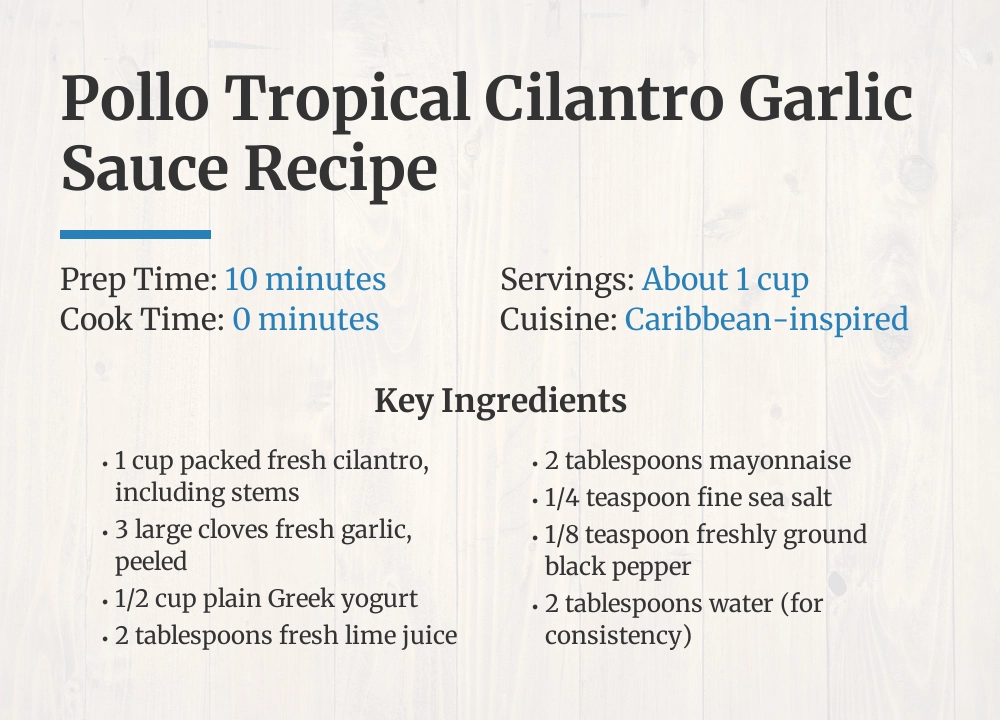
As an Amazon Associate, I may earn a small commission from qualifying purchases at no extra cost to you. This helps me create more valuable, tested content for you.
The first time I dipped a piece of grilled chicken into that vibrant green sauce at Pollo Tropical, I knew I had found a condiment worth mastering. Its creamy texture and bold garlic-cilantro punch transformed the entire meal. When I moved away from the Southeast, that sauce was one of the flavors I missed most.
After numerous kitchen experiments and tasting sessions, I perfected a homemade version that delivers the same authentic taste. This recipe replicates the signature sauce, allowing you to bring a taste of the tropics into your home.
This guide provides the complete formula for Pollo Tropical’s cilantro garlic sauce. It also explores the science, nutrition, and versatility of this beloved condiment to ensure your success.
How to Make Pollo Tropical Cilantro Garlic Sauce Recipe
This section contains the complete formula for creating the sauce. Follow the steps precisely for the best results. The method is straightforward, but the details matter.
Recipe Details
- Prep Time: 10 minutes
- Cook Time: 0 minutes
- Servings: About 1 cup
- Course: Condiment, Sauce
- Cuisine: Caribbean-inspired
- Diet: Vegetarian
Ingredients
- 1 cup packed fresh cilantro, including stems
- 3 large cloves fresh garlic, peeled
- 1/2 cup plain Greek yogurt
- 2 tablespoons fresh lime juice
- 2 tablespoons mayonnaise
- 1/4 teaspoon fine sea salt
- 1/8 teaspoon freshly ground black pepper
- 2 tablespoons water (for consistency)
Instructions
- Wash the cilantro thoroughly and pat it dry. Roughly chop the leaves and stems to make blending easier.
- Peel the garlic cloves. If you prefer a milder garlic flavor, you can lightly crush them and remove the inner germ.
- Combine the chopped cilantro, garlic, Greek yogurt, mayonnaise, lime juice, salt, and pepper in a blender or food processor.
- Secure the lid and begin blending on a low speed. Gradually increase to high until the mixture is mostly smooth.
- While the blender is running, slowly add the water through the feed tube. Continue blending for 60-90 seconds until the sauce is completely smooth and creamy.
- Turn off the appliance and taste the sauce. Adjust salt and pepper if desired. For a thinner consistency, add another tablespoon of water.
- Transfer the sauce to a clean jar or container. Use it immediately or refrigerate for later use.
Nutrition
- Calories: 45 kcal
- Protein: 2 g
- Fat: 3.5 g
- Carbohydrates: 2 g
- Sugar: 1 g
- Fiber: 0.2 g
- Sodium: 105 mg
- Cholesterol: 3 mg
Cooking Method
This is a no-cook recipe that relies on mechanical emulsification. The blending process breaks down the fibrous cilantro and garlic, creating a smooth, unified sauce. The high-speed blades shear the ingredients, allowing the fats from the yogurt and mayonnaise to surround the water-based components.
This action creates a stable emulsion, giving the sauce its creamy body without any heat application. The method is quick and preserves the fresh, raw flavors of the herbs and citrus.
Tools Needed
- A high-speed blender or a food processor
- Measuring cups and spoons
- A rubber spatula for scraping
- Airtight container for storage
Defining the Cilantro Garlic Sauce
Pollo Tropical’s cilantro garlic sauce is a creamy, herb-based condiment. It is a cornerstone of their sauce bar, complementing their Caribbean-inspired grilled meats and bowls. The sauce balances the pungent, earthy notes of fresh garlic with the bright, citrusy character of cilantro.
The creaminess typically comes from a dairy or dairy-alternative base, which mellows the sharpness of the raw alliums. It is not a cooked sauce, which is why the freshness of the ingredients is paramount to its success.
Its role extends beyond a mere dip. It functions as a marinade, a dressing for grain bowls, and a topping for burritos and fajitas. This versatility is a key reason for its popularity.
Origins and Cultural Placement
This sauce is a product of a specific culinary fusion. Pollo Tropical is a Florida-based chain that specializes in a Caribbean-inspired menu. The sauce reflects this heritage, drawing from the liberal use of cilantro, garlic, and citrus found in many Latin American and Caribbean cuisines.
It is a modern, fast-food interpretation of traditional mojos and chimichurris. These sauces are staples in Cuban, Puerto Rican, and other regional cooking. They are used to marinate and accompany meats, adding moisture and a burst of flavor.
The concept of a “sauce bar” itself, where customers can customize their meals, is a hallmark of the brand. It empowers diners to control the flavor profile of their food, making the cilantro garlic sauce a choose-your-own-adventure element.
Comprehensive Ingredient Analysis
Each component in this recipe plays a critical role in the final flavor, texture, and stability of the sauce. Understanding these roles allows for intelligent substitutions and troubleshooting.
Fresh Cilantro
Cilantro, also known as coriander leaf, is the defining herb. Its flavor profile is a complex mix of bright, citrusy, and slightly peppery notes. The compound responsible for its distinctive aroma is (E)-2-decenal.
Using the stems is highly recommended. They contain a high concentration of flavor and blend smoothly, contributing to the sauce’s body. Always choose bunches with vibrant green leaves and firm stems, avoiding any that are wilted or yellowing.
For those with the genetic trait that makes cilantro taste soapy, flat-leaf parsley can be used as a direct substitute. The flavor will be different, more grassy and less citrusy, but it will still produce a delicious green sauce.
Fresh Garlic
Garlic provides the pungent, aromatic backbone. The compound allicin is created when garlic cells are ruptured, giving it that characteristic sharp bite. The size and freshness of the cloves significantly impact the sauce’s potency.
Using fresh garlic, rather than pre-minced jarred versions, is non-negotiable for the best flavor. Jarred garlic often contains preservatives and has a muted, sometimes bitter taste that can dominate the sauce unpleasantly.
If you desire a mellower garlic presence, you can briefly blanch the peeled cloves in boiling water for 30 seconds before blending. This deactivates the enzyme alliinase, reducing the formation of harsh allicin.
The Creamy Base: Yogurt and Mayonnaise
The combination of Greek yogurt and mayonnaise creates the ideal texture and tang. Greek yogurt provides thickness, protein, and a pleasant acidity. Its strained nature means it has less whey, preventing the sauce from becoming watery.
Mayonnaise contributes rich mouthfeel and stabilizes the emulsion due to its lecithin content. This helps bind the water from the cilantro and lime juice with the fats, creating a cohesive, non-separating sauce.
For a lighter version, you can use all Greek yogurt. For a richer, more decadent sauce similar to a true aioli, you can use all mayonnaise. The original Pollo Tropical version likely uses a proprietary base that this combination mimics effectively.
Fresh Lime Juice
Lime juice is the primary source of acidity. It brightens the entire sauce, cutting through the richness of the dairy and fat. The citric acid also helps preserve the vibrant green color of the cilantro by slowing down oxidation.
Always use juice from fresh limes. Bottled lime juice lacks the complex floral and citrus notes and can impart a metallic or stale flavor. Roll the limes firmly on the counter before juicing to maximize yield.
Nutritional Science of the Sauce
From a dietary perspective, this sauce is a way to add significant flavor without excessive calories, when used in moderation. The primary ingredients offer various micronutrients and health-promoting compounds.
Macronutrient Distribution
The majority of the calories come from the fats in the mayonnaise and yogurt. These are a mix of saturated and unsaturated fats. The protein content is modest but present, courtesy of the Greek yogurt.
Carbohydrates are minimal and primarily come from the cilantro and lime juice. There is a small amount of natural sugar from the yogurt and lime. The sauce is inherently low in fiber.
Sodium levels are controllable based on the amount of salt you add. Using a high-quality sea salt and tasting as you go can help you keep sodium in check while still achieving a well-seasoned result.
Micronutrients and Bioactive Compounds
Cilantro is a source of vitamins A, C, and K, as well as small amounts of potassium and manganese. It also contains antioxidants like quercetin.
Garlic is renowned for its organosulfur compounds, such as allicin, which have been studied for their potential cardiovascular and antimicrobial properties.
Greek yogurt provides calcium, vitamin B12, and probiotics, which support gut health. The live cultures can contribute to a healthy microbiome, though blending may reduce their viability.
Adapting the Recipe for Dietary Needs
This recipe is highly adaptable. With a few simple swaps, you can accommodate most dietary restrictions without sacrificing the core flavor profile.
Vegan and Dairy-Free Version
To make this sauce vegan, replace the Greek yogurt and mayonnaise with plant-based alternatives. Use unsweetened, plain cashew yogurt or almond yogurt for the base. These options provide a similar thickness and neutral flavor.
For the mayonnaise component, select a high-quality vegan mayo made from avocado oil or soybean oil. The emulsifying properties will work identically to traditional mayonnaise.
Combine 1/2 cup vegan yogurt with 2 tablespoons vegan mayo. Proceed with the rest of the recipe as written. The final product will be nearly identical in texture and taste.
Low-Fat and Low-Calorie Adjustments
For a lower-fat version, omit the mayonnaise entirely and use only Greek yogurt. You may need to add an extra tablespoon of water to achieve the desired drizzling consistency.
Using a non-fat Greek yogurt will further reduce the calorie and fat content. The trade-off is a slightly less rich mouthfeel, but the herb and garlic flavors will remain prominent.
Allergen Considerations
For a nut-free version, ensure that any plant-based yogurts you use are made from coconut, soy, or oat bases instead of almond or cashew.
The recipe is naturally gluten-free. Always check labels on pre-made ingredients like mayonnaise to confirm they are produced in a gluten-free facility if cross-contamination is a concern.
Expert Techniques for Perfect Results
Small details in preparation can make the difference between a good sauce and a great one. These tips are gleaned from professional kitchens and extensive home testing.
Achieving the Right Consistency
The most common issue is a sauce that is too thick or too thin. If it is too thick, add water one teaspoon at a time while blending until it reaches a pourable consistency. If it is too thin, you have limited options, which is why it’s best to add water gradually.
You can thicken a thin sauce by adding more cilantro or a small amount of avocado, which will add body without overpowering the flavor. Avoid adding more yogurt or mayo at this stage, as it can throw off the flavor balance.
Preventing Bitterness and Discoloration
Cilantro can sometimes contribute a bitter note, especially if the stems are very mature. To avoid this, use the tender, upper parts of the stems and avoid any woody, lower stems.
The sauce will naturally darken over time due to oxidation. To slow this process, press a piece of plastic wrap directly onto the surface of the sauce before sealing the container. This limits its exposure to air.
Flavor Layering and Balancing
Always taste your sauce after blending. The intensity of garlic and lime can vary. You may find you need a pinch more salt to make the flavors “pop” or an extra squeeze of lime for brightness.
Letting the sauce rest in the refrigerator for at least 30 minutes before serving allows the flavors to meld and harmonize. The sharpness of the raw garlic will mellow slightly during this time.
Serving and Application Ideas
This sauce’s utility extends far beyond a simple dip for chicken. Its bright, creamy character can elevate a wide array of dishes.
Primary Pairings
It is a natural companion for grilled or broiled proteins. Drizzle it over grilled chicken, broiled salmon, or shrimp. It can also be used as a marinade for chicken before grilling.
It is excellent as a topping for tacos, burritos, and fajitas, adding a cool, creamy element that contrasts with spicy seasonings. Use it in place of sour cream in a burrito bowl.
Creative Uses
Thin it out with a little more water or lime juice to create a vibrant salad dressing for greens or a slaw. It works wonderfully as a sandwich spread, particularly on chicken sandwiches or veggie wraps.
Serve it as a dip for crispy roasted potatoes, sweet potato fries, or as a sauce for garlic parmesan chicken wings. It can even be a refreshing accompaniment to grilled corn on the cob.
Storage and Food Safety
Proper storage is crucial for maintaining quality and safety. Because this sauce contains fresh herbs and dairy, it is perishable.
Transfer the finished sauce to an airtight container. A large mouth mason jar or a restaurant-style quart container works perfectly. Store it in the refrigerator immediately.
The sauce will keep for up to 5 days. You may notice some slight separation after storage; simply stir it well with a spoon before using. Do not freeze this sauce, as freezing will break the emulsion and cause the herbs to become mushy and discolored upon thawing.
The Emulsion Science Explained
This sauce is a classic oil-in-water emulsion, stabilized by the lecithin in the mayonnaise and the proteins in the yogurt. An emulsion is a mixture of two liquids that are normally immiscible, like oil and water.
The high-speed blending creates tiny droplets of oil (from the mayo) that become suspended in the water-based liquid (from the yogurt, cilantro, and lime). The emulsifiers coat these droplets, preventing them from coalescing and separating.
The inclusion of fibrous cilantro and garlic actually aids the emulsion. These particles get caught in the network of fat and protein, further stabilizing the mixture and contributing to its thick, creamy texture.
Frequently Asked Questions
What can I use if I don’t have a blender?
A food processor will work just as well. If you have neither, you can mince the cilantro and garlic as finely as possible and whisk them vigorously into the yogurt and mayonnaise. The texture will be more rustic, but the flavor will be similar.
Can I make this sauce spicier?
Yes, you can add heat easily. Include one seeded jalapeño pepper or a teaspoon of adobo sauce from a can of chipotle peppers in adobo when blending. This will add a smoky heat that complements the other flavors.
Why did my sauce turn out watery?
Watery sauce is typically caused by adding too much liquid or using cilantro that was not thoroughly dried after washing. Always pat herbs dry, and add water gradually only if needed to reach your preferred consistency.
Is this sauce the same as the one served at the restaurant?
This is a copycat recipe designed to mimic the flavor and texture of the Pollo Tropical version as closely as possible using common household ingredients. While it may not be identical, it is a very close and reliable approximation.
Can I use dried cilantro instead of fresh?
Dried cilantro is not recommended. It lacks the vibrant flavor and color of the fresh herb and will result in a dull, hay-like taste. The fresh leaves are essential for the authentic profile.
How can I tell if the sauce has gone bad?
Discard the sauce if you notice an off or sour smell, significant darkening or browning, or any signs of mold. As a general rule, do not consume it after 5 days, even if it looks fine.
What is the purpose of the mayonnaise?
Mayonnaise adds richness and, more importantly, acts as a powerful emulsifier. It helps bind the oil and water components together, creating a smooth, stable sauce that does not separate easily.