Reina
Reina 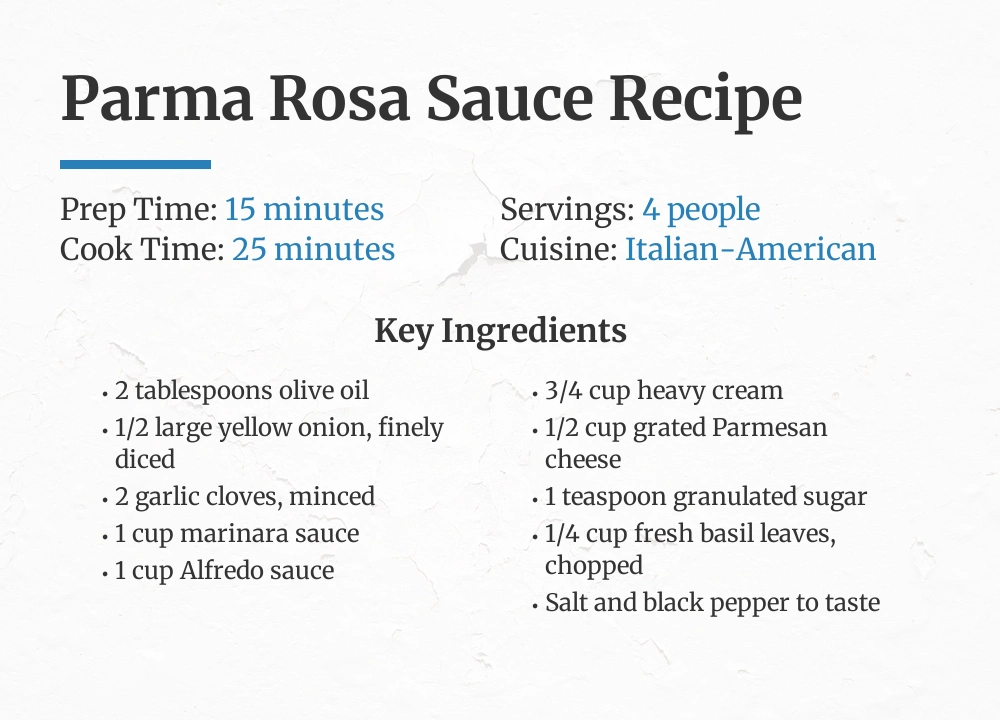
As an Amazon Associate, I may earn a small commission from qualifying purchases at no extra cost to you. This helps me create more valuable, tested content for you.
Finding a sauce that balances rich creaminess with tomato brightness can transform weeknight dinners. Parma rosa sauce achieves this harmony, making it a reliable choice for family meals.
I discovered this recipe while helping my grandmother prepare Sunday dinners. Her version used fresh garden tomatoes and cream from a local farm. That experience taught me how simple ingredients create profound flavors.
This guide provides a detailed method for making parma rosa sauce from scratch. You will learn about ingredient selection, cooking techniques, and nutritional adjustments. The goal is to equip you with knowledge for consistent results.
How to Make Parma Rosa Sauce Recipe
This section outlines the complete process for creating parma rosa sauce. Follow these steps for a smooth, flavorful outcome. The recipe combines marinara and Alfredo elements for a pink hue.
Recipe Details
- Prep Time: 15 minutes
- Cook Time: 25 minutes
- Servings: 4 people
- Course: Main Course
- Cuisine: Italian-American
- Diet: Vegetarian
Ingredients
- 2 tablespoons olive oil
- 1/2 large yellow onion, finely diced
- 2 garlic cloves, minced
- 1 cup marinara sauce
- 1 cup Alfredo sauce
- 3/4 cup heavy cream
- 1/2 cup grated Parmesan cheese
- 1 teaspoon granulated sugar
- 1/4 cup fresh basil leaves, chopped
- Salt and black pepper to taste
Instructions
- Heat olive oil in a medium saucepan over medium heat. Add diced onion and cook until translucent, about 5 minutes.
- Stir in minced garlic and cook for 1 minute until fragrant. Avoid browning the garlic to prevent bitterness.
- Pour in marinara sauce and bring to a gentle simmer. Let it cook for 10 minutes to meld flavors.
- Reduce heat to low and add Alfredo sauce, heavy cream, and sugar. Whisk continuously to combine.
- Simmer for 5 minutes, then stir in Parmesan cheese until melted. Add basil, salt, and pepper.
- Remove from heat and serve immediately over cooked pasta. Store leftovers in an airtight container.
Nutrition
- Calories: 320 kcal
- Protein: 8 g
- Fat: 28 g
- Carbohydrates: 10 g
- Sugar: 6 g
- Fiber: 2 g
- Sodium: 650 mg
- Cholesterol: 75 mg
Cooking Method
This sauce uses a stovetop simmering technique. Start by sautéing aromatics like onion and garlic to build a flavor base. Adding tomatoes and cream later prevents curdling.
Constant stirring during cream incorporation ensures a smooth texture. Simmering at low heat allows ingredients to integrate without separating. This method preserves the sauce’s velvety consistency.
Tools Needed
- Medium saucepan
- Whisk or wooden spoon
- Measuring cups and spoons
- Cheese grater
- Knife and cutting board
Ingredient Analysis
Understanding each component helps you make informed substitutions. Quality ingredients elevate the final dish. This section breaks down key elements and their roles.
Tomatoes
Tomatoes provide acidity and umami depth. Canned crushed tomatoes offer consistency, while fresh cherry tomatoes add sweetness. San Marzano varieties are less acidic.
Peeled tomatoes blend smoothly for a uniform sauce. The cooking process breaks down tomatoes, releasing natural sugars. This balances the cream’s richness.
Cream
Heavy cream contributes fat for a lush mouthfeel. Its high butterfat content emulsifies with tomato liquids. Lower-fat options like half-and-half can thin the sauce.
Cream should be added off direct heat to prevent scalding. Temperature control is crucial for maintaining texture. Fresh cream has a neutral pH, which stabilizes the mixture.
Cheese
Parmesan cheese adds saltiness and umami. Aged varieties have crystalline structures that melt evenly. Grating cheese yourself avoids anti-caking agents.
Cheese incorporation at the end preserves its flavor. Overheating can cause oil separation. A microplane grater ensures fine, quick-melting shreds.
Nutritional Breakdown
This sauce provides energy from fats and carbohydrates. The combination includes vitamins A and C from tomatoes. Calcium from dairy supports bone health.
Using full-fat dairy increases saturated fat content. Balancing portions with vegetables adds fiber. The protein content comes mainly from cheese and cream.
Tomatoes contain lycopene, an antioxidant enhanced by cooking. Olive oil contributes monounsaturated fats. These elements support cardiovascular health when consumed in moderation.
Dietary Adaptations
Adjustments accommodate various dietary needs without sacrificing flavor. Simple swaps make this recipe versatile. Always test substitutions for consistency.
Vegan Version
Replace dairy cream with cashew cream or coconut milk. Use nutritional yeast instead of Parmesan cheese. Plant-based Alfredo sauces are available commercially.
Marinara sauce should be vegan-certified. Olive oil remains the cooking fat. These changes create a lactose-free alternative with similar richness.
Gluten-Free Option
The sauce is naturally gluten-free. Serve with gluten-free pasta like brown rice or corn varieties. Check labels on pre-made sauces for hidden gluten.
Thickeners in some Alfredo sauces may contain wheat. Making both sauces from scratch ensures safety. This adaptation suits celiac disease or gluten sensitivity.
Low-Sodium Adjustment
Reduce salt by using low-sodium marinara sauce. Omit added salt and rely on herbs for flavor. Parmesan cheese can be replaced with a salt-free alternative.
Fresh tomatoes have less sodium than canned versions. Rinsing canned tomatoes removes excess salt. This approach helps manage blood pressure.
Cultural and Historical Context
Parma rosa sauce originates from Italian-American cuisine. It blends elements of Northern Italian cream sauces with Southern tomato bases. The name suggests inspiration from Parma, known for Parmesan cheese.
This sauce gained popularity in mid-20th century American households. It offered a departure from classic marinara. Restaurants often use it for pink pasta dishes.
The combination reflects immigrant adaptations of traditional recipes. It represents a fusion approach to Italian cooking. Understanding this history enriches the cooking experience.
Common Mistakes and Expert Tips
Avoiding pitfalls ensures a perfect sauce every time. These tips come from professional kitchen experience. They address frequent issues home cooks face.
Curdling Prevention
Curdling occurs when dairy overheats or acid levels are too high. Temper the cream by adding it to warm, not boiling, tomato sauce. Stir constantly during incorporation.
Using full-fat dairy reduces separation risks. A pinch of sugar neutralizes tomato acidity. These steps maintain a smooth emulsion.
Consistency Control
For a thicker sauce, simmer longer to reduce liquids. Add a tablespoon of tomato paste for extra body. A thinner sauce requires more cream or a splash of pasta water.
Starch from cooked pasta water helps bind ingredients. Adjust consistency off heat to avoid overcooking. This flexibility suits different pasta shapes.
Flavor Enhancement
Toasting garlic lightly unlocks its sweetness. Fresh basil added at the end preserves its aroma. A dash of red pepper flakes introduces subtle heat.
Balancing sweetness with sugar counters tomato tartness. Taste and adjust seasoning before serving. These small changes elevate the overall profile.
Serving and Pairing Suggestions
This sauce pairs well with various pasta shapes like bow ties or cavatappi. The ridges hold the creamy texture effectively. Serve it as a main course with a side salad.
Protein additions like grilled chicken or shrimp complement the sauce. Vegetarian options include roasted vegetables. Garlic bread absorbs excess sauce nicely.
For wine pairings, choose a light white like Pinot Grigio. The acidity cuts through the creaminess. This creates a balanced meal experience.
Storage and Reheating
Store leftover sauce in an airtight container for up to 3 days. Refrigeration preserves freshness. Freezing is possible for one month.
Reheat gently on the stovetop over low heat. Add a splash of cream or water to restore consistency. Microwave reheating may cause separation.
Stir frequently during reheating to distribute heat evenly. Avoid boiling to maintain texture. These methods keep the sauce quality intact.
The Science Behind the Sauce
Emulsification binds water-based tomatoes and fat-based cream. Lecithin in egg yolks in some Alfredo sauces aids this process. Heat energy causes protein denaturation.
Acid-base reactions occur between tomatoes and dairy. Sugar addition reduces perceived acidity. Understanding these principles helps troubleshoot issues.
Maillard reactions from sautéing onions develop flavor compounds. This scientific approach ensures repeatable results. It transforms simple cooking into precise technique.
Frequently Asked Questions
What is parma rosa sauce?
Parma rosa sauce is a creamy tomato blend often used in pasta dishes. It combines marinara and Alfredo sauces for a pink color and balanced flavor.
Why is it called parma rosa?
The name likely references Parma, Italy, famous for Parmesan cheese. “Rosa” means pink in Italian, describing its color from tomato and cream mixing.
How can I make a dairy-free version?
Use coconut milk or cashew cream instead of dairy. Substitute nutritional yeast for Parmesan cheese. Ensure marinara sauce is vegan.
What pasta works best with this sauce?
Short pasta like rotini or bow ties hold the sauce well. Their shapes trap the creamy texture. Long pasta like fettuccine also pairs nicely.
Can I use fresh tomatoes instead of canned?
Yes, roast cherry tomatoes to concentrate flavor. Peel and seed larger tomatoes for a smoother sauce. Adjust cooking time for freshness.
How do I prevent the sauce from splitting?
Add cream off direct heat and stir constantly. Use full-fat dairy for stability. Avoid boiling after adding dairy ingredients.
Is this sauce suitable for freezing?
Yes, freeze in portion-sized containers. Thaw in the refrigerator before reheating. Stir well after thawing to recombine ingredients.
What are common variations of this recipe?
Some add mushrooms or spinach for extra vegetables. Protein like chicken or sausage makes it heartier. Herbs like oregano can replace basil.