Reina
Reina 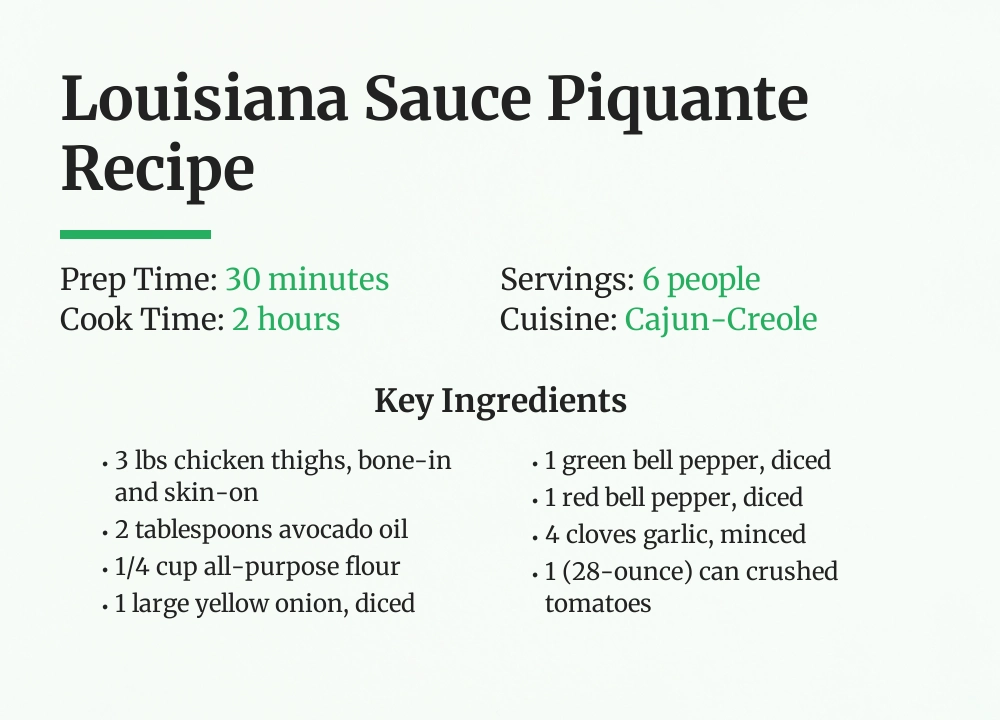
As an Amazon Associate, I may earn a small commission from qualifying purchases at no extra cost to you. This helps me create more valuable, tested content for you.
The first time I stirred a pot of sauce piquante in my own kitchen, the aroma transported me straight to a Louisiana backyard gathering. I was determined to capture that authentic taste without traveling hundreds of miles. This recipe is the result of that dedication, tested and refined to help you achieve the same deep, satisfying results.
Louisiana sauce piquante is a robust, tomato-based stew known for its spicy kick and complex layers of flavor. It embodies the spirit of Cajun and Creole cooking, where simple ingredients transform into something extraordinary. You will find this dish is both a culinary project and a deeply rewarding experience.
Beyond the recipe itself, we will explore the nutritional profile, historical roots, and practical adaptations. My goal is to provide a complete resource so you can cook with confidence and understanding. Let’s begin with the hands-on process of making the sauce piquante.
How to Make Louisiana Sauce Piquante Recipe
This section provides the complete recipe with detailed steps. Read through all instructions before you start cooking. Having your ingredients prepared in advance, a concept known as mise en place, will make the process smoother.
Recipe Details
- Prep Time: 30 minutes
- Cook Time: 2 hours
- Servings: 6 people
- Course: Main Course
- Cuisine: Cajun-Creole
- Diet: Gluten-Free adaptable
Ingredients
- 3 lbs chicken thighs, bone-in and skin-on
- 2 tablespoons avocado oil
- 1/4 cup all-purpose flour
- 1 large yellow onion, diced
- 2 stalks celery, chopped
- 1 green bell pepper, diced
- 1 red bell pepper, diced
- 4 cloves garlic, minced
- 1 (28-ounce) can crushed tomatoes
- 4 cups chicken broth
- 2 tablespoons Cajun seasoning
- 1 teaspoon cayenne pepper
- 1 teaspoon black pepper
- 2 bay leaves
- 1/4 cup fresh parsley, chopped
- Salt to taste
Instructions
- Pat the chicken thighs dry with paper towels and season generously with salt and black pepper. Heat the avocado oil in a large Dutch oven over medium-high heat. Brown the chicken in batches, skin-side down first, for about 5-7 minutes per side until golden. Remove the chicken and set aside.
- Reduce the heat to medium. Sprinkle the flour into the hot oil and fat in the pot. Cook, stirring constantly, for about 10-15 minutes until the roux reaches a deep brown color, similar to milk chocolate. Be careful not to burn it.
- Add the diced onion, celery, and bell peppers to the roux. This mixture is the holy trinity of Cajun cooking. Sauté for 8-10 minutes until the vegetables soften and become aromatic. Stir in the minced garlic and cook for one more minute.
- Pour in the crushed tomatoes and chicken broth, stirring to combine everything and scrape any browned bits from the bottom of the pot. Add the Cajun seasoning, cayenne pepper, black pepper, and bay leaves.
- Return the browned chicken thighs to the pot, submerging them in the liquid. Bring the sauce to a boil, then immediately reduce the heat to low. Cover the pot and let it simmer gently for 1.5 to 2 hours, until the chicken is fall-off-the-bone tender.
- Remove the bay leaves. Skim off any excess fat from the surface if desired. Stir in the fresh parsley. Taste and adjust seasoning with more salt, black pepper, or hot sauce if needed. Serve hot over rice.
Nutrition
- Calories: 420 kcal
- Protein: 35 g
- Fat: 22 g
- Carbohydrates: 18 g
- Sugar: 8 g
- Fiber: 4 g
- Sodium: 980 mg
- Cholesterol: 165 mg
Cooking Method
This recipe uses a braising technique. The initial sear on the chicken creates a flavorful fond in the pot. A slow, moist simmer in a covered Dutch oven then tenderizes the meat and allows the flavors to meld. The key stages are creating a dark roux, building the vegetable base, and the long, slow cook.
Tools Needed
- Large Dutch oven or heavy-bottomed pot
- Sharp chef’s knife
- Cutting board
- Wooden spoon or sturdy spatula
- Measuring cups and spoons
Ingredient Selection and Purpose
Every component in sauce piquante has a specific role. Understanding these roles helps you make informed substitutions and appreciate the dish’s balance.
Chicken
Bone-in, skin-on chicken thighs are my preference for this stew. The bones contribute gelatin to the broth during the long simmer, creating a richer mouthfeel. The skin provides fat for browning and building the roux. You can use a whole chicken cut into pieces, but thighs remain moist and flavorful. Boneless, skinless chicken breasts can be used for a leaner version, but they may become dry if overcooked.
The Holy Trinity and Aromatics
Onion, celery, and bell peppers form the holy trinity, the vegetable backbone of countless Cajun and Creole dishes. The onion provides a sweet base, celery adds an earthy note, and bell peppers offer a mild, vegetal flavor. Garlic introduces a pungent, aromatic quality that deepens the overall flavor profile. The specific ratio and fine dice ensure they cook evenly and integrate fully into the sauce.
Tomatoes and Acidity
Crushed tomatoes provide body and a tangy sweetness that balances the spice. The acidity in tomatoes helps tenderize the chicken and brightens the rich sauce. Using high-quality canned tomatoes ensures consistent flavor year-round. The tomato acts as the primary liquid base alongside the broth, creating the “sauce” in sauce piquante.
Spices and Heat
Cajun seasoning is a pre-mixed blend typically containing paprika, garlic powder, onion powder, oregano, and thyme. It delivers a complex, savory foundation. Cayenne pepper is your primary source of heat; its sharp, clean burn is a signature of the dish. Black pepper adds another layer of pungency. The level of spice is adjustable, but a noticeable heat is characteristic of a true sauce piquante.
Nutritional Perspective
As a dish, sauce piquante offers a balanced macronutrient profile. The chicken is an excellent source of complete protein, essential for muscle repair and satiety. Using avocado oil for the roux introduces monounsaturated fats, which are heart-healthy.
The holy trinity of vegetables contributes dietary fiber, vitamins A and C from the bell peppers, and various antioxidants. The lycopene in cooked tomatoes is more bioavailable and is linked to several health benefits. The sodium content is manageable by using low-sodium broth and controlling added salt.
This meal is inherently gluten-free if you ensure your Cajun seasoning and broth contain no gluten-containing additives. The long cooking time makes the nutrients from the vegetables and chicken more accessible for digestion. Serving it over brown rice instead of white can further increase the fiber content.
Adapting the Recipe
The foundational recipe is versatile. You can modify it to suit various dietary needs and preferences without losing its essential character.
Gluten-Free Version
To make this dish gluten-free, substitute the all-purpose flour with a gluten-free flour blend or rice flour for the roux. The technique remains identical. Always verify that your Cajun seasoning and chicken broth are certified gluten-free, as some brands use wheat-based anti-caking agents or flavorings.
Alternative Proteins
While chicken is classic, sauce piquante is famously adaptable. Venison is a popular choice, especially in hunting communities, lending a gamey depth. Alligator meat offers a unique, lean protein with a flavor similar to chicken and fish. For a seafood variation, crawfish or shrimp can be added in the last 10 minutes of cooking. Beef stew meat also works well, though it may require a longer simmering time to become tender.
Lower-Fat Preparation
For a lower-fat version, use boneless, skinless chicken breasts and skip the browning step. Create the roux using only oil, omitting the chicken fat. You can also degrease the sauce thoroughly after cooking by chilling it and skimming the solidified fat from the top before reheating.
Origins and Evolution
Sauce piquante has roots in the rural, country cooking of the Acadians, or Cajuns, in South Louisiana. The name itself is French, meaning “piquant sauce,” pointing to its sharp, spicy character. It is a quintessential one-pot meal born from necessity, designed to feed large families with readily available ingredients.
The dish reflects the cultural melting pot of Louisiana. The French technique of making a roux merges with the Spanish introduction of tomatoes and the African influence of slow-simmered stews and use of spices. It differs from a traditional Creole stew, which might use a lighter roux and more herbs, by being typically darker, spicier, and associated with Cajun country.
Every family along the bayous has its own version, with debates over the best protein, the ideal level of heat, and the perfect roux color. This recipe honors those traditions while providing a reliable, tested method for the modern home cook.
Refining Your Technique
Mastering sauce piquante involves attention to a few critical details. These insights come from both professional training and personal trial and error in the kitchen.
The Roux
The most common mistake is burning the roux. A burnt roux will make the entire dish bitter and is irreparable. Use a heavy-bottomed pot like a Dutch oven for even heat distribution. Stir constantly and be patient; achieving a milk chocolate color takes time. If you see black specks, you must discard it and start over. The roux is the foundation of flavor, so give it your full attention.
Layering Flavors
Do not rush the step of sautéing the holy trinity. This process, called sweating, allows the vegetables to release their moisture and sugars, which caramelize and build a deep flavor foundation. Adding the garlic last prevents it from burning and becoming acrid. Browning the chicken properly creates fond, those browned bits in the pot that dissolve into the sauce, adding immense savoriness.
Simmering and Fat Management
A gentle simmer is crucial. A rolling boil can break down the chicken too much, making it stringy, and cause the tomatoes to become too acidic. The long, slow cook is what tenderizes the meat and allows the flavors to marry. After cooking, you will likely have rendered fat on the surface. Skimming this off results in a cleaner, more refined sauce without sacrificing richness.
Serving and Preservation
Sauce piquante is typically served over a bed of steamed long-grain white rice, which helps absorb the flavorful sauce. A side of crusty French bread is perfect for sopping up every last bit. For a traditional Louisiana meal, pair it with a simple green salad or a side of maque choux, a creamy corn dish.
Leftovers can be stored in an airtight container in the refrigerator for up to 4 days. The flavors often improve after a day, as the spices continue to meld. For longer storage, freeze portions in airtight containers for up to 3 months. Thaw in the refrigerator overnight and reheat gently on the stovetop, adding a splash of broth or water if the sauce has thickened too much.
Flavor Development Science
The deep flavor of this dish is a result of several chemical processes. The Maillard reaction occurs when the chicken skin and flour in the roux are exposed to high heat, creating hundreds of new flavor compounds. This reaction is responsible for the complex, savory, and roasted notes.
Braising the chicken in an acidic tomato sauce helps break down tough connective tissues into gelatin, resulting in a tender texture. The slow simmering allows for the infusion of fat-soluble flavors from the spices and vegetables into the liquid, creating a cohesive and layered sauce. The careful balance of acidity from the tomatoes and heat from the peppers stimulates multiple taste receptors on the tongue.
Frequently Asked Questions
What is the main characteristic of a good sauce piquante?
A good sauce piquante has a balanced, deep flavor. It should feature a noticeable but not overwhelming heat, a rich, dark color from a properly cooked roux, and tender protein that falls apart easily. The sauce should be thick enough to coat the back of a spoon but not pasty.
Can I make this recipe with alligator meat?
Yes, alligator is a traditional and excellent choice. Use one pound of diced alligator meat. Because it is lean, sear it quickly over high heat to lock in juices before adding it to the simmering sauce for the final 20-30 minutes of cooking to prevent it from becoming tough.
What is the difference between Cajun and Creole versions?
The primary difference often lies in location and ingredient availability. Cajun sauce piquante, from rural areas, typically uses a darker roux and is often spicier. Creole versions, from New Orleans, might use a lighter roux or butter-based sauce and include a wider array of herbs like thyme and oregano.
How can I reduce the sodium in this dish?
Use low-sodium or no-salt-added chicken broth and canned tomatoes. Make your own Cajun seasoning blend to control the salt content. Rely more on the natural flavors from the browned meat, vegetables, and additional black pepper or cayenne for taste without extra sodium.
Why did my roux turn out lumpy?
A lumpy roux usually results from adding the flour to cold oil or adding the vegetables before the roux is fully incorporated. Ensure your oil is hot before sprinkling in the flour, and whisk continuously. If lumps form, you can strain the roux or simply continue cooking and stirring; they often dissolve with the addition of liquid and prolonged simmering.
Is it necessary to use a Dutch oven?
A Dutch oven is highly recommended due to its thick walls and heavy bottom, which distribute heat evenly and prevent hot spots that can burn the roux or the stew. If you do not have one, a heavy-bottomed stockpot is the next best option, but you will need to monitor the heat more carefully.
Can I make sauce piquante in a slow cooker?
Yes, you can adapt it. Complete the browning of the chicken and the making of the roux in a skillet on the stovetop. Then transfer the roux, vegetables, liquids, and seasonings to the slow cooker. Add the chicken, cover, and cook on low for 6-8 hours or on high for 3-4 hours.