Reina
Reina 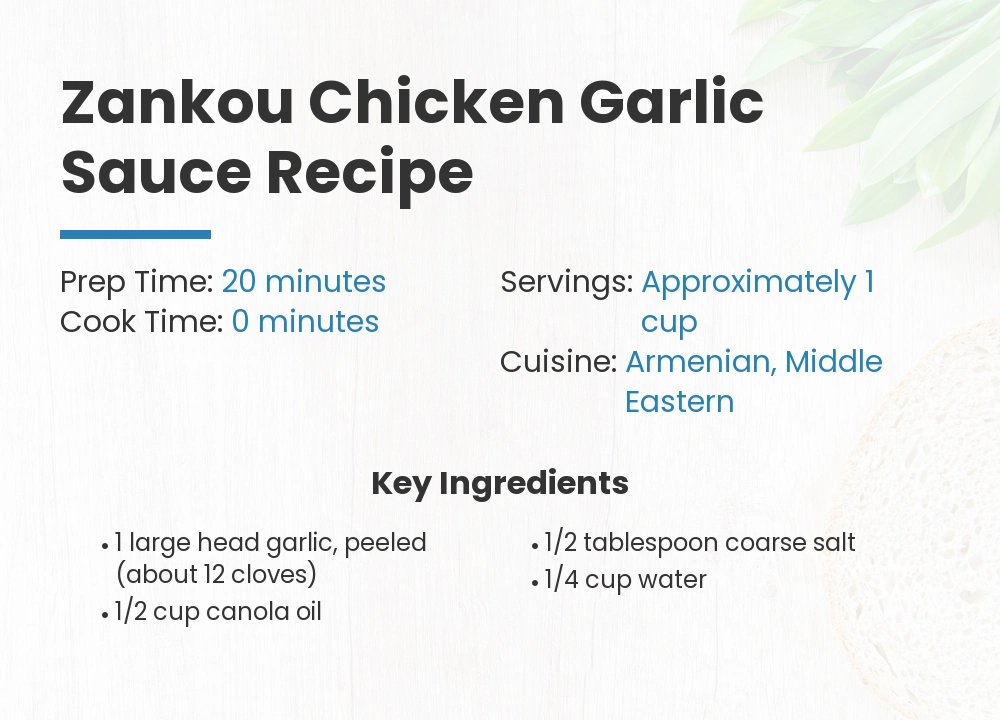
As an Amazon Associate, I may earn a small commission from qualifying purchases at no extra cost to you. This helps me create more valuable, tested content for you.
That unmistakable garlic sauce from Zankou Chicken has a way of sticking with you long after the meal is over. I remember standing in line at their Los Angeles location, captivated by the aroma of rotisserie chicken and spices. The first time I dipped a piece of warm pita into that creamy, pungent sauce, I knew I had to learn how to make it myself.
After moving away from California, I missed having easy access to this condiment. My background in dietetics and culinary history drove me to experiment in my own kitchen. Through trial and error, I developed a method that closely mirrors the original.
This article will walk you through creating that iconic garlic sauce step by step. You will also discover its nutritional profile, cultural roots, and ways to incorporate it into various meals. Let us begin with the core recipe so you can start making it right away.
How to Make Zankou Chicken Garlic Sauce Recipe
This section provides the complete formula for replicating the famous garlic sauce. Follow these measurements and steps for consistent results. The recipe yields a condiment that pairs well with many dishes.
Recipe Details
- Prep Time: 20 minutes
- Cook Time: 0 minutes
- Servings: Approximately 1 cup
- Course: Condiment
- Cuisine: Armenian, Middle Eastern
- Diet: Vegan, Vegetarian
Ingredients
- 1 large head garlic, peeled (about 12 cloves)
- 1/2 cup canola oil
- 1/3 cup fresh lemon juice
- 1/2 tablespoon coarse salt
- 1/4 cup water
- 1 small cooked and riced russet potato (optional for thickness)
Instructions
- Prepare the garlic by peeling each clove thoroughly. This ensures a smooth texture.
- If using potato, boil it until tender, then pass it through a potato ricer or mash finely. Let it cool completely.
- Combine garlic, lemon juice, and salt in a blender. Pulse until the mixture forms a paste.
- With the blender running on low speed, slowly drizzle in the canola oil. This gradual addition helps emulsify the sauce.
- Add water and the riced potato if using. Blend until the consistency is creamy and uniform.
- Taste the sauce and adjust salt or lemon juice if needed. The flavor should be bold and garlicky.
- Transfer to an airtight container and refrigerate for at least one hour before serving. This allows the flavors to meld.
Nutrition
- Calories: 130 kcal
- Protein: 0.6 g
- Fat: 13 g
- Carbohydrates: 3.5 g
- Sugar: 0.6 g
- Fiber: 0.3 g
- Sodium: 320 mg
- Cholesterol: 0 mg
Cooking Method
This sauce requires no heat application. The preparation relies on mechanical emulsification through blending. Combining oil and acid with garlic creates a stable mixture without eggs.
The optional potato acts as a natural thickener, contributing to the creamy body. This method preserves the raw, strong garlic flavor that defines the condiment.
Tools Needed
- High-speed blender or food processor
- Measuring cups and spoons
- Potato ricer or masher if using potato
- Airtight container for storage
- Knife and cutting board for garlic preparation
The Origins of Zankou Chicken
Zankou Chicken began in 1962 in Beirut, Lebanon, founded by an Armenian family. They brought their culinary traditions to Los Angeles, where the chain expanded. The garlic sauce reflects this heritage, drawing from both Armenian and Lebanese cuisines.
This condiment is a staple in Middle Eastern cooking, often served with grilled meats and flatbreads. Understanding its background enriches the cooking experience. It represents a blend of family recipes and regional influences.
Key Ingredients and Their Roles
Each component in this sauce contributes to its flavor and texture. Selecting quality ingredients makes a noticeable difference in the final product.
Garlic
Garlic provides the dominant flavor profile. Use fresh, firm heads for the best results. Older garlic can develop bitter notes when raw.
The allicin compound in garlic offers health benefits, including antimicrobial properties. Peeling cloves completely prevents any bitter bits in the sauce.
Canola Oil
Canola oil has a neutral taste that lets garlic shine. Its high smoke point is irrelevant here, but its light texture aids emulsification.
This oil contains monounsaturated fats, which are better for heart health than saturated alternatives. You can substitute with other neutral oils like sunflower or grapeseed.
Lemon Juice
Fresh lemon juice adds necessary acidity to balance the garlic. Bottled juice often lacks brightness and can impart off-flavors.
The citric acid helps preserve the sauce and enhances flavor complexity. It also assists in breaking down garlic compounds for a smoother blend.
Coarse Salt
Coarse salt dissolves well during blending and seasons evenly. It enhances the other ingredients without overpowering.
Salt also acts as a preservative, extending the sauce’s shelf life. Adjust the amount based on your dietary needs.
Potato
Cooked and riced potato gives body to the sauce without eggs. It creates a creamy consistency similar to mayonnaise.
Russet potatoes work best due to their high starch content. This addition makes the recipe suitable for vegan diets.
Nutritional Profile and Health Considerations
This garlic sauce is calorie-dense primarily from oil, but it offers some benefits. Garlic contains antioxidants and may support immune function.
Using canola oil provides omega-3 fatty acids, which are anti-inflammatory. The sauce is low in carbohydrates and sugar, making it suitable for low-carb diets.
Monitor sodium intake if you have hypertension. The values listed are estimates per serving; actual nutrition depends on exact ingredients and portions.
Adapting the Recipe for Special Diets
This recipe is naturally vegan and gluten-free. For a lower-fat version, reduce the oil and increase water or lemon juice.
If you avoid nightshades, omit the potato and use a tablespoon of aquafaba or silken tofu instead. Those with garlic sensitivities can roast the cloves first to mellow the flavor.
For a nut-free version, ensure all ingredients are certified, though the base recipe contains no nuts. Always check labels for potential cross-contamination if allergies are a concern.
Avoiding Common Preparation Errors
One frequent mistake is adding oil too quickly, which can break the emulsion. Drizzle it slowly while the blender runs to maintain stability.
Using warm potato can cause the sauce to separate. Always cool cooked potatoes completely before incorporating.
Over-blending might incorporate too much air, altering the texture. Pulse until just combined for the ideal consistency.
Storing the sauce improperly can lead to spoilage. Keep it refrigerated in a sealed container and use within five days.
Serving Ideas and Food Pairings
This garlic sauce complements grilled chicken, beef shawarma, or falafel. Spread it on wraps or use it as a dip for fresh vegetables.
Try it with roasted asparagus or as a dressing for potato salad. It also enhances grain bowls, like the Chicken Tarna bowl from Zankou.
For a complete meal, serve with warm pita bread, cucumber slices, and feta cheese. The sauce adds depth to simple home-cooked Mediterranean dishes.
The Emulsification Process Explained
Emulsification binds oil and water-based liquids that normally separate. In this recipe, garlic and potato act as emulsifiers, stabilizing the mixture.
Blending creates shear force that disperses oil droplets throughout the liquid. The acid from lemon juice helps maintain this structure by reducing surface tension.
Understanding this science helps troubleshoot if the sauce breaks. If separation occurs, re-blend with a small amount of water or more potato.
Storage and Shelf Life
Store the sauce in an airtight container in the refrigerator. It thickens when cold, so let it sit at room temperature for 10 minutes before use.
Properly stored, it lasts up to five days. Do not freeze, as this can alter the texture and cause separation upon thawing.
If you notice any off odors or discoloration, discard it immediately. Always use clean utensils to prevent contamination.
Frequently Asked Questions
What is Zankou chicken garlic sauce made of?
It typically contains garlic, canola oil, lemon juice, salt, and sometimes potato for thickness. This creates an eggless, creamy condiment with a strong garlic flavor.
Why does my garlic sauce taste bitter?
Bitterness often comes from over-blended garlic or old cloves. Use fresh garlic and avoid over-processing to prevent this issue.
Can I make this sauce without a blender?
Yes, use a mortar and pestle to crush garlic into a paste, then whisk in other ingredients. The texture may be slightly grainier but still usable.
How can I make the sauce spicier?
Add a small amount of cayenne pepper or fresh chili peppers during blending. Adjust to your preferred heat level.
Is Zankou garlic sauce vegan?
Yes, the traditional copycat recipe contains no animal products, making it suitable for vegan diets.
What dishes pair well with this garlic sauce?
It works with chicken shawarma wraps, falafel, grilled meats, roasted vegetables, and as a spread for sandwiches or bread.
Can I use olive oil instead of canola oil?
Yes, but extra virgin olive oil has a stronger flavor that might overpower the garlic. Light olive oil is a better substitute.
How long does homemade garlic sauce last?
When refrigerated properly, it stays fresh for about five days. Always check for signs of spoilage before use.