Reina
Reina 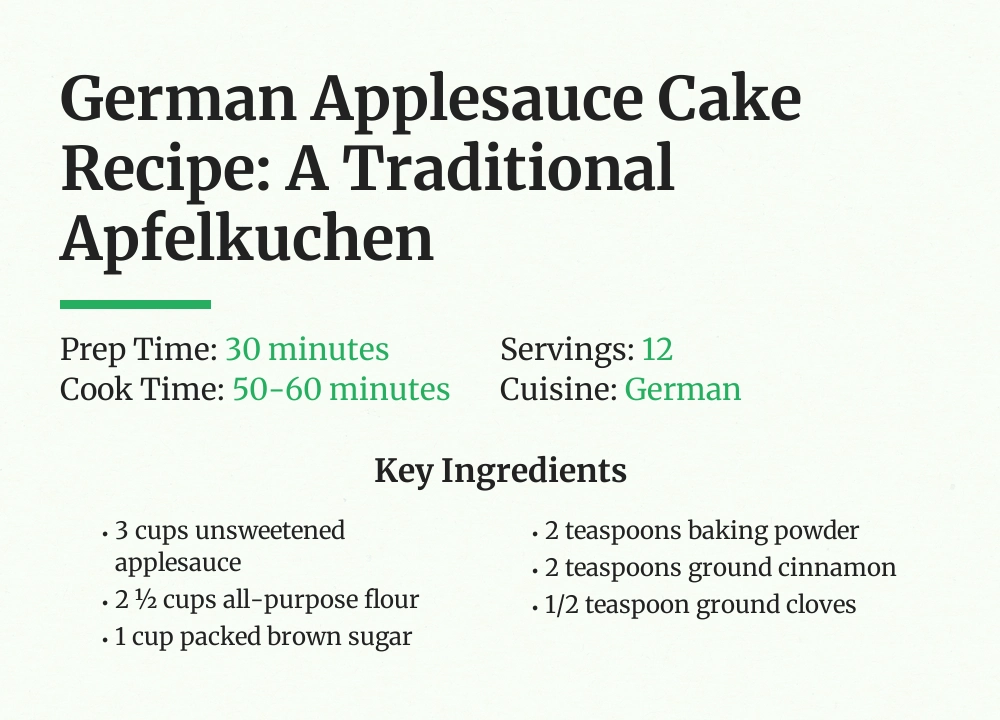
As an Amazon Associate, I may earn a small commission from qualifying purchases at no extra cost to you. This helps me create more valuable, tested content for you.
The scent of cinnamon and baked apples from my neighbor’s kitchen was a constant in my childhood. She would bring over a slice of this moist, spiced cake, which she called Apfelkuchen. It was nothing like the overly sweet desserts I knew. This cake was substantial, fragrant, and deeply satisfying.
Years later, as a dietitian, I appreciate its balance of flavor and nutrition. The applesauce provides natural sweetness and moisture, allowing for less added fat and sugar. This German applesauce cake recipe is the one I return to, a testament to both tradition and sensible eating.
It is a versatile dessert, equally suited for a formal Kaffee und Kuchen afternoon or a simple family treat. This guide will provide you with the complete method, from selecting the right apples to understanding the science behind its perfect crumb.
How to Make German Applesauce Cake Recipe
This section contains the complete, actionable recipe. Follow these steps for a reliably excellent result. The subsequent sections will delve into the why and how of each ingredient and technique.
Recipe Details
- Prep Time: 30 minutes
- Cook Time: 50-60 minutes
- Servings: 12
- Course: Dessert
- Cuisine: German
- Diet: Vegetarian
Ingredients
- 3 cups unsweetened applesauce
- 2 ½ cups all-purpose flour
- 1 cup packed brown sugar
- 1/2 cup unsalted butter, softened
- 2 large eggs
- 2 teaspoons baking powder
- 2 teaspoons ground cinnamon
- 1/2 teaspoon ground cloves
- 1/4 teaspoon salt
- 1 tablespoon vanilla sugar or 1 teaspoon vanilla extract
Instructions
- Preheat your oven to 350°F (180°C). Grease and flour a 9-inch tube pan or a Bundt pan.
- In a large bowl, cream together the softened butter and brown sugar until the mixture is light and fluffy.
- Beat in the eggs one at a time, ensuring each is fully incorporated before adding the next. Stir in the vanilla extract.
- In a separate bowl, whisk together the flour, baking powder, cinnamon, cloves, and salt.
- Gradually add the dry ingredients to the creamed mixture, alternating with the unsweetened applesauce. Begin and end with the dry ingredients. Mix until just combined; do not overmix.
- Pour the batter into the prepared pan, spreading it evenly.
- Bake for 50-60 minutes, or until a wooden skewer inserted into the center of the cake comes out clean.
- Allow the cake to cool in the pan for 15 minutes before inverting it onto a wire rack to cool completely.
Nutrition
- Calories: 285 kcal
- Protein: 4 g
- Fat: 9 g
- Carbohydrates: 48 g
- Sugar: 26 g
- Fiber: 2 g
- Sodium: 85 mg
- Cholesterol: 48 mg
Cooking Method
This cake is prepared using the creaming method. This technique incorporates air into the butter and sugar, which helps the cake rise. The addition of applesauce is done alternately with the dry ingredients to prevent the batter from curdling and to ensure an even, tender texture.
Tools Needed
- 9-inch tube pan or Bundt pan
- Two large mixing bowls
- Electric hand mixer or stand mixer
- Whisk
- Measuring cups and spoons
- Wire cooling rack
Understanding Your Ingredients
Each component in this recipe plays a specific role. Knowing their function allows you to make informed substitutions and troubleshoot any issues that may arise during baking.
Applesauce
Unsweetened applesauce is the cornerstone of this cake. It acts as a humectant, retaining moisture and resulting in a dense, tender crumb that stays fresh for days. It also partially replaces fats, contributing to a lower overall fat content compared to many butter cakes.
For a more complex flavor, consider using a chunky, homemade applesauce. The texture provides small pockets of intense apple flavor. The type of apple used in the sauce matters; tart varieties like Granny Smith or Boskoop offer a pleasant contrast to the sweetness.
Flour and Leavening
All-purpose flour provides the structure for the cake. Its medium protein content creates a stable but tender crumb. Baking powder is the primary leavening agent, reacting with moisture and heat to produce carbon dioxide gas that makes the cake rise.
It is crucial to measure your flour correctly. Spoon it into the measuring cup and level it off with a knife. Scooping directly from the bag can compress the flour, leading to an excess and a dry, dense final product.
Spices: Cinnamon and Clove
The warm spiced flavor is non-negotiable in a traditional Apfelkuchen. Ground cinnamon provides a sweet, woody base note. A small amount of ground cloves adds depth and a slightly pungent warmth that complements the apples perfectly.
The quality of your spices directly impacts the cake’s aroma. Ground spices lose their potency over time. If your cinnamon doesn’t smell fragrant when you open the jar, it is time to replace it.
Fats and Sweeteners
Butter contributes to the cake’s rich flavor and tender texture. Using unsalted butter allows you to control the exact amount of salt in the recipe. Brown sugar is used for its molasses content, which adds moisture and a caramel-like flavor that pairs well with the spices.
The creaming of butter and sugar is a critical step. The goal is to dissolve the sugar and trap tiny air bubbles in the fat. These bubbles expand during baking, contributing to the cake’s lift.
Nutritional Perspective
From a dietary standpoint, this cake has several positive attributes. The primary sweetener comes from the applesauce and a moderate amount of brown sugar. This is a different approach than cakes relying solely on refined sugars.
Applesauce is a source of soluble fiber, specifically pectin. This can aid in digestion and help moderate blood sugar response compared to more refined desserts. The cake also provides small amounts of iron and potassium.
Portion control is key. A single serving, as outlined in the recipe, fits into a balanced diet. The nutritional profile is based on a 2,000-calorie diet, so your needs may vary.
Dietary Adaptations
This recipe is adaptable to various dietary needs without sacrificing its essential character. Here are tested and reliable modifications.
Gluten-Free Version
Replace the all-purpose flour with a 1:1 gluten-free baking blend. These blends typically contain xanthan gum, which replicates the binding properties of gluten. The texture may be slightly more crumbly but will still be excellent.
Vegan Version
Substitute the butter with an equal amount of vegan butter or coconut oil. For the eggs, use commercial egg replacer or a flax egg. To make a flax egg, mix 1 tablespoon of ground flaxseed with 3 tablespoons of water per egg and let it sit for 5 minutes until gelatinous.
Lower-Sugar Version
You can reduce the brown sugar to 3/4 cup. The applesauce will provide sufficient sweetness for most palates. Ensure you are using truly unsweetened applesauce, as many store-bought versions contain added sugar.
The Story of Apfelkuchen
German baking, or Deutsch Konditorei, has a long tradition of fruit-based cakes. Apfelkuchen, meaning “apple cake,” is a category that includes many variations, from the simple sheet cake to the more elaborate gedeckter Apfelkuchen, which has a pastry lid.
This applesauce version, sometimes called Apfelmuskuchen, originates from a practical need to use fruit preserves and sauces. It is a staple of home baking, often associated with family gatherings and the afternoon coffee ritual known as Kaffeezeit.
Its popularity endures because it is unpretentious and highlights the natural flavor of its core ingredient. It is a cake that feels both rustic and refined.
Achieving Perfect Results
Success in baking often comes down to technique. Here are the most common pitfalls and how to avoid them.
Do Not Overmix the Batter
Once the dry and wet ingredients are combined, mix only until no streaks of flour remain. Overmixing develops the gluten in the flour, resulting in a tough, rubbery cake with large tunnels. A few small lumps are preferable to overmixing.
Proper Pan Preparation
Thoroughly grease and flour your Bundt or tube pan. Pay special attention to the central tube and all crevices. This prevents the cake from sticking and breaking upon removal. A non-stick spray with flour included can be very effective.
Testing for Doneness
Oven temperatures can vary. Start checking the cake at the 50-minute mark. The best test is to insert a skewer or a thin butter knife into the center of the cake. It should come out with a few moist crumbs attached, but not with wet batter.
If the top is browning too quickly while the center is still wet, tent the cake loosely with aluminum foil for the remainder of the baking time.
Serving and Storage
This cake is versatile in its serving options. It is superb on its own, still slightly warm from the oven. For a more decadent dessert, a scoop of vanilla ice cream provides a lovely contrast in temperature and texture.
A simple dusting of confectioners’ sugar is a classic finish. For a cinnamon glaze, whisk together 1 cup of sifted confectioners’ sugar, 1/4 teaspoon of cinnamon, and 1-2 tablespoons of milk until smooth. Drizzle it over the cooled cake.
Store any leftover German applesauce cake in an airtight container at room temperature for up to 3 days. For longer storage, it freezes well. Wrap individual slices or the whole cake tightly in cling film and then in foil. It will keep for up to 3 months. Thaw at room temperature.
Frequently Asked Questions
Can I use sweetened applesauce?
You can, but you should reduce the amount of brown sugar in the recipe by about 1/4 cup to account for the added sweetness. Unsweetened applesauce gives you the most control over the final flavor.
My cake is dense. What went wrong?
A certain density is characteristic of this cake, but it should not be gummy. A overly dense result is often due to overmixing the batter, using old baking powder, or measuring the flour incorrectly by packing too much into the cup.
What is the difference between this and Applesauce Spice Cake?
The terms are often used interchangeably. A German Apfelkuchen typically emphasizes the apple flavor with cinnamon and clove, while an American-style spice cake might include a broader blend like nutmeg, allspice, and ginger.
Can I make this in a regular cake pan?
Yes, a 9×13-inch rectangular pan or two 8-inch round pans will work. The baking time will be shorter, likely 30-40 minutes. Always test for doneness with a skewer.
Why did my cake stick to the Bundt pan?
This is usually due to insufficient greasing and flouring. Ensure every surface is covered. Let the cake cool in the pan for 15 minutes before inverting it; this allows the structure to set slightly, making it less likely to break.
How can I make my own applesauce for this recipe?
Peel, core, and chop 4-5 large apples. Place them in a saucepan with 1/2 cup of water and a squeeze of lemon juice. Simmer for 15-20 minutes until soft, then mash with a potato masher or puree for a smoother sauce. Let it cool before using.