Reina
Reina 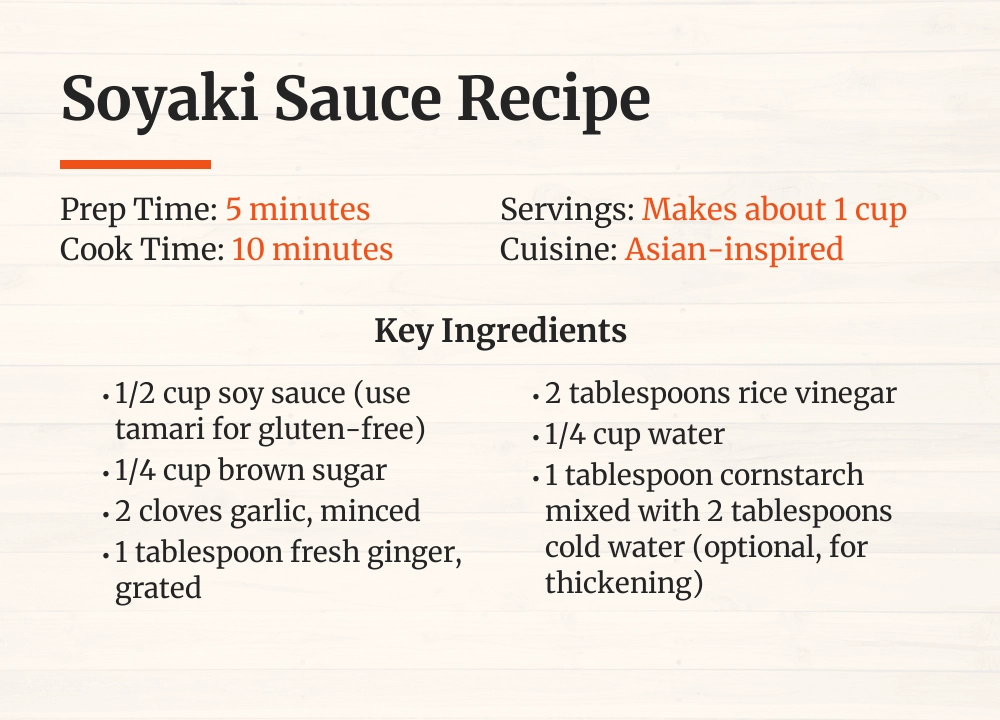
As an Amazon Associate, I may earn a small commission from qualifying purchases at no extra cost to you. This helps me create more valuable, tested content for you.
Store-bought sauces often contain artificial additives and excess sodium, but crafting your own soyaki sauce at home solves that. This versatile condiment brings a perfect balance of sweet and savory to your meals.
I developed this recipe after years of experimenting with Asian-inspired flavors in my kitchen. The first time I used it to baste chicken, the aroma filled the room and the results were incredible. You can achieve the same depth of flavor with simple ingredients.
Soyaki sauce is a homemade version of popular bottled sauces, combining soy sauce, brown sugar, ginger, and garlic. It works as a marinade, glaze, or dipping sauce for various dishes.
This guide will walk you through making it step by step, with insights into its ingredients and uses.
How to Make Soyaki Sauce
This section provides the complete recipe for creating soyaki sauce from scratch. Follow these instructions for a consistent, smooth sauce every time.
Recipe Details
- Prep Time: 5 minutes
- Cook Time: 10 minutes
- Servings: Makes about 1 cup
- Course: Condiment, Sauce
- Cuisine: Asian-inspired
- Diet: Vegan, Gluten-free adaptable
Ingredients
- 1/2 cup soy sauce (use tamari for gluten-free)
- 1/4 cup brown sugar
- 2 cloves garlic, minced
- 1 tablespoon fresh ginger, grated
- 2 tablespoons rice vinegar
- 1/4 cup water
- 1 tablespoon cornstarch mixed with 2 tablespoons cold water (optional, for thickening)
Instructions
- Combine soy sauce, brown sugar, minced garlic, grated ginger, and rice vinegar in a small sauce pot.
- Place the pot over medium heat and bring the mixture to a gentle boil, stirring frequently to dissolve the sugar completely.
- If you prefer a thicker consistency, create a cornstarch slurry by mixing cornstarch with cold water in a separate bowl. Slowly pour it into the simmering sauce while stirring.
- Continue to cook for 2-3 minutes until the sauce thickens to your desired level. Remove from heat and let it cool slightly before use.
- Transfer the sauce to a clean container for storage or use immediately as a marinade or glaze.
Nutrition
- Calories: 30 kcal
- Protein: 1 g
- Fat: 0 g
- Carbohydrates: 7 g
- Sugar: 6 g
- Fiber: 0 g
- Sodium: 600 mg
- Cholesterol: 0 mg
Cooking Method
This sauce is prepared using a stovetop simmering technique. Simmering allows the flavors to meld together without burning the sugars or aromatics. Constant stirring prevents sticking and ensures even thickening.
Tools Needed
- Small sauce pot or saucepan
- Measuring cups and spoons
- Whisk or stirring spoon
- Knife and cutting board for mincing
- Airtight container for storage
Understanding Soyaki Sauce
Soyaki sauce is a homemade condiment inspired by teriyaki and other Asian sauces. It typically features soy sauce as a base, enhanced with sweeteners and spices.
Unlike many bottled premade sauces, this version avoids artificial ingredients and allows full control over flavor and sodium levels. Its versatility makes it suitable for numerous culinary applications.
The name “soyaki” likely derives from its similarity to teriyaki, with “soy” highlighting the soy sauce component. It has gained popularity as a copycat recipe for commercial products.
Historical Roots and Evolution
Soyaki sauce draws from Japanese teriyaki traditions, which involve grilling with a sweet soy glaze. The term “teriyaki” comes from “teri” meaning luster and “yaki” meaning grill.
Over time, Western adaptations led to variations like soyaki, which simplifies the recipe for home cooks. Indonesian kecap manis, a sweet soy sauce, also influences its profile with its use of palm sugar.
This fusion style reflects how global cuisines evolve through ingredient availability and cultural exchange. Making it at home continues this tradition of adaptation.
Ingredient Analysis
Each component in soyaki sauce contributes to its flavor, texture, and nutritional profile. Selecting quality ingredients ensures the best results.
Soy Sauce
Soy sauce is fermented from soybeans, wheat, salt, and water. It provides umami, a savory taste, and saltiness to the sauce. Different brands vary in sodium content and flavor intensity.
For a gluten-free version, use tamari or coconut aminos. These alternatives maintain the umami character while accommodating dietary needs.
Brown Sugar
Brown sugar adds sweetness and helps create a glossy finish. It contains molasses, which contributes to the sauce’s rich color and depth. You can adjust the amount based on your preference for sweetness.
Ginger and Garlic
Fresh ginger and garlic introduce pungent, aromatic notes. Ginger offers a slight heat and digestive benefits, while garlic adds complexity and health properties like antioxidant effects.
Mincing them finely ensures they infuse the sauce evenly without leaving large chunks.
Cornstarch Slurry
Cornstarch mixed with cold water acts as a thickening agent. Adding it to the hot sauce causes the starch granules to swell, creating a smoother consistency than flour-based thickeners.
This step is optional but recommended for glazes and dipping sauces where thickness is desired.
Nutritional Insights
Homemade soyaki sauce can be part of a balanced diet when used in moderation. Its primary nutritional considerations involve sodium and sugar content.
Soy sauce is high in sodium, contributing to about 600 mg per serving in this recipe. Using low-sodium soy sauce reduces this amount significantly.
Brown sugar provides carbohydrates and calories, but you can substitute with monk fruit or stevia for a lower sugar version. The sauce is naturally fat-free and low in protein.
Incorporating ginger and garlic adds trace minerals and compounds with anti-inflammatory properties. Overall, controlling portions helps manage intake.
Adapting for Dietary Needs
This sauce is highly customizable to fit various dietary restrictions. Simple swaps maintain the flavor while meeting specific health goals.
For gluten-free diets, replace regular soy sauce with tamari or coconut aminos. These options provide similar umami without gluten proteins.
To reduce sugar, use erythritol or a sugar-free syrup instead of brown sugar. This adjustment lowers the carbohydrate and calorie count.
Vegan and dairy-free diets are already accommodated, as the recipe contains no animal products. For low-sodium versions, dilute with water or use low-sodium soy sauce.
Avoiding Common Errors
Many home cooks encounter issues when making sauces like this. Awareness of potential mistakes leads to better outcomes.
Overheating the sauce can cause the sugar to burn, resulting in a bitter taste. Keep the heat at medium and stir constantly during the boil.
Adding cornstarch slurry directly to hot liquid without mixing with cold water first may create lumps. Always premix the slurry in a separate bowl.
Using old or low-quality spices can dull the flavor. Fresh ginger and garlic provide the brightest aroma and taste.
Storing the sauce in a non-airtight container may lead to spoilage. Use glass jars or plastic containers with tight lids for longevity.
Serving and Pairing Ideas
Soyaki sauce excels in diverse culinary roles. Its balanced profile complements proteins, vegetables, and grains.
Use it as a marinade for chicken breast, beef, or salmon. Let the protein sit in the sauce for at least 30 minutes before baking or grilling.
It works well as a glaze for stir-fries with broccoli, bell peppers, and carrots. Add it during the last few minutes of cooking to coat the vegetables evenly.
As a dipping sauce, pair it with appetizers like tofu satay, spring rolls, or panko shrimp. The slight sweetness enhances crispy textures.
For a quick meal, toss cooked noodles or rice with a couple of tablespoons of sauce and fresh herbs.
Storage and Preparation Tips
Proper storage extends the shelf life of homemade soyaki sauce. Cool it completely before transferring to a container.
Refrigerate in an airtight jar for up to two weeks. The flavors may intensify over time, so shake well before each use.
For meal prep, make a double batch and freeze portions in ice cube trays. Thaw as needed for quick additions to dishes.
If the sauce separates or thickens too much upon storage, gently reheat it with a splash of water to restore consistency.
The Science of Flavor Development
Understanding the chemical processes in sauce-making improves your technique. Key reactions occur during heating and mixing.
Simmering the sauce allows the sugars to caramelize, contributing to a deeper color and flavor. The Maillard reaction between amino acids and sugars enhances umami.
Cornstarch thickening involves gelatinization, where starch molecules absorb water and swell. This process requires heat and proper ratios to avoid clumping.
Acids like rice vinegar balance the pH, preventing excessive sweetness and adding a subtle tang that brightens the overall profile.
Frequently Asked Questions
What is soyaki sauce?
Soyaki sauce is a homemade condiment similar to teriyaki, made from soy sauce, brown sugar, ginger, and garlic. It serves as a marinade, glaze, or dip.
Can I make soyaki sauce without cornstarch?
Yes, omit the cornstarch slurry for a thinner sauce. Alternatively, simmer longer to reduce and thicken it naturally through evaporation.
How long does homemade soyaki sauce last?
Stored in the refrigerator in a sealed container, it remains fresh for up to two weeks. Always check for off smells or mold before use.
Is soyaki sauce healthy?
It can be part of a healthy diet if used sparingly due to its sodium and sugar content. Opt for low-sodium soy sauce and reduce sugar for a healthier version.
What can I use instead of brown sugar?
Maple syrup, honey, or coconut sugar are suitable substitutes. Adjust quantities to taste, as sweetness levels may vary.
Can I use this sauce for meal prep?
Absolutely, it stores well and can be batch-made for weekly use. Freeze it in portions for longer storage.
How do I prevent the sauce from burning?
Cook over medium heat and stir frequently. Using a heavy-bottomed pot distributes heat evenly and reduces hot spots.
What proteins work best with soyaki sauce?
Chicken, beef, tofu, and fish like salmon absorb the flavors well. Marinate for at least 30 minutes for best infusing flavor.