Reina
Reina 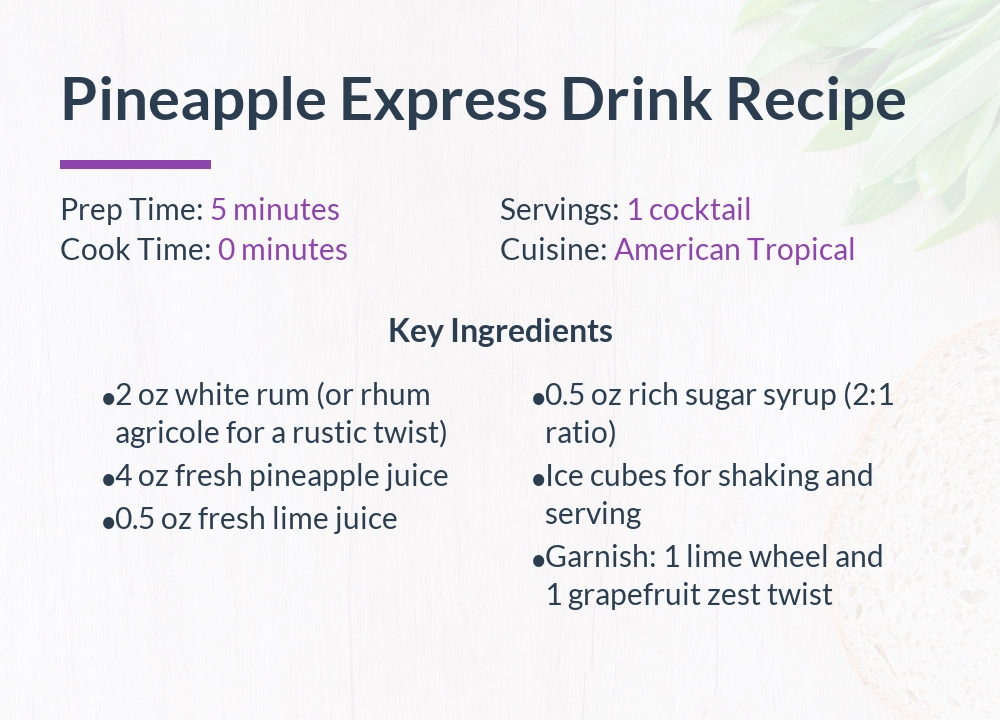
As an Amazon Associate, I may earn a small commission from qualifying purchases at no extra cost to you. This helps me create more valuable, tested content for you.
You might be searching for a vibrant, tropical drink that elevates casual gatherings or solo relaxation. The Pineapple Express cocktail delivers with its harmonious blend of sweet pineapple, zesty lime, and robust rum. I first encountered this drink at a friend’s backyard party in Chicago, where its refreshing character stood out amidst other beverages.
That experience inspired me to perfect the recipe through repeated testing in my own kitchen. This article provides a detailed roadmap for crafting this cocktail, starting with the core formula below. You will find everything from precise measurements to deeper insights on ingredients and techniques.
By following this guide, you can replicate the balanced flavor profile that makes this drink a favorite. Let’s begin with the essential steps to prepare your own Pineapple Express.
How to Make Pineapple Express Drink Recipe
This section outlines the complete recipe for one serving of the Pineapple Express cocktail. Each component is calibrated to achieve optimal balance between sweetness, acidity, and alcohol strength. Adhere to the measurements for consistent results.
Recipe Details
- Prep Time: 5 minutes
- Cook Time: 0 minutes
- Servings: 1 cocktail
- Course: Beverage
- Cuisine: American Tropical
- Diet: Vegan
Ingredients
- 2 oz white rum (or rhum agricole for a rustic twist)
- 4 oz fresh pineapple juice
- 0.5 oz fresh lime juice
- 0.5 oz rich sugar syrup (2:1 ratio)
- Ice cubes for shaking and serving
- Garnish: 1 lime wheel and 1 grapefruit zest twist
Instructions
- Chill a coupe or rocks glass by filling it with ice or placing it in the freezer for 5 minutes.
- Add the white rum, pineapple juice, lime juice, and rich sugar syrup into a cocktail shaker.
- Fill the shaker halfway with ice cubes to ensure proper dilution and chilling.
- Secure the lid tightly and shake vigorously for 15-20 seconds until the outside frosts.
- Discard the ice from the chilled glass and fine-strain the mixture into it to remove pulp and ice chips.
- Express the grapefruit zest over the drink by twisting it to release oils, then drop it in.
- Place the lime wheel on the rim or float it on top for visual appeal.
- Serve immediately while cold and aromatic.
Nutrition
- Calories: 210 kcal
- Protein: 0.5 g
- Fat: 0.1 g
- Carbohydrates: 18 g
- Sugar: 16 g
- Fiber: 0.3 g
- Sodium: 2 mg
- Cholesterol: 0 mg
Cooking Method
This cocktail employs the shaking method to integrate ingredients thoroughly. Shaking aerates the mixture, slightly diluting it with meltwater for a smoother texture. It also emulsifies the citrus and syrup, creating a cohesive flavor profile.
Tools Needed
- Cocktail shaker (Boston or standard tin)
- Jigger for accurate measurement
- Fine mesh strainer
- Knife and cutting board for garnish
- Chilled coupe or rocks glass
Ingredient Analysis
Understanding each component’s role allows for informed substitutions and enhancements. This breakdown covers sourcing, varieties, and functional attributes.
Pineapple Juice
Fresh pineapple juice contributes natural sweetness and enzymatic brightness. Varieties like Golden Sweet or Queen pineapples yield different brix levels, affecting the drink’s sugar content. Canned juice offers convenience but may contain preservatives that alter taste.
I recommend juicing ripe pineapples at home for optimal flavor control. The bromelain enzyme in fresh juice can tenderize proteins, adding a subtle complexity. Store-bought versions should be 100% juice without added sweeteners.
Lime Juice
Freshly squeezed lime juice provides critical acidity to counterbalance sweetness. Key limes or Persian limes vary in tartness; Persian types are more consistent for recipes. Bottled juice often lacks volatile aromatics and can taste flat.
Juice limes at room temperature to maximize yield. Strain out pulp if you prefer a clearer drink. The citric acid content stabilizes the mixture, preventing separation when shaken.
Rum Selection
White rum is neutral and lets tropical fruit notes dominate. Rhum agricole, made from sugarcane juice, introduces grassy, vegetal undertones. Brands like Belle Isle offer flavored options such as honey habanero for a spicy kick.
Aged rums can muddy the color but add caramel notes. For authenticity, use a 100-proof rhum agricole to withstand the juice’s intensity. The alcohol content around 40% ABV ensures proper integration without overwhelming the palate.
Sweeteners
Rich sugar syrup (2:1 sugar to water) provides viscosity and sustained sweetness. Simple syrup (1:1) results in a thinner, less sweet profile. Honey or agave syrup can substitute for nuanced flavors but may require dilution.
Prepare syrup by dissolving sugar in hot water, then cooling it completely. This prevents crystallization in the shaker. The syrup’s density affects mouthfeel, with richer versions coating the tongue longer.
Nutritional Insights
This cocktail contains approximately 210 calories per serving, primarily from carbohydrates and alcohol. Pineapple juice delivers vitamin C and manganese, supporting immune function and bone health. Lime juice adds minimal calories but contributes flavonoids with antioxidant properties.
The sugar content stems naturally from fruit and added syrup. Moderation is key, as excessive consumption can impact blood glucose levels. Rum provides empty calories without significant micronutrients.
For weight management, consider reducing syrup or using a sugar alternative. The low fiber and protein mean this drink is best paired with protein-rich snacks to stabilize energy.
Dietary Modifications
Adapt this recipe to meet various dietary needs without compromising taste. The base is naturally vegan and gluten-free, but adjustments can enhance accessibility.
Low-Sugar Version
Replace rich syrup with stevia or monk fruit sweetener. Use reduced-sugar pineapple juice or dilute with water. This cuts carbohydrates to under 10 grams per serving.
Alcohol-Free Variation
Omit rum and add 2 oz of seedlip garden or another non-alcoholic spirit. Increase pineapple juice to 6 oz and add a splash of grapefruit juice for complexity.
Allergy Considerations
Ensure all ingredients are certified gluten-free if sensitivity exists. Cross-contamination in syrups or juices is rare but possible with artisanal products.
Historical Background
The Pineapple Express draws inspiration from tropical cocktail traditions dating to the mid-20th century. It echoes elements of the Daiquiri and Painkiller, with pineapple symbolizing hospitality in Polynesian culture.
Freddie Sarkis, a noted mixologist, may have popularized modern iterations in Chicago bars. The name references both the cannabis strain and the meteorological phenomenon, implying a “flow” of tropical flavors.
Rhum agricole’s inclusion ties to French Caribbean traditions, contrasting with Cuban-style white rums. This fusion exemplifies how global ingredients merge in contemporary mixology.
Expert Tips for Perfect Results
Avoid over-shaking, which can dilute the drink excessively. Shake until the shaker feels cold, about 15 seconds. Use large, dense ice cubes for slower melting.
Select ripe, fragrant pineapples for juicing. They should yield slightly to pressure at the base. Store juice in airtight containers for up to two days to preserve freshness.
Experiment with garnishes: a hint of habanero pepper on the rim adds heat, while smoked salt enhances umami. Always fine-strain to achieve a silky texture free of ice shards.
Serving Suggestions and Pairings
Serve this cocktail in a chilled coupe glass to maintain temperature. It pairs well with spicy or savory dishes like grilled corn guacamole or vegan black bean dip. The acidity cuts through richness, cleansing the palate.
For parties, scale the recipe using a large pitcher. Mix all ingredients except ice and garnish, then shake individual servings fresh. Complement with citrus-based salads or esquites for a cohesive theme.
Store any leftover mixture without ice in the refrigerator for up to 24 hours. Separation may occur, so stir before serving. Do not freeze, as it can alter the texture and flavor balance.
The Science Behind the Flavors
Shaking creates a temporary emulsion where oil droplets from citrus suspend in the aqueous solution. This enhances aroma release upon sipping. The cold temperature numbs taste buds slightly, reducing perceived bitterness.
Pineapple’s bromelain breaks down proteins, which can soften the alcohol’s burn. Lime juice’s citric acid lowers the pH, making flavors pop by stimulating salivary glands.
Sugar syrup not only sweetens but also rounds out harsh notes by binding to water molecules. This interaction prevents the drink from tasting too thin or sharp.
Frequently Asked Questions
What is the origin of the Pineapple Express drink?
The Pineapple Express likely emerged from modern mixology scenes in urban bars, blending tropical cocktail elements with contemporary naming trends. It is not a historic classic but a newer creation.
Can I use canned pineapple juice instead of fresh?
Yes, but choose 100% juice without added sugars or preservatives. Fresh juice offers superior flavor and enzymatic activity, but canned works adequately for convenience.
How can I reduce the calorie content of this cocktail?
Substitute the rich syrup with a zero-calorie sweetener and decrease the pineapple juice to 3 oz. This can lower calories to around 150 per serving.
What type of rum is best for a balanced taste?
White rum or rhum agricole between 40-50% ABV works well. Avoid overly aged rums that impart oak flavors, which can clash with the fruit notes.
Is this drink suitable for vegan diets?
Yes, all standard ingredients are plant-based. Confirm that the rum brand uses no animal products in filtration, though most do not.
How do I make a large batch for a party?
Multiply the ingredients by the number of servings and mix in a pitcher without ice. Shake individual portions with ice when ready to serve to maintain carbonation and chill.
What food pairings complement the Pineapple Express?
Opt for light, zesty dishes like Mexican cauliflower, black bean salad, or stuffed peppers. The drink’s acidity balances creamy or spicy elements effectively.
Why is my cocktail too sweet or too tart?
Adjust the lime juice for tartness or syrup for sweetness. Taste the mixture before shaking and modify ratios slightly. Freshness of ingredients also affects perceived acidity.
Can I prepare this drink without a cocktail shaker?
Use a jar with a tight lid as an alternative. Shake vigorously for the same duration. Strain through a fine sieve if no strainer is available.
How long does the prepared drink last?
Consume immediately after preparation for optimal taste. The ice will continue to dilute it, and flavors degrade over time due to oxidation.