Reina
Reina 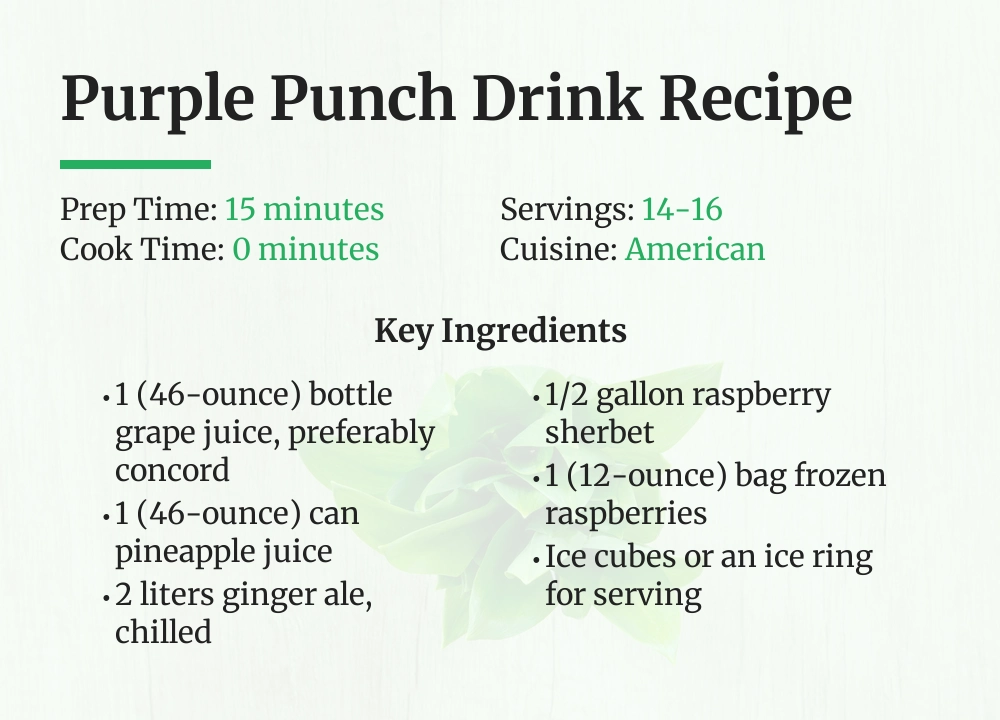
As an Amazon Associate, I may earn a small commission from qualifying purchases at no extra cost to you. This helps me create more valuable, tested content for you.
Finding a crowd-pleasing drink for events like weddings or baby showers often leads to bland options. This purple punch recipe solves that with its vibrant color and balanced flavor. I first made it for my son’s wedding, where it became the highlight, serving over a hundred guests without hassle.
You will appreciate how simple ingredients like grape juice and ginger ale combine for a refreshing result. This guide covers everything from preparation to nutritional insights, ensuring your version exceeds expectations.
Let me walk you through crafting this beverage, starting with the core recipe.
How to Make Purple Punch Drink Recipe
This section provides the complete recipe for a classic purple punch. Follow these steps for a consistent outcome every time.
Recipe Details
- Prep Time: 15 minutes
- Cook Time: 0 minutes
- Servings: 14-16
- Course: Beverage
- Cuisine: American
- Diet: Vegan
Ingredients
- 1 (46-ounce) bottle grape juice, preferably concord
- 1 (46-ounce) can pineapple juice
- 2 liters ginger ale, chilled
- 1/2 gallon raspberry sherbet
- 1 (12-ounce) bag frozen raspberries
- Ice cubes or an ice ring for serving
Instructions
- Chill all ingredients beforehand to maintain cold temperature without diluting flavor.
- Pour the grape juice and pineapple juice into a large punch bowl. Stir gently to combine.
- Add the frozen raspberries to the juice mixture. They will slowly thaw and release flavor.
- Scoop the raspberry sherbet into the bowl, allowing it to float and create a creamy texture.
- Slowly pour in the ginger ale just before serving to preserve carbonation. Stir lightly.
- Add ice cubes or an ice ring to keep the punch cold. Serve immediately in cups.
Nutrition
- Calories: 180 kcal
- Protein: 1 g
- Fat: 2 g
- Carbohydrates: 40 g
- Sugar: 35 g
- Fiber: 1 g
- Sodium: 25 mg
- Cholesterol: 5 mg
Cooking Method
This recipe uses a no-cook assembly method. Combining cold ingredients directly in a punch bowl ensures the drink stays refreshing. The key is minimal stirring to prevent the ginger ale from going flat.
Tools Needed
- Large punch bowl (at least 4-quart capacity)
- Measuring cups and spoons
- Ladle for serving
- Glasses or cups
Exploring the Ingredients in Depth
Each component in this punch contributes to its flavor, color, and texture. Understanding their roles helps you make informed substitutions.
Grape Juice: The Foundation of Flavor
Grape juice, especially concord variety, provides the dominant purple hue and sweet-tart taste. Concord grapes have a deep color from anthocyanins, which are antioxidants.
Their natural sweetness reduces the need for added sugar. If you use white grape juice, the color will be lighter, so adjust with food coloring if desired.
Always opt for 100% juice concentrates to avoid artificial additives. The juice’s acidity balances the sweetness of other ingredients.
Pineapple Juice: Tropical Sweetness and Acidity
Pineapple juice adds a tropical note and subtle acidity that cuts through the richness. It contains bromelain, an enzyme that can aid digestion.
Canned pineapple juice is convenient, but fresh juice offers a brighter flavor. The acidity helps preserve the drink’s freshness when stored briefly.
In this recipe, it complements the grape juice without overpowering it. Ensure it is well-chilled to maintain the beverage’s temperature.
Ginger Ale: Carbonation and Spice
Ginger ale introduces fizz and a mild spicy note. Its carbonation lightens the drink, making it feel effervescent and refreshing.
Choose a quality brand with real ginger extract for better flavor. Diet versions can be used for lower sugar content, but they may alter the taste.
Add it last to prevent the punch from becoming flat. The ginger element pairs well with the fruit juices, enhancing overall complexity.
Raspberry Sherbet: Creamy Texture and Color Boost
Raspberry sherbet adds a creamy texture and intensifies the purple color. Sherbet is lower in fat than ice cream, making it a lighter option.
It slowly melts into the punch, creating a delightful swirl. If sherbet is unavailable, raspberry sorbet works as a vegan alternative.
The fruit content in sherbet contributes to the antioxidant profile. Scoop it in just before serving to maintain structure.
Frozen Raspberries: Natural Sweetness and Visual Appeal
Frozen raspberries serve as both a garnish and flavor enhancer. As they thaw, they release juices that blend with the punch.
They provide fiber and vitamins, adding nutritional value. Using frozen berries eliminates the need for additional ice, reducing dilution.
Their red color deepens the purple shade when mixed. Ensure they are free from added sugars for a healthier version.
Nutritional Profile and Health Considerations
This punch is a festive treat, but understanding its nutritional aspects helps you enjoy it mindfully. The values per serving are estimates based on standard ingredients.
Caloric Content and Sugar Levels
At around 180 calories per serving, the punch derives most energy from carbohydrates. The sugar content is primarily natural from fruits, but it is high at 35g per serving.
This makes it suitable for occasional consumption rather than daily intake. The fiber from raspberries slightly offsets sugar absorption, aiding blood sugar management.
For those monitoring intake, consider using reduced-sugar juices. The sherbet and ginger ale contribute additional sugars, so adjustments there can lower overall content.
Vitamins and Antioxidants
Grape juice is rich in vitamin C and polyphenols, which support immune function. Pineapple juice provides manganese and vitamin B6, aiding metabolism.
Raspberries add vitamin K and ellagic acid, known for anti-inflammatory properties. Together, these ingredients offer a boost of antioxidants.
However, the benefits are best enjoyed in moderation due to the sugar. Pairing the punch with protein-rich foods can balance the glycemic load.
Hydration and Electrolytes
As a liquid-based beverage, this punch contributes to hydration. The sodium from ginger ale and juices provides minimal electrolytes.
It is not a significant source of potassium or magnesium. For better hydration, serve it with water or dilute slightly with club soda.
The high water content makes it refreshing, but be mindful of sugar-induced thirst. In hot weather, the ice helps maintain fluid balance.
Adapting the Recipe for Dietary Needs
This punch can be modified to suit various dietary preferences without sacrificing flavor. Here are practical swaps.
Vegan and Dairy-Free Options
The base recipe is already vegan if using plant-based sherbet. Check labels for gelatin or dairy derivatives in sherbet; opt for sorbet instead.
Ginger ale is typically vegan, but some brands may use honey. Choose certified vegan sodas to ensure compliance.
All juices are naturally plant-based. For a creamier version, use coconut milk-based ice cream instead of sherbet.
Low-Sugar and Diabetic-Friendly Variations
Replace regular grape juice with a sugar-free version or dilute with water. Use diet ginger ale to cut sugar content significantly.
Substitute sherbet with sugar-free frozen yogurt or omit it entirely. Add extra frozen berries for sweetness without added sugar.
Monitor portion sizes to keep carbohydrate intake in check. Stevia-sweetened juices can also be used, but test for aftertaste.
Gluten-Free and Allergen Notes
All ingredients are inherently gluten-free, but verify labels on processed items like sherbet. Cross-contamination is rare in juices and sodas.
For nut allergies, ensure no cross-contact in manufacturing. The recipe is free from common allergens like nuts, soy, and eggs.
If using homemade juices, avoid additives that may contain allergens. Always inform guests of ingredients when serving.
The Historical Roots of Punch Beverages
Punch drinks have a rich history dating back to the 17th century. The word “punch” derives from the Hindi “panch,” meaning five, for the original ingredients: alcohol, sugar, lemon, water, and tea.
Early versions were popularized by British sailors in India. They spread to Europe and America, evolving into non-alcoholic forms for social gatherings.
Purple punch, specifically, gained traction in the 20th century with the availability of commercial juices. It became a staple at events like weddings and holidays for its visual appeal.
This recipe reflects modern adaptations, focusing on accessibility and family-friendly ingredients. Understanding this background adds depth to your serving experience.
Avoiding Common Preparation Errors
Even simple recipes can have pitfalls. Here are mistakes to watch for and how to fix them.
Over-dilution from Ice
Adding too much ice can water down the punch, dulling the flavor. Use an ice ring made from part of the juice mixture instead of plain ice cubes.
Freeze grape juice in a ring mold with embedded berries. This melts slowly, enhancing rather than diluting the drink.
Chill ingredients thoroughly before mixing to minimize ice needs. Serve in a chilled bowl to maintain temperature.
Loss of Carbonation
Pouring ginger ale too early or stirring vigorously causes fizz to dissipate. Add it at the last moment and stir gently once.
Keep the ginger ale refrigerated until use. If serving over time, consider adding it in batches to retain bubbles.
Using club soda as a backup can restore fizz if needed. Avoid using flat soda, as it affects texture.
Color Inconsistencies
The purple shade can vary based on juice brands and ratios. Test a small batch first to adjust color with natural options like beet juice.
Avoid artificial dyes; rely on fruit pigments. Concord grape juice is key for a deep hue.
If the color is too light, add a bit of blueberry juice. Too dark? Dilute with white grape juice or lemonade.
Serving and Presentation Tips
How you serve this punch impacts its appeal. Follow these suggestions for an impressive display.
Choosing the Right Punch Bowl
A clear glass or crystal bowl showcases the vibrant color. Ensure it holds at least 4 quarts to prevent overflow.
Place it on a stable surface, perhaps with a ladle and cups nearby. For outdoor events, use a bowl with a lid to keep insects out.
Decorate the base with purple-themed linens or flowers. This enhances the visual experience for guests.
Garnishes and Enhancements
Float lemon slices or fresh mint sprigs on top for a fresh aroma. Edible flowers like violets add elegance.
For a dramatic effect, use a chunk of dry ice in a separate container under the bowl. Never place dry ice directly in the punch due to safety concerns.
It creates a misty appearance, perfect for Halloween or themed parties. Always handle dry ice with gloves and in well-ventilated areas.
Pairing with Food
This punch pairs well with light appetizers like fruit platters or cheese boards. The sweetness complements savory items like sandwiches or crackers.
For desserts, serve with angel food cake or cookies to avoid overpowering sweetness. Balance the meal with protein-rich options to offset sugar spikes.
At brunches, it works with quiche or pastries. Experiment with pairings based on the occasion.
Storage and Leftovers
Store any leftover punch in a sealed container in the refrigerator for up to 2 days. The carbonation will fade, but the flavor remains.
Re-stir before serving, as ingredients may separate. Freeze portions into ice pops for a fun treat later.
Do not refreeze melted sherret, as it alters texture. Discard if left at room temperature for over 2 hours.
The Science of Color and Flavor Fusion
The purple color comes from anthocyanins in grape juice, which change shade with pH. Adding acidic pineapple juice helps stabilize the hue.
When mixed, the juices create a harmonious balance of sweet and tart due to their natural sugar and acid profiles. The ginger ale’s carbonation releases aroma compounds, enhancing perceived flavor.
Sherbet emulsifies fats and water-based juices, giving a smooth mouthfeel. Understanding these interactions allows you to tweak the recipe for consistency.
Frequently Asked Questions
What is purple punch drink recipe?
It is a beverage made from grape juice, pineapple juice, ginger ale, and sherbet, known for its purple color and sweet taste. It serves crowds at events like weddings.
Why is purple punch drink recipe important?
It offers a versatile, non-alcoholic option for celebrations, combining flavor and visual appeal. Its simplicity makes it accessible for home cooks.
How does purple punch drink recipe work?
Ingredients are chilled and combined to create a balanced mix of sweet, tart, and fizzy elements. The recipe relies on no-cook assembly for ease.
Can I make purple punch without sherbet?
Yes, substitute with sorbet or omit it for a lighter version. The color and flavor will be less creamy but still enjoyable.
How can I reduce the sugar in purple punch?
Use sugar-free juices and diet ginger ale. Replace sherbet with frozen fruit puree. Dilute with sparkling water to lower sweetness.
What is the best way to keep purple punch cold?
Use an ice ring made from juice instead of cubes to prevent dilution. Chill the punch bowl beforehand and serve in a cool environment.
Can I prepare purple punch in advance?
Mix juices and freeze into ice rings a day ahead. Add ginger ale and sherbet just before serving to maintain carbonation and texture.
Is purple punch suitable for children?
Yes, it is non-alcoholic and kid-friendly. Monitor portion sizes due to sugar content. For younger children, dilute with water.
How long does purple punch last in the fridge?
It stays fresh for up to 2 days when stored in a sealed container. The quality declines as carbonation fades, so consume quickly.
What can I use instead of ginger ale?
Try lemon-lime soda or club soda with a splash of ginger syrup. This maintains fizz while allowing flavor customization.