Reina
Reina 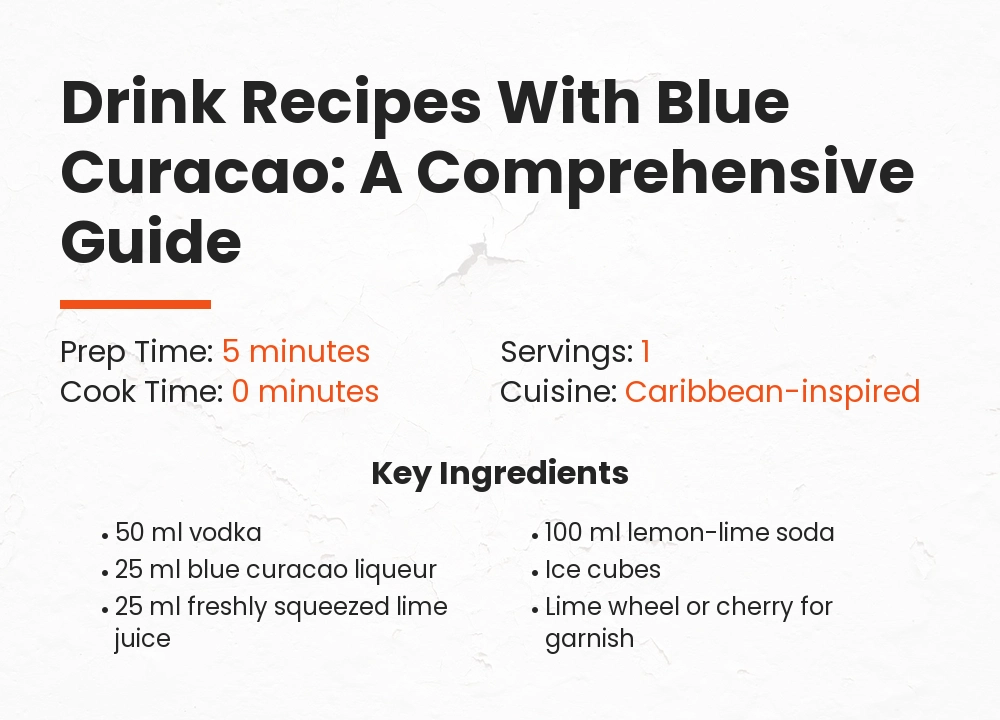
As an Amazon Associate, I may earn a small commission from qualifying purchases at no extra cost to you. This helps me create more valuable, tested content for you.
The first time I mixed a Blue Lagoon cocktail, the vibrant hue reminded me of a Caribbean sea under the midday sun. That moment in a small beachside bar sparked my curiosity about this blue liqueur. You might have seen it in bars or social media feeds, wondering how to recreate those eye-catching drinks at home.
This guide provides detailed recipes and insights into blue curacao, from its origins to nutritional aspects. Whether you are hosting a party or exploring mixology, you will find everything needed here. I have tested each recipe personally to ensure clarity and success for your home bar.
Blue curacao serves as a versatile base for numerous cocktails, blending citrus notes with visual appeal. Let us start with a foundational recipe to build your confidence before diving into deeper analysis.
How to Make Drink Recipes with Blue Curacao
This section outlines a classic Blue Lagoon cocktail, a popular choice for its simplicity and striking color. I recommend using fresh ingredients for the best flavor profile. The recipe balances sweetness and acidity, making it a crowd-pleaser.
Recipe Details
- Prep Time: 5 minutes
- Cook Time: 0 minutes
- Servings: 1
- Course: Beverage
- Cuisine: Caribbean-inspired
- Diet: Vegetarian, contains alcohol
Ingredients
- 50 ml vodka
- 25 ml blue curacao liqueur
- 25 ml freshly squeezed lime juice
- 100 ml lemon-lime soda
- Ice cubes
- Lime wheel or cherry for garnish
Instructions
- Fill a highball glass with ice cubes to chill the base.
- Pour vodka and blue curacao directly over the ice.
- Add lime juice slowly to avoid curdling if mixing with cream-based variations.
- Top with lemon-lime soda and stir gently with a bar spoon.
- Garnish with a lime wheel or cherry on the rim.
- Serve immediately to maintain carbonation and temperature.
Nutrition
- Calories: 180 kcal
- Protein: 0 g
- Fat: 0 g
- Carbohydrates: 15 g
- Sugar: 14 g
- Fiber: 0 g
- Sodium: 10 mg
- Cholesterol: 0 mg
Cooking Method
This recipe uses the build method, where ingredients are added directly into the serving glass. No heating or complex techniques are involved, making it accessible for beginners. Stirring incorporates the layers without losing effervescence.
Tools Needed
- Highball or hurricane glass
- Jigger for measuring
- Bar spoon for stirring
- Citrus juicer for fresh lime juice
- Ice tongs or scoop
Understanding Blue Curacao
Blue curacao is a liqueur derived from the dried peel of the Laraha citrus fruit, native to Curacao. Its bright blue color comes from food coloring, added to distinguish it from other citrus liqueurs. The flavor profile is sweet with bitter orange notes, often used to add visual drama to cocktails.
Historically, it dates back to the 19th century when Spanish settlers found the Laraha fruit too bitter to eat. They developed a liqueur by steeping the peels in alcohol, creating the foundation for modern versions. Today, it is a staple in tropical and beach-themed drinks.
In mixology, it pairs well with clear spirits like vodka and rum, enhancing citrus-based juices. The alcohol content typically ranges from 15% to 40%, depending on the brand. Store it in a cool, dark place to preserve its color and flavor.
What is Blue Curacao?
Blue curacao is an orange-flavored liqueur, often confused with triple sec but distinct in its coloring. It contains sugars and artificial colorants, which contribute to its calorie density. When selecting a bottle, check for natural flavorings to avoid overly synthetic tastes.
Why is it Blue?
The blue color is achieved through FDA-approved food dyes, such as Brilliant Blue FCF. This addition does not affect the taste but makes it ideal for layered drinks. Some artisanal brands use spirulina or butterfly pea flower for natural coloring.
Taste and Aroma
Expect a sweet, slightly bitter orange aroma with a smooth mouthfeel. The flavor can overpower subtle ingredients, so measure carefully. In cocktails, it balances acidic components like lime juice, reducing the need for additional sweeteners.
Nutritional Breakdown
From a dietary perspective, blue curacao is high in sugars and calories, with minimal nutritional value. A standard serving contains about 100-150 calories, primarily from carbohydrates. Moderation is key, especially for those monitoring sugar intake.
The liqueur’s base alcohol contributes empty calories, meaning it provides energy without vitamins or minerals. Combining it with fresh juices can add vitamin C, but also increases sugar content. For a healthier twist, use sugar-free mixers or reduce the liqueur portion.
Alcohol metabolism varies by individual, affecting blood sugar levels and hydration. I advise consuming blue curacao drinks with food to slow absorption. Always consider personal health conditions when incorporating alcoholic beverages into your diet.
Caloric Content and Health Considerations
Each ounce of blue curacao has approximately 80-100 calories, similar to other liqueurs. The sugar content can spike insulin levels, so diabetic individuals should opt for low-sugar versions. Hydrate with water between drinks to mitigate dehydration.
Balancing Sweetness and Alcohol
To reduce sweetness, use citrus juices like lemon or grapefruit, which cut through the sugar. Diluting with soda water lowers the overall alcohol concentration. Experiment with herb-infused syrups for complexity without extra calories.
Popular Blue Curacao Cocktails
Beyond the Blue Lagoon, several cocktails showcase this liqueur’s versatility. The Blue Hawaiian incorporates pineapple juice and coconut cream for a creamy texture. The Blue Margarita substitutes triple sec with blue curacao, offering a visual twist on a classic.
For shot options, the Blue Kamikaze mixes vodka, blue curacao, and lime juice. Each recipe highlights different pairings, from creamy to citrusy profiles. I have included adaptations to suit various preferences and occasions.
Blue Hawaiian Cocktail
This tropical drink combines light rum, blue curacao, pineapple juice, and coconut cream. Shake all ingredients with ice and strain into a hurricane glass. Garnish with a pineapple wedge and drink umbrella for presentation.
Blue Margarita
Replace triple sec with blue curacao in a traditional margarita recipe. Use tequila, lime juice, and agave syrup, shaken and served in a salt-rimmed glass. The blue color contrasts beautifully with the salt rim.
Other Variations
The Blue Whale cocktail adds creme de menthe for a minty note. The Blue Long Island Iced Tea includes multiple spirits, with blue curacao providing color. For non-alcoholic versions, use blue curacao syrup and sparkling water.
Dietary Adaptations
Many blue curacao drinks can be modified for dietary needs. Vegan options replace honey with agave syrup and use plant-based creams. Gluten-free adaptations ensure all spirits are distilled from gluten-free grains like corn or potatoes.
Low-sugar versions employ stevia-sweetened mixers or reduce the liqueur quantity. For dairy-free creamy drinks, coconut milk or almond milk works well. Always check labels for allergens in pre-made mixers.
Vegan and Low-Sugar Options
Use vegan blue curacao brands that avoid animal-based colorants. Substitute sugar with monk fruit sweetener in syrups. For creamy textures, blend silken tofu with citrus juices as a base.
Common Mistakes and Expert Tips
Overpouring blue curacao is a frequent error, leading to overly sweet drinks. Measure with a jigger to maintain balance. Another mistake is using stale citrus juice, which affects acidity; always squeeze fresh.
Shaking drinks with carbonated ingredients can cause overflow. Add soda after shaking other components. For clear ice, use filtered water and freeze slowly. Store blue curacao away from light to prevent color fading.
Garnishes should complement the drink’s flavor, not just aesthetics. A citrus twist adds aroma, while a cherry provides sweetness. Chill glasses beforehand to keep drinks colder longer.
Serving and Pairing Suggestions
Serve blue curacao cocktails in tulip or hurricane glasses to showcase their color. Pair with light appetizers like cheese boards or veggie platters to balance sweetness. The citrus notes complement spicy foods, such as Thai or Mexican dishes.
For gatherings, batch prepare non-alcoholic versions and add alcohol separately. Store leftovers in sealed containers in the refrigerator for up to 24 hours. Re-stir before serving to redistribute ingredients.
The Science Behind the Color and Flavor
The blue color in curacao is due to light absorption by dye molecules, reflecting blue wavelengths. Flavor compounds like limonene from orange peels interact with alcohol, enhancing aroma. Understanding this helps in creating stable emulsions for creamy drinks.
Acidity from citrus juices can alter the color intensity, so adjust lime juice carefully. Sugar content affects viscosity, influencing how layers form in stratified cocktails. Experiment with temperature to see how it impacts flavor release.
Frequently Asked Questions
What is the origin of blue curacao?
Blue curacao originated in the Caribbean island of Curacao in the 19th century. It was developed from the bitter Laraha citrus fruit, with blue coloring added later for market differentiation.
Can I make blue curacao at home?
Yes, by infusing vodka with dried orange peels and sweetening with syrup. Add blue food coloring for the signature hue, but note that commercial versions have consistent flavor profiles.
Is blue curacao gluten-free?
Most blue curacao brands are gluten-free, as distillation removes gluten proteins. Verify labels if you have celiac disease or sensitivities.
How do I reduce the sugar in blue curacao drinks?
Use sugar-free alternatives like diet lemon-lime soda or fresh citrus juice without added sweeteners. Dilute with sparkling water to lower overall sugar concentration.
What are some non-alcoholic substitutes for blue curacao?
Blue curacao syrup or non-alcoholic blue fruit punches can mimic the color and sweetness. Combine with citrus juices and soda for similar effects.
Why does my blue curacao drink separate?
Separation occurs due to density differences between ingredients. Stir gently before serving or use emulsifiers like egg white in creamy versions.
How long does blue curacao last after opening?
It can last up to a year if stored properly in a cool, dark place. The color may fade over time, but the flavor remains stable.
Can I use blue curacao in cooking?
Yes, it works in desserts like cakes or glazes, adding color and citrus flavor. Reduce the alcohol by heating gently if needed.