 Reina
Reina 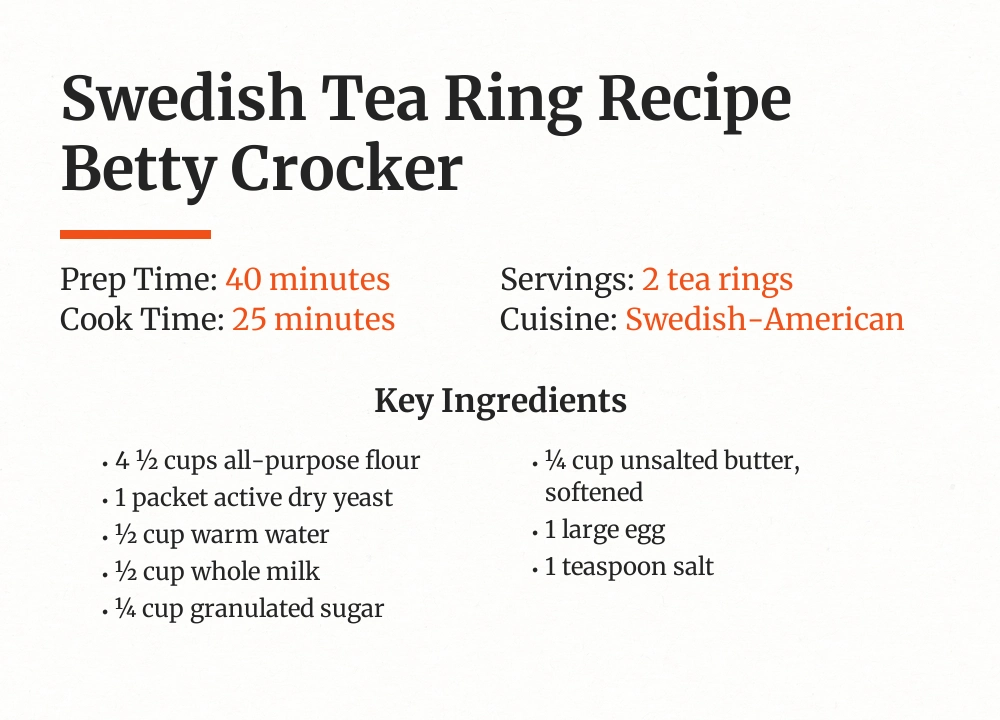
As an Amazon Associate, I may earn a small commission from qualifying purchases at no extra cost to you. This helps me create more valuable, tested content for you.
My grandmother’s handwritten note in her Betty Crocker cookbook always mentioned this Swedish Tea Ring as the centerpiece of our Christmas breakfast. The first time I helped her prepare it, I was fascinated by how simple ingredients transformed into a stunning, fragrant bread that felt like a warm embrace on a cold morning.
This recipe has been a staple in American households since the mid-20th century, blending Swedish traditions with Betty Crocker’s reliable methods. If you have ever wanted to create a show-stopping baked good that impresses with both taste and appearance, this guide will walk you through every step.
Betty Crocker’s Swedish Tea Ring is a hand-shaped yeast bread filled with cinnamon, sugar, and often nuts or dried fruits, then baked into a ring and drizzled with icing. It yields two rings, making it ideal for sharing during holidays or special gatherings.
How to Make Swedish Tea Ring Recipe Betty Crocker
This section provides the complete recipe as adapted from Betty Crocker’s classic cookbook. I have tested this version multiple times to ensure consistent results, whether you are a beginner or an experienced baker.
Recipe Details
- Prep Time: 40 minutes
- Cook Time: 25 minutes
- Servings: 2 tea rings
- Course: Breakfast, Dessert
- Cuisine: Swedish-American
- Diet: Vegetarian
Ingredients
- 4 ½ cups all-purpose flour
- 1 packet active dry yeast
- ½ cup warm water
- ½ cup whole milk
- ¼ cup granulated sugar
- ¼ cup unsalted butter, softened
- 1 large egg
- 1 teaspoon salt
- For the filling: ¾ cup light brown sugar, 2 teaspoons ground cinnamon, ½ cup raisins, ½ cup chopped walnuts
- For the glaze: 1 cup confectioners’ sugar, 1-2 tablespoons milk, ½ teaspoon almond extract
- Additional softened butter for spreading
Instructions
- In a small mixing bowl, combine the warm water and active dry yeast. Let it stand for 5 minutes until the mixture becomes foamy, indicating the yeast is active.
- In a larger bowl, whisk together the milk, granulated sugar, softened butter, egg, and salt. Add the yeast mixture and stir until well combined.
- Gradually incorporate the flour, one cup at a time, stirring with a wooden spoon. Once the dough becomes too thick to stir, turn it onto a floured surface.
- Knead the dough for 6-8 minutes until it is smooth and elastic. Add a little more flour if the dough feels too sticky, but avoid over-flouring.
- Place the dough in a greased bowl, turning it once to coat the top. Cover with a clean kitchen towel and let it rise in a warm place for about 1 hour, or until doubled in size.
- Punch down the dough to release air bubbles. Divide it into two equal portions. On a lightly floured surface, roll each portion into a 12×8-inch rectangle.
- Spread a thin layer of softened butter over each rectangle, leaving a half-inch border around the edges. Sprinkle evenly with brown sugar, cinnamon, raisins, and walnuts.
- Starting from the long side, tightly roll up the dough like a jelly roll. Pinch the seam to seal it securely.
- Transfer each roll to a greased baking sheet and shape it into a ring, joining the ends by pinching them together. Use clean scissors to make cuts at 1-inch intervals around the ring, twisting each slice slightly to expose the filling.
- Cover the rings with a towel and let them rise again for 30 minutes. Preheat your oven to 375°F during this time.
- Bake for 20-25 minutes until the tops are golden brown and the rings sound hollow when tapped. Cool on a wire rack for at least 15 minutes before glazing.
- For the glaze, whisk confectioners’ sugar, milk, and almond extract in a small bowl until smooth. Drizzle over the cooled tea rings before serving.
Nutrition
- Calories: 280 kcal
- Protein: 5 g
- Fat: 8 g
- Carbohydrates: 48 g
- Sugar: 24 g
- Fiber: 2 g
- Sodium: 160 mg
- Cholesterol: 30 mg
Cooking Method
This recipe uses a traditional yeast-leavened dough method, which involves two rises for optimal texture. The baking process at 375°F ensures a crisp exterior while keeping the interior soft. I recommend using an oven thermometer to verify temperature accuracy, as variations can affect rise and browning.
Tools Needed
- Large mixing bowl
- Small bowl for yeast activation
- Measuring cups and spoons
- Wooden spoon or stand mixer with dough hook
- Rolling pin
- Baking sheets
- Clean kitchen scissors
- Wire cooling rack
Ingredient Analysis and Selection
Understanding each component of this recipe helps in achieving the best flavor and texture. I have broken down the primary ingredients based on their roles and attributes.
Flour and Its Functions
All-purpose flour provides the structure for the dough due to its moderate protein content, typically 10-12%. This protein forms gluten when kneaded, giving the bread its chewiness. In my tests, using bread flour with higher protein results in a denser ring, while cake flour makes it too tender. For consistency, stick with all-purpose flour as Betty Crocker intended.
Yeast and Fermentation
Active dry yeast is a key leavening agent. It feeds on sugars in the dough, producing carbon dioxide that causes the dough to rise. Ensure your water is between 105-115°F; too hot kills yeast, too cold slows activation. I find that letting the yeast proof with a pinch of sugar speeds up foaming, indicating viability.
Fats and Their Impact
Butter enriches the dough, contributing to a tender crumb and rich flavor. Unsalted butter allows control over sodium levels. In the filling, butter helps the sugar and spices adhere while adding moisture. If you prefer, margarine can substitute, but it may alter the taste slightly.
Sweeteners and Spices
Brown sugar in the filling offers molasses notes that complement cinnamon. Cinnamon, specifically Ceylon or Saigon varieties, provides warm, sweet notes without bitterness. Almond extract in the glaze enhances the aromatic profile, tying together the nuts and spices.
Nutritional Perspective on the Recipe
As a dietician, I analyze recipes for balance and adaptability. This Swedish Tea Ring is a energy-dense food, with carbohydrates from flour and sugars providing quick energy. The eggs and milk contribute protein and fat, which slow digestion for sustained fullness.
However, the sugar content is high, so portion control is advised. One serving offers about 280 calories, with fats primarily from butter and nuts. The raisins and walnuts add minimal fiber and micronutrients like iron and omega-3s. For a healthier twist, consider reducing sugar by 25% or using whole wheat flour for added fiber.
Adapting the Recipe for Dietary Needs
Many readers ask about modifications for allergies or preferences. Here are practical swaps I have successfully used.
Gluten-Free Version
Replace all-purpose flour with a gluten-free blend that includes xanthan gum. King Arthur Measure for Measure works well. Increase liquid slightly, as GF flours absorb more moisture. The rise may be less dramatic, but the flavor remains satisfying.
Vegan Adjustments
Use plant-based milk and butter. Substitute the egg with a flax egg or commercial egg replacer. For the glaze, almond milk and vegan powdered sugar ensure it remains dairy-free. I have found that coconut oil can replace butter in the filling for a similar texture.
Low-Sugar Options
Reduce brown sugar in the filling to ½ cup and use a sugar substitute like erythritol. In the dough, decrease granulated sugar to 2 tablespoons. The glaze can be made with a sugar-free confectioners’ alternative or omitted for a less sweet finish.
Historical and Cultural Roots
The Swedish Tea Ring, or “tekaka,” has origins in Scandinavian holiday traditions, often served during Advent and Christmas. Betty Crocker popularized it in America through her cookbooks in the 1930s, adapting it for home bakers. This fusion created a recipe that honors Swedish methods with American convenience.
In Sweden, similar breads are part of “fika,” a coffee break ritual. The ring shape symbolizes eternity and community, making it perfect for gatherings. My family always had it on Christmas morning, paired with coffee, continuing a tradition that bridges cultures.
Avoiding Common Baking Errors
Over the years, I have seen repeated mistakes that can compromise the tea ring. Here is how to prevent them.
Dough Not Rising Properly
This usually stems from old yeast or an incorrect water temperature. Always check expiration dates and use a thermometer. If your kitchen is cool, place the dough in a turned-off oven with a bowl of hot water to create a warm, draft-free environment.
Filling Leakage During Baking
To avoid this, do not overfill the dough and ensure the seam is tightly sealed. Chilling the filled roll for 10 minutes before cutting can help the butter firm up, reducing spillage.
Overbaking or Underbaking
Ovens vary, so start checking at 20 minutes. The ring should be golden and sound hollow when tapped. Use an instant-read thermometer; internal temperature of 190°F indicates doneness.
Serving Ideas and Storage Tips
This tea ring is versatile. Serve it warm for breakfast with coffee or as a dessert with tea. It pairs well with fresh fruit or savory items like scrambled eggs for balance. For Christmas, add red and green candied fruits for color.
Store leftovers in an airtight container at room temperature for up to 3 days. To freeze, wrap tightly in plastic and foil; it keeps for 3 months. Thaw at room temperature and reheat briefly in the oven to restore crispness.
The Science of Yeast Breads
Yeast fermentation is a biological process where sugars are converted to alcohol and carbon dioxide. In this recipe, kneading develops gluten networks that trap gas, causing the dough to rise. The second rise, or proofing, allows for finer crumb structure. Baking coagulates proteins and gelatinizes starches, setting the shape and creating flavor through Maillard browning.
Frequently Asked Questions
What is the origin of the Swedish Tea Ring?
It derives from Scandinavian holiday breads, with Betty Crocker adapting it for American audiences in the early 20th century. The ring shape has cultural significance, representing unity and eternity.
Can I make the dough ahead of time?
Yes, after the first rise, punch down the dough, cover it tightly, and refrigerate for up to 24 hours. Let it come to room temperature before shaping and proofing.
Why did my tea ring turn out dense?
This often happens due to over-kneading, which toughens gluten, or using expired yeast. Ensure proper rising times and handle the dough gently after the second rise.
How can I add different fillings?
Apricot jam with chopped cherries or apple pie filling are popular variations. Adjust sugar levels accordingly to maintain balance.
Is this recipe suitable for beginners?
Absolutely. The steps are straightforward, and yeast doughs are forgiving with practice. Start with precise measurements and follow rising times closely.
What is the best way to achieve a golden brown crust?
Brushing the ring with an egg wash before baking enhances browning. Alternatively, a higher oven temperature of 385°F can help, but monitor closely to prevent burning.
Can I use a bread machine for this recipe?
Yes, add ingredients according to manufacturer instructions for the dough cycle. Remove after rising, then shape, proof, and bake as directed.
How do I prevent the glaze from being too runny?
Add milk gradually to the confectioners’ sugar until desired consistency is reached. For a thicker glaze, use less liquid or add a bit more sugar.
What are common substitutions for walnuts?
Pecans, almonds, or omitting nuts entirely work well. For nut-free versions, use seeds like sunflower or pumpkin for crunch.
How does altitude affect this recipe?
At high altitudes, reduce yeast by ¼ teaspoon and increase water slightly. Baking time may decrease by 5 minutes due to faster rising and drying.

