Reina
Reina 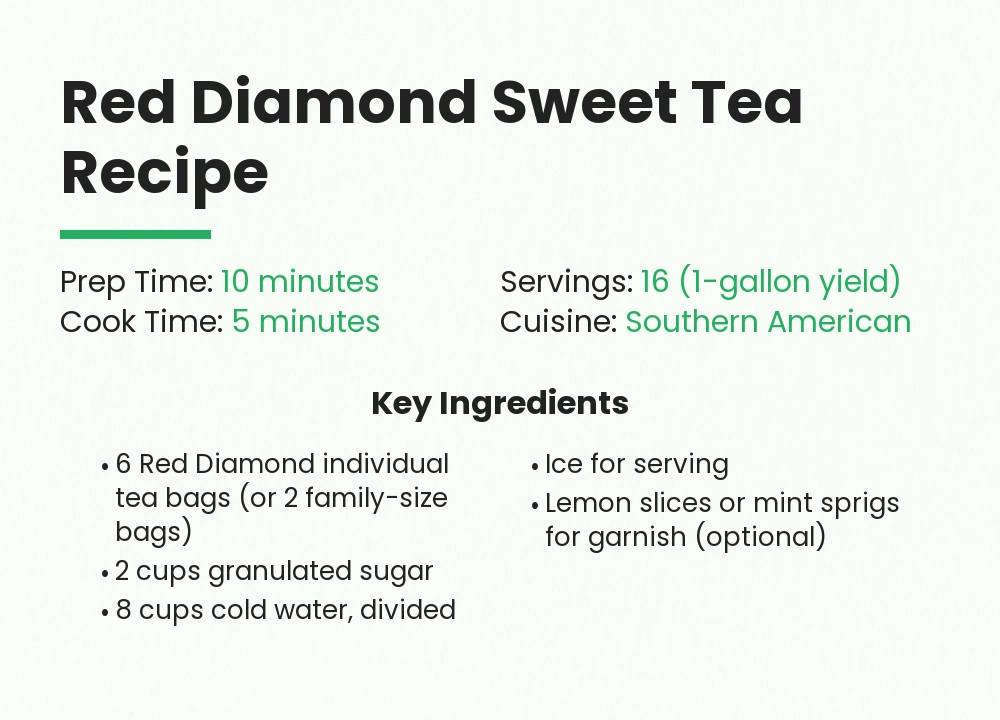
As an Amazon Associate, I may earn a small commission from qualifying purchases at no extra cost to you. This helps me create more valuable, tested content for you.
Sweet tea is a staple in many households, especially during warm months when a cool, refreshing drink is essential. I have vivid memories of my grandmother preparing large batches for family reunions, always insisting on Red Diamond tea bags for their robust flavor. Her method was simple but yielded consistently smooth results without the bitterness that can plague homemade iced tea.
If your previous attempts at sweet tea have ended up too weak, overly sweet, or unpleasantly astringent, this guide will walk you through a reliable process. The Red Diamond sweet tea recipe focuses on balancing sweetness and tea strength, using accessible ingredients and straightforward techniques. This approach ensures you can replicate that classic Southern beverage at home with confidence.
You will need six Red Diamond individual tea bags, two cups of granulated sugar, and about one gallon of water. The process involves brewing a strong tea concentrate, dissolving sugar while the tea is hot, and then diluting and chilling the mixture. Let’s begin with the complete recipe so you can see the entire method before we explore the nuances that make it exceptional.
How to Make Red Diamond Sweet Tea Recipe
This section provides the foundational recipe for creating a classic gallon of sweet tea. Follow these steps precisely for a balanced, non-bitter result that serves a crowd or stores well for individual use.
Recipe Details
- Prep Time: 10 minutes
- Cook Time: 5 minutes
- Servings: 16 (1-gallon yield)
- Course: Beverage
- Cuisine: Southern American
- Diet: Vegetarian
Ingredients
- 6 Red Diamond individual tea bags (or 2 family-size bags)
- 2 cups granulated sugar
- 8 cups cold water, divided
- Ice for serving
- Lemon slices or mint sprigs for garnish (optional)
Instructions
- Place a medium saucepan on the stove and fill it halfway with about 4 cups of water.
- Heat the water over high heat until it reaches a rolling boil. You should see large, consistent bubbles.
- Remove the saucepan from the heat source immediately after boiling. Submerge the six Red Diamond tea bags into the hot water.
- Allow the tea bags to steep for 5 to 7 minutes. Do not squeeze the bags after steeping, as this can release tannins that cause bitterness.
- While the tea is still hot, add the two cups of sugar to the pitcher. Pour the hot tea concentrate over the sugar.
- Stir the mixture vigorously until all the sugar granules have completely dissolved into the liquid.
- Add the remaining 4 cups of cold water to the pitcher to dilute the concentrate, bringing the total volume to approximately one gallon.
- Cover the pitcher and place it in the refrigerator to chill for at least 4 hours, or until thoroughly cold.
- Serve the tea over ice in tall glasses. Garnish with lemon slices or fresh mint if desired.
Nutrition
- Calories: 96 kcal
- Protein: 0 g
- Fat: 0 g
- Carbohydrates: 25 g
- Sugar: 25 g
- Fiber: 0 g
- Sodium: 5 mg
- Cholesterol: 0 mg
Cooking Method
This recipe uses a hot brew method to extract maximum flavor from the tea leaves quickly. Boiling water is poured over the tea bags off the heat to prevent scalding, which can make the tea taste harsh. The sugar is added while the tea is warm to ensure it dissolves fully, preventing a grainy texture in the final beverage.
Tools Needed
- Medium saucepan (2-3 quart capacity)
- 1-gallon pitcher or container with lid
- Long-handled spoon for stirring
- Measuring cups
Understanding the Core Components
Every ingredient in this recipe plays a specific role in the final product’s taste, texture, and appearance. Selecting high-quality components and understanding their functions will help you achieve the best possible outcome.
Red Diamond Tea Bags
Red Diamond tea is a blend of black teas known for its smooth profile and lack of excessive bitterness. The brand sources leaves from various regions to create a consistent base that stands up well to sweetening. Using six individual bags or two family-size bags provides the optimal strength for a gallon of tea without becoming overpowering.
If you cannot find Red Diamond, Luzianne is a common alternative often used in Southern sweet tea. However, the flavor profile may differ slightly, with Red Diamond offering a more rounded finish. The tea bags should be fully submerged during steeping to ensure even extraction of flavors and caffeine.
Granulated Sugar and Sweetener Options
Granulated white sugar is traditional because it dissolves easily and provides a clean sweetness that doesn’t mask the tea flavor. The two cups used in this recipe create a standard Southern sweetness level, which is about one cup of sugar per half-gallon of tea. This amount can be adjusted based on personal preference.
Other sweeteners like honey, agave nectar, or simple syrup can be substituted. Liquid sweeteners may alter the flavor slightly and require stirring after chilling to prevent separation. For a lower-calorie version, stevia or erythritol are options, but they might leave a slight aftertaste that some people notice.
Water Quality and Temperature
Water makes up the majority of the beverage, so its quality directly impacts the taste. If your tap water has a strong mineral flavor or chlorine notes, using filtered water can produce a cleaner-tasting tea. The initial boil should be vigorous to ensure oxygen is released, which can affect the steeping process.
When adding cold water to dilute the concentrate, using chilled filtered water helps cool the tea faster and maintains clarity. The temperature during steeping is critical; water that is too hot can make the tea bitter, while water that is too cool may not extract enough flavor.
Nutritional Profile and Health Considerations
Sweet tea is primarily a source of hydration and quick energy due to its sugar content. As a dietician, I note that it should be consumed in moderation as part of a balanced diet. Understanding its nutritional makeup helps in making informed choices.
Caloric and Sugar Content
Each serving of this tea contains about 96 calories, all derived from carbohydrates in the form of sugar. The 25 grams of sugar per glass is significant, comparable to many soft drinks. Consistent intake of high-sugar beverages can impact blood sugar levels and dental health.
For those monitoring sugar intake, reducing the sugar to one cup or using a zero-calorie sweetener can lower the calorie count substantially. The tea itself contains antioxidants called polyphenols, which are beneficial, but the high sugar can offset some of those advantages.
Caffeine Levels and Sensitivity
Black tea naturally contains caffeine, with Red Diamond tea providing approximately 30-50 milligrams per 8-ounce serving. This is less than coffee but enough to provide a mild stimulant effect. Individuals sensitive to caffeine may experience jitters or sleep disturbances if consumed in large quantities or late in the day.
If you prefer a lower-caffeine version, you can steep the tea for a shorter time or use a decaffeinated black tea blend. The brewing time directly influences caffeine extraction, so adjusting it can moderate the content without drastically changing the flavor.
Adapting the Recipe for Dietary Needs
Many people have specific dietary restrictions or preferences that require recipe modifications. This sweet tea recipe is highly adaptable to various needs without losing its essential character.
Vegan and Plant-Based Variations
The standard recipe is already vegan, as it contains no animal products. However, if you add creamers or milk-based additions, opt for almond, oat, or soy milk to keep it plant-based. For a richer texture, coconut milk can add a subtle tropical note.
When using alternative sweeteners, ensure they are vegan-friendly. Some sugar brands use bone char in processing, so organic or raw sugar is a safe choice if this is a concern.
Low-Sugar and Sugar-Free Options
To reduce sugar, start by halving the amount to one cup per gallon. This still provides sweetness but cuts the calories and sugar content in half. Alternatively, use a monk fruit or stevia blend designed for baking and beverages, following package instructions for equivalence.
If using artificial sweeteners, add them after the tea has cooled to prevent potential aftertastes. Sugar-free versions will have minimal calories and carbohydrates, making them suitable for low-carb or diabetic diets.
Gluten-Free and Allergen Information
Pure tea and sugar are naturally gluten-free, so this recipe is safe for those with celiac disease or gluten intolerance. Always check tea bag labels, as some brands may include flavorings or additives that contain gluten. Red Diamond tea is typically gluten-free, but verifying packaging is wise.
For other allergens, the recipe is free of nuts, dairy, and soy unless modifications are made. When adding flavors like caramel swirl creamer, choose allergen-free versions if needed.
Historical and Cultural Background
Sweet tea has deep roots in American Southern culture, dating back to the 19th century when ice became more accessible. It evolved from a luxury item to a everyday drink, symbolizing hospitality and community.
Southern Traditions and Social Role
In the South, sweet tea is often served at gatherings, from casual family dinners to large events like weddings and church functions. The phrase “house wine of the South” highlights its ubiquity. Recipes are frequently passed down through generations, with each family having slight variations in sweetness or brewing time.
Red Diamond, as a brand, has been part of this tradition since its founding in 1906, providing a consistent product that many Southern households rely on. Its presence in grocery stores across the region makes it a familiar choice for recreating authentic sweet tea.
Evolution of Iced Tea Consumption
Iced tea gained popularity after the 1904 World’s Fair in St. Louis, where it was promoted as a refreshing alternative to hot beverages in warm weather. Sweet tea specifically became entrenched in the South due to the region’s climate and agricultural history, where sugar was a common crop.
Over time, variations like flavored teas and tea punches emerged, incorporating fruits, herbs, and spirits. This recipe represents the classic version that remains a benchmark for quality and taste.
Avoiding Common Preparation Errors
Even simple recipes can have pitfalls that affect the final product. Being aware of these common mistakes and how to prevent them will ensure your sweet tea turns out perfectly every time.
Bitterness from Over-Steeping or High Heat
Leaving tea bags in hot water for too long extracts tannins, which create a bitter taste. Stick to the 5-7 minute steeping window and remove the bags promptly. Also, never boil the tea bags directly on the heat source, as this can scorch the leaves.
If your tea does end up bitter, you can dilute it with more cold water or balance it with a small pinch of baking soda, which neutralizes acidity. However, prevention is better than correction, so timing is key.
Sugar Not Dissolving Properly
Adding sugar to cold tea will result in granules settling at the bottom. Always dissolve sugar in the hot tea concentrate before adding cold water. Stir thoroughly until no granules are visible, which may take a minute or two of vigorous mixing.
If you forget and the sugar doesn’t dissolve, you can gently warm the entire mixture on the stove while stirring, then rechill it. This extra step can save a batch that would otherwise be gritty.
Cloudy Tea and Storage Issues
Cloudiness can occur if the tea is cooled too slowly or if there are impurities in the water. To avoid this, cool the tea rapidly by diluting with cold water and refrigerating promptly. Using filtered water also helps maintain clarity.
Store sweet tea in a sealed container in the refrigerator for up to 5 days. If it develops an off taste or odor, discard it. Do not leave it at room temperature for extended periods, as bacteria can grow in the sugary environment.
Serving Ideas and Food Pairings
Sweet tea is versatile and can be enjoyed in various settings and with different foods. Its sweet, slightly tannic profile complements many dishes, enhancing the overall dining experience.
Classic Southern Meals
Pair this tea with fried chicken, barbecue ribs, or pulled pork for a traditional Southern meal. The sweetness cuts through the richness of fried foods and the smokiness of grilled meats. It also goes well with side dishes like coleslaw, cornbread, or potato salad.
For a full Southern theme dinner, serve the tea in large pitchers with plenty of ice, alongside dishes like creole gumbo or jambalaya. The beverage helps balance spicy flavors and cleanses the palate between bites.
Modern Variations and Creative Twists
Incorporate flavors like cinnamon apple by adding a stick of cinnamon during steeping and a splash of apple juice after chilling. For a citrus sweet tea, mix in fresh-squeezed lemon or orange juice. These additions can make the tea feel new and exciting for different occasions.
For adult gatherings, a sweet rum punch can be made by adding a shot of bourbon or dark rum to each glass. A cold fashioned variation uses tea as a base with a hint of orange and cherry, mimicking the classic cocktail without the strong alcohol content.
Seasonal and Holiday Adaptations
During holidays, create a sparkling holiday tea punch by mixing chilled sweet tea with ginger ale or club soda and adding seasonal fruits like cranberries or pomegranate seeds. A red hot holiday tea can be made by steeping red cinnamon candies with the tea bags for a spicy, festive drink.
In summer, add fresh berries like strawberries or blueberries to the pitcher for a fruit-infused version. A lavender vanilla bean tea involves steeping dried lavender and a split vanilla pod with the tea bags for a floral, aromatic beverage.
The Science Behind Brewing Perfect Tea
Brewing tea involves chemical processes that extract flavors, colors, and compounds from the tea leaves. Understanding these can help you optimize each step for better results.
Extraction of Flavors and Compounds
When tea bags are steeped in hot water, compounds like catechins, caffeine, and polyphenols dissolve into the liquid. The temperature around 200°F (just off boil) is ideal for black tea, as it opens the leaf cells without destroying delicate flavors. Steeping time controls the concentration of these compounds.
Sugar acts as a preservative and flavor enhancer, bonding with water molecules to create a syrup-like consistency that carries the tea flavors evenly. Dissolving it in hot liquid ensures it integrates fully, preventing crystallization.
Role of Temperature in Clarity and Taste
Rapid cooling after brewing helps prevent the formation of tea cream, a precipitate that can make tea cloudy. This happens when compounds like theaflavins and thearubigins bind together as the temperature drops slowly. Chilling quickly minimizes this reaction.
The cold water added after brewing also stops the steeping process, locking in the desired flavor level. If the tea continues to steep as it cools, it can become stronger and more bitter than intended.
Frequently Asked Questions
What is the best way to store sweet tea?
Keep sweet tea in a sealed container in the refrigerator. Glass or BPA-free plastic pitchers with tight lids work well. Consume within 5 days for optimal freshness. Do not store at room temperature for more than 2 hours to prevent bacterial growth.
Can I use other brands of tea bags?
Yes, brands like Luzianne or Lipton can be substituted, but the flavor may vary. Red Diamond is chosen for its smoothness, so adjust steeping time if using a stronger or milder brand. Start with the same number of bags and taste test after steeping.
How can I make less sweet tea?
Reduce the sugar to one cup per gallon or use alternative sweeteners. You can also brew the tea without sugar and add sweetener to individual glasses to customize sweetness levels. This approach allows everyone to adjust to their preference.
Why did my tea turn out cloudy?
Cloudiness often results from slow cooling or minerals in hard water. To fix it, cool the tea quickly by adding ice or cold water immediately after brewing. Using filtered water can prevent this issue in future batches.
Is it possible to make this tea without boiling water?
For cold brew tea, steep tea bags in cold water in the refrigerator for 8-12 hours. This method reduces bitterness but requires more time. The sugar should be added as a simple syrup after steeping to ensure it dissolves properly.
Can I add flavors like vanilla or caramel?
Yes, add flavorings like vanilla extract, caramel swirl liquid creamer, or fruit juices after the tea has cooled. Start with small amounts, such as one tablespoon per gallon, and adjust to taste. Avoid adding during brewing, as heat can alter delicate flavors.
How does this recipe compare to store-bought sweet tea?
Homemade sweet tea allows control over sweetness and ingredient quality, often tasting fresher than bottled versions. Store-bought teas may contain preservatives or additional flavors. This recipe replicates the classic taste without additives.
What are some common variations for this tea?
Popular variations include adding lemon juice for citrus sweet tea, mint leaves for freshness, or spices like cinnamon and cardamom during steeping. For a creamy version, mix in coconut milk or a dairy-free creamer to create an iced tea latte.
Can I use this tea as a base for cocktails?
Absolutely. Sweet tea pairs well with spirits like bourbon, vodka, or rum. For a cold fashioned variation, combine tea with a splash of orange juice, a cherry, and a shot of whiskey. Adjust sweetness based on the alcohol used.
How can I make a larger batch for events?
Double or triple the recipe using a larger container. Use 12 tea bags and 4 cups of sugar for 2 gallons. Ensure you have a pot large enough to boil the water and a container that can hold the volume. Steep time remains the same, but chilling may take longer.