Reina
Reina 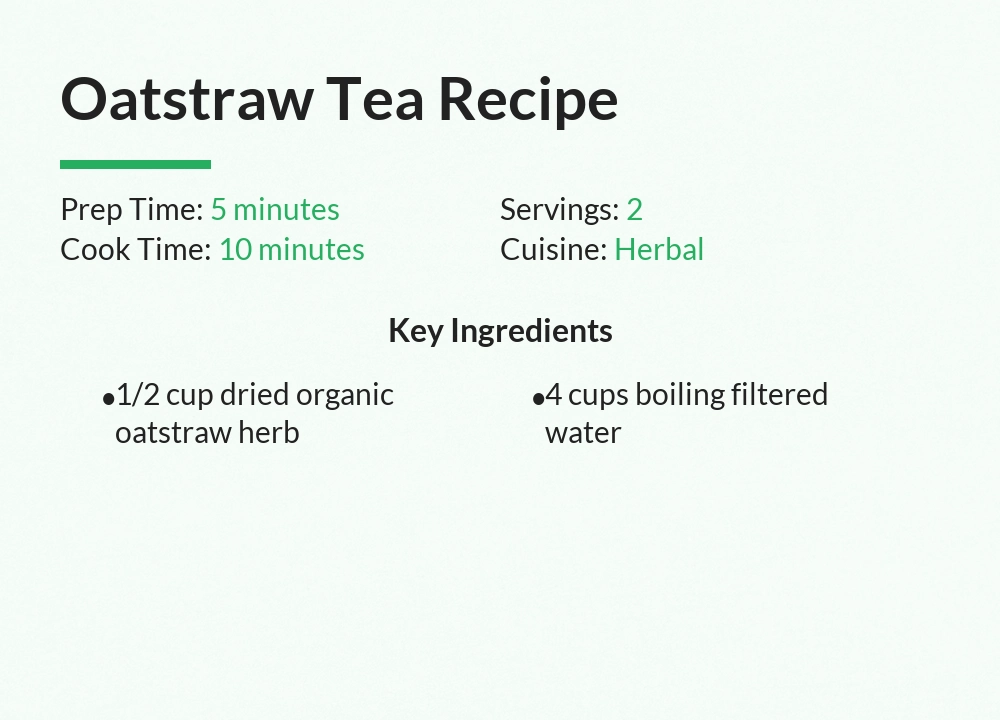
As an Amazon Associate, I may earn a small commission from qualifying purchases at no extra cost to you. This helps me create more valuable, tested content for you.
During a particularly dry autumn, when the Santa Ana winds whipped through California and left my skin feeling parched, I reached for an old herbal ally I learned about years ago. Oatstraw tea became my daily ritual, not just for its mild, earthy flavor, but for the profound sense of balance it brought to my hectic days.
This simple infusion, made from the straw of the Avena sativa plant, is a powerhouse of minerals and calming properties. I will show you exactly how to prepare it, drawing from my experience as a dietician and culinary historian to ensure you get the most from every cup.
The basic method involves steeping dried oatstraw in boiling water to extract its essential vitamins and minerals. It is a gentle, versatile beverage that can be enjoyed hot or cold, and its benefits for the nervous system and bone health are well-documented.
How to Make oatstraw tea recipe
Recipe Details
- Prep Time: 5 minutes
- Cook Time: 10 minutes
- Servings: 2
- Course: Beverage
- Cuisine: Herbal
- Diet: Vegan, Gluten-Free
Ingredients
- 1/2 cup dried organic oatstraw herb
- 4 cups boiling filtered water
Instructions
- Bring filtered water to a rolling boil in a kettle.
- Place the dried oatstraw herb into a large mason jar or teapot.
- Pour the boiling water directly over the herb, ensuring it is fully submerged.
- Cover the container tightly with a lid to prevent the escape of volatile oils.
- Allow the mixture to steep for a minimum of 10 minutes; for a stronger, more nutrient-dense infusion, steep for 4 to 8 hours.
- Strain the liquid through a standard stainless steel mesh kitchen strainer into a cup or another jar.
- Discard the spent herbs and enjoy the tea warm, or chill it for a refreshing cold drink.
Nutrition
- Calories: 5 kcal
- Protein: 0.3 g
- Fat: 0.1 g
- Carbohydrates: 1 g
- Sugar: 0 g
- Fiber: 0.5 g
- Sodium: 2 mg
- Cholesterol: 0 mg
Cooking Method
This recipe uses the infusion method, which involves pouring boiling water over dried plant material and letting it steep. This technique is ideal for extracting water-soluble constituents like minerals and certain vitamins from the oatstraw without damaging them with prolonged heat.
Tools Needed
- A kettle for boiling water
- A 1-quart glass mason jar or teapot with a lid
- A standard stainless steel mesh kitchen strainer
- Measuring cups
The Herb Behind the Brew
Oatstraw is the stem and leaf of the oat plant, Avena sativa, harvested after the grain has matured. Unlike the oat grain you might eat for breakfast, the straw is rich in silica, calcium, and B vitamins, which contribute to its nourishing properties.
This herb has been used for centuries in various traditional medicine systems across Europe and North America. Its historical use as a nerve tonic and skin remedy is well-recorded in herbal texts from the 19th century.
Energetic Properties and Flavor Profile
Oatstraw possesses a calming, earthy flavor that is neither bitter nor overpowering. Its mild nature makes it an excellent base for herbal blends. Energetically, it is considered a nutritive tonic, meaning it helps build and support the body’s foundational resources over time.
Many describe its effect as grounding, providing a gentle sense of stability without being sedative. This makes it a perfect choice for daily consumption to help maintain a balanced stress response.
Nutritional Science of Oatstraw
From a dietician’s perspective, oatstraw tea is a source of essential minerals that are often deficient in modern diets. Its infusion releases calcium, magnesium, and silica into the water, making them bioavailable for absorption.
Key Constituents and Their Effects
The calcium in oatstraw supports bone density and nervous system function. Silica is a critical element for connective tissue health, skin elasticity, and hair strength. The B vitamins present, though in small amounts, contribute to energy production at a cellular level.
This combination of nutrients works synergistically to bolster the body’s resilience. Regular consumption can help combat the effects of daily stress and environmental dryness.
Selecting and Sourcing Your Oatstraw
The quality of your dried herbs directly impacts the potency and safety of your tea. I always seek out certified organic oatstraw to avoid potential pesticide contamination. The herb should have a green hue and a fresh, hay-like scent.
Identifying High-Quality Herb
Look for oatstraw that is clearly labeled Avena sativa or Avena fatua. The material should be clean, free of dust, and stored in a sealed container away from light. Reputable companies like Buddha Teas or small-scale herbalists often provide high-quality, sustainably harvested options.
If you have celiac disease or a gluten sensitivity, ensure your oatstraw is from a certified gluten-free source, as cross-contamination with gluten-containing grains can occur during harvesting and processing.
Advanced Brewing and Blending Techniques
While the basic recipe is effective, you can tailor your oatstraw tea to target specific needs or preferences. The method of preparation can alter the final flavor and nutritional profile.
Creating a Nourishing Infusion
For a more potent mineral drink, create a nourishing infusion by using a full ounce of oatstraw in a quart jar, steeping it overnight. This longer steeping time pulls even more vitamins and essential minerals from the plant material, resulting in a deeply colored, nutrient-dense liquid.
Herbal Synergies and Blends
Oatstraw pairs beautifully with other herbs. Combining it with nettle leaf adds iron and chlorophyll. Adding tulsi, also known as holy basil, introduces adaptogenic properties that help the body adapt to stress. A blend with chamomile flowers enhances the calming effect, perfect for the evening.
For a simple blend, try 1/4 cup dried oatstraw, 1/4 cup dried nettle leaf, and 1/4 cup dried tulsi. Steep as usual for a comprehensive daily herbal nourishment.
Common Preparation Errors and Solutions
Many people make the mistake of using water that is not hot enough, which fails to extract the full spectrum of minerals. Always use boiling water for this particular herb to ensure proper extraction.
Another frequent error is steeping for too short a time. While a 10-minute steep will yield a pleasant tea, a longer infusion of several hours is required to access the deeper mineral content. Covering the jar during steeping is crucial to prevent the loss of volatile compounds.
Using a metal strainer is fine, but avoid brewing in reactive metal pots, as this can affect the flavor and potentially leach metals into your tea. Glass or ceramic containers are ideal.
Serving, Storage, and Daily Integration
You can drink oatstraw tea at any time of day. Its mild nature means it won’t cause drowsiness, making it suitable for the morning or afternoon. I often enjoy a cup after a large meal to support digestion.
Store prepared tea in a sealed glass jar in the refrigerator for up to 48 hours. For longer storage, you can freeze it in ice cube trays and use the cubes in smoothies or for a cool drink. The tea develops a beautiful amber hue over time, which is perfectly normal.
Integrating this tea into your routine is a perfect way to add essential minerals without significant calories. It can be a cornerstone of a balanced lifestyle, especially during periods of added stress or dry weather.
Dietary Adaptations and Considerations
This recipe is inherently vegan and gluten-free when certified gluten-free oatstraw is used. For those monitoring sugar intake, oatstraw tea contains no natural sugars, and no sweetener is required due to its mild flavor.
If you desire a creamier texture, a splash of oat milk or almond milk can be added after straining. This does not alter the core benefits but can make the drink more satisfying.
Historical and Cultural Roots
The use of oatstraw as a remedy dates back centuries in European folk medicine. It was traditionally used to support convalescence and strengthen the nervous system after illness. Herbalists like Hildegard of Bingen documented its applications for skin conditions and overall vitality.
In more recent history, it gained popularity in North American herbalism as a nourishing tonic, often recommended for its calming presence and ability to combat the effects of a fast-paced modern life.
The Mechanism of Action in the Body
Oatstraw works primarily by providing bioavailable minerals that are co-factors for numerous enzymatic processes. The silica helps strengthen connective tissues, while the calcium and magnesium work to regulate nerve transmission and muscle function.
Its constituents have a mild affinity for the nervous system, helping to modulate the stress response without being directly sedative. This is why many report feeling a little more energy and mental clarity with consistent use, as it addresses underlying nutrient deficiencies that can cause fatigue.
Frequently Asked Questions
What is oatstraw tea recipe?
It is a method for preparing a beverage by steeping the dried stems and leaves of the oat plant in hot water to extract its nutrients and create a mild, earthy herbal tea.
Why is oatstraw tea recipe important?
This recipe is important because it provides a simple way to access the mineral-rich and calming properties of oatstraw, which can support nervous system health, bone density, and overall daily nourishment.
How does oatstraw tea recipe work?
The recipe works through infusion, where boiling water pulls water-soluble vitamins, minerals, and other plant constituents from the dried oatstraw into the liquid, making them available for your body to absorb upon drinking.
Does oatstraw help you sleep?
Oatstraw is not a sedative herb, but its high mineral content can help calm the nervous system, which may indirectly promote better sleep by reducing restlessness and supporting a balanced stress response.
How long does it take for oatstraw to work?
The effects are cumulative and subtle. You may notice a slight improvement in calmness or skin health within a few weeks of daily consumption, but significant benefits for bone or nerve health develop over months of consistent use.
Is oatstraw a stimulant?
No, oatstraw is not a stimulant like coffee. It is a nutritive tonic that provides foundational support, which can sometimes result in a feeling of increased energy by addressing underlying nutrient deficiencies, but it does not contain caffeine.
What else can you make with oatstraw?
Beyond tea, you can use a strong oatstraw infusion as a base for soups or broths, add it to a bath for skin health, or incorporate it into an herbal oat scrub for topical use to combat dryness.
Can I drink oatstraw tea every day?
Yes, its mild nature makes it suitable for daily consumption. Many herbalists recommend it as a daily tonic for long-term building of the body’s resources.