Reina
Reina 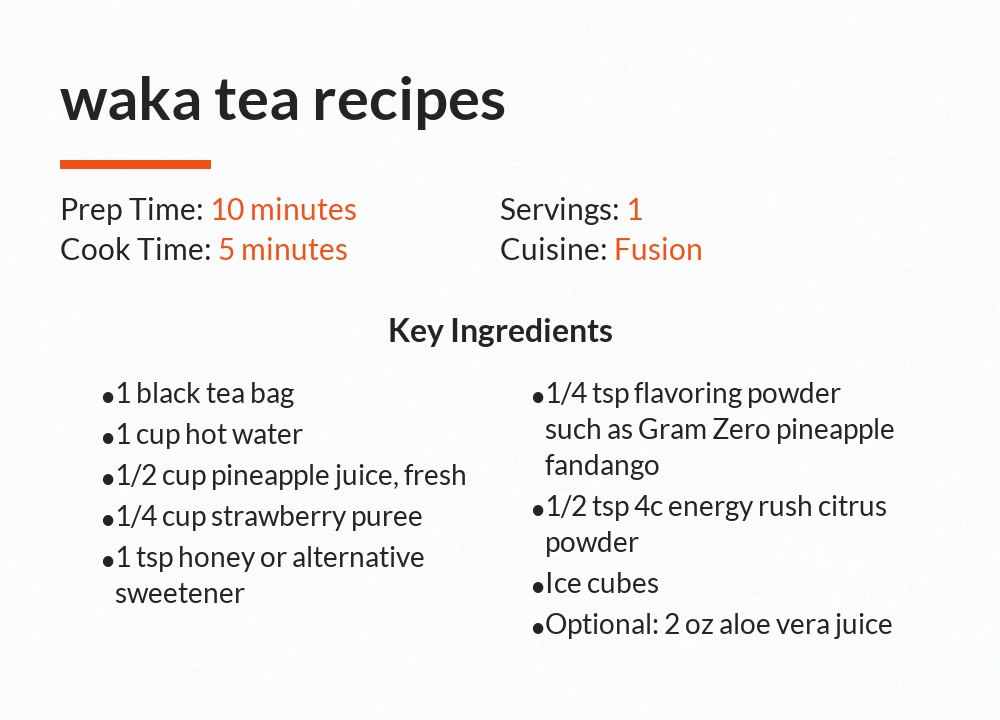
As an Amazon Associate, I may earn a small commission from qualifying purchases at no extra cost to you. This helps me create more valuable, tested content for you.
I first tasted waka tea at a local farmers market, where a vendor offered samples of a vibrant strawberry sunrise loaded tea.
The balance of tart fruit and smooth tea base caught my attention, leading me to research and develop my own versions.
Waka tea recipes typically involve combining tea with fruit juices, flavor powders, and other enhancers for a refreshing beverage.
In this guide, I will walk you through a detailed recipe, explain its nutritional aspects, and cover numerous variations to suit your preferences.
How to Make waka tea recipes
Recipe Details
- Prep Time: 10 minutes
- Cook Time: 5 minutes
- Servings: 1
- Course: Beverage
- Cuisine: Fusion
- Diet: Vegan
Ingredients
- 1 black tea bag
- 1 cup hot water
- 1/2 cup pineapple juice, fresh
- 1/4 cup strawberry puree
- 1 tsp honey or alternative sweetener
- 1/4 tsp flavoring powder such as Gram Zero pineapple fandango
- 1/2 tsp 4c energy rush citrus powder
- Ice cubes
- Optional: 2 oz aloe vera juice
Instructions
- Steep the black tea bag in hot water for 5 minutes, then remove the bag and allow the tea to cool to room temperature.
- In a 32 oz cup or shaker, combine the cooled tea, pineapple juice, strawberry puree, honey, flavoring powder, and energy rush powder.
- Add ice cubes and aloe vera juice if using, then shake vigorously or stir until all ingredients are fully incorporated.
- Pour the mixture into a glass, ensuring it is well mixed, and serve immediately for best flavor.
Nutrition
- Calories: 90 kcal
- Protein: 1 g
- Fat: 0 g
- Carbohydrates: 22 g
- Sugar: 18 g
- Fiber: 1 g
- Sodium: 15 mg
- Cholesterol: 0 mg
Cooking Method
This recipe uses a no-cook method after brewing the tea, relying on shaking or blending to mix ingredients.
It preserves the freshness of fruit components and maintains nutrient integrity.
You can adjust the mixing technique based on available tools, such as using a blender for a smoother texture.
Tools Needed
- Kettle or microwave for heating water
- Measuring cups and spoons
- Shaker or blender
- 32 oz cup for mixing and serving
- Spoon or stirrer
Understanding Waka Tea and Its Variations
Waka tea refers to a category of loaded teas that often include tea bases, fruit elements, and supplemental powders.
These drinks are known for their customizable nature, allowing for endless flavor combinations.
From my experience, the key to a great waka tea lies in balancing acidity, sweetness, and texture.
What is Waka Tea?
Waka tea is a beverage that typically starts with a tea base, such as black or green tea, and is enhanced with fruits, juices, and flavor powders.
It originated from modern health-conscious communities seeking alternatives to sugary sodas and energy drinks.
The term “loaded” indicates the addition of ingredients like aloe vera or energy supplements for extra benefits.
Popular Waka Tea Recipes
Many variations exist, each with unique flavor profiles and ingredient lists.
I have tested several recipes to understand their appeal and nutritional impact.
Strawberry Sunrise Loaded Tea
This version uses strawberry puree and citrus notes for a bright, energizing start to the day.
It often includes a hint of sweetener to balance the tartness of the berries.
Peach Nectar Loaded Tea
Peach nectar provides a smooth, sweet base that pairs well with black tea.
I find it works best with a touch of honey and a splash of aloe vera for hydration.
Cinnapom Sangria Loaded Tea
Cinnamon and pomegranate flavors create a warm, spiced drink reminiscent of sangria.
This variation is ideal for cooler weather and can be served warm or cold.
Guava Melon Loaded Tea Fresher
Guava and melon combine for a tropical twist that is both refreshing and lightly sweet.
Using fresh fruit instead of concentrates enhances the natural flavors.
Napa Valley Loaded Tea
Inspired by wine country, this recipe often includes grape-based elements and herbal notes.
It is a sophisticated option for those seeking a more complex beverage.
The Pineapple Wave Loaded Tea
Pineapple juice and coconut flavors mimic a tropical wave, often with added energy powders.
I recommend using fresh pineapple juice to avoid excess sugars from canned versions.
Mango Rush Loaded Tea
Mango puree or juice gives a creamy texture and sweet taste, boosted with energy supplements.
This is a popular choice for post-workout recovery due to its carbohydrate content.
Indian Ocean Loaded Tea
This variation incorporates chai tea spices and tropical fruits for an exotic blend.
It typically includes cardamom, cinnamon, and mango or guava elements.
Ingredient Deep Dive
Each component in waka tea plays a role in flavor, nutrition, and texture.
Selecting high-quality ingredients can significantly improve the final product.
Tea Bases
Tea serves as the foundation, providing caffeine and antioxidants.
Different teas offer varying flavor profiles and health benefits.
Black Tea
Black tea has a robust flavor that stands up well to strong fruit additions.
It contains theaflavins, which may support heart health and reduce inflammation.
Green Tea
Green tea offers a lighter taste with high levels of catechins, known for their antioxidant properties.
It pairs nicely with citrus or melon flavors in recipes like guava melon loaded tea.
Chai Tea
Chai tea includes spices like cinnamon and ginger, adding warmth and complexity.
It works well in variations such as Indian Ocean loaded tea for a spiced kick.
Fruit Components
Fruits contribute natural sugars, vitamins, and freshness to the drink.
Using fresh or minimally processed fruits maximizes nutritional value.
Pineapple
Pineapple adds bromelain, an enzyme that aids digestion and reduces inflammation.
Its sweet-tart profile is central to recipes like the pineapple wave.
Strawberry
Strawberries provide vitamin C and antioxidants, supporting immune function.
They blend smoothly into purees for even distribution in the tea.
Guava
Guava is rich in fiber and vitamin C, enhancing satiety and skin health.
It pairs excellently with melon in guava melon variations.
Peach
Peaches offer beta-carotene and potassium, promoting eye and heart health.
Nectar forms provide a smooth consistency without pulp interference.
Mango
Mango contains vitamins A and E, which are beneficial for vision and skin.
Its creamy texture makes it ideal for mango rush or tropical mango recipes.
Flavor Enhancers and Supplements
These ingredients amplify taste, energy, or nutritional content.
They should be used in moderation to avoid overpowering the drink.
Flavoring Powders
Powders like Gram Zero pineapple fandango add concentrated flavor without extra liquid.
They often contain natural extracts and may include vitamins or minerals.
Energy Rush Powders
Products such as 4c energy rush provide caffeine and B vitamins for an energy lift.
They are derived from ingredients like guarana, which has a slower caffeine release than coffee.
Aloe Vera Juice
Aloe vera juice soothes the digestive tract and adds hydration.
It has a mild, slightly bitter taste that balances sweetness in recipes.
Guarana Powder
Guarana is a natural stimulant with higher caffeine content than coffee beans.
It is often used in small amounts, such as 1/8 tsp, to avoid jitters.
Nutritional Breakdown
Waka tea can be a nutrient-dense beverage when made with whole ingredients.
Its nutritional profile varies based on the specific recipe and portions used.
Caloric Content
Most waka teas range from 80 to 150 calories per serving, primarily from carbohydrates.
Using low-sugar juices and natural sweeteners can reduce calorie intake.
Macronutrients
Carbohydrates dominate, providing quick energy from fruits and sweeteners.
Protein and fat are minimal unless additions like collagen or milk are included.
Micronutrients
Fruits and teas contribute vitamins such as C and A, plus minerals like potassium.
Antioxidants from tea and fruits help combat oxidative stress in the body.
Health Benefits
Regular consumption may support hydration, energy levels, and nutrient intake.
The caffeine and guarana can enhance mental focus and physical performance.
Antioxidants aid in reducing inflammation and supporting overall wellness.
Dietary Adaptations
Waka tea recipes are highly adaptable to various dietary needs and preferences.
Simple swaps can make them suitable for vegan, low-sugar, or gluten-free diets.
Vegan Options
Replace honey with maple syrup or agave nectar to maintain sweetness.
Ensure any flavor powders are free from animal-derived ingredients.
Low-Sugar Versions
Use stevia or monk fruit sweeteners instead of honey or sugar.
Opt for unsweetened fruit purees and juices to cut down on natural sugars.
Dairy-Free and Gluten-Free
Most waka teas are naturally dairy-free, but check powder labels for hidden dairy.
Tea and fruits are gluten-free, but verify that supplements are certified gluten-free.
High-Protein Variations
Add a scoop of plant-based protein powder to the shaker for extra protein.
Collagen water can be used as a base to support joint and skin health.
The History and Culture of Loaded Teas
Loaded teas have roots in health food movements and modern café culture.
They gained popularity through social media and word-of-mouth in fitness communities.
I recall seeing them first in urban wellness centers, where they were promoted for their energy-boosting properties.
The trend has evolved to include a wide range of flavors and functional ingredients.
Today, they are often associated with homemade recipes and customizable beverage experiences.
Common Mistakes and Expert Tips
Avoiding common errors can ensure your waka tea turns out perfectly every time.
Based on my trials, here are key pitfalls and how to overcome them.
Over-Brewing Tea
Steeping tea too long can result in bitterness that overpowers other flavors.
Follow recommended steeping times and cool the tea quickly to halt extraction.
Imbalanced Sweetness
Too much sweetener can mask the natural fruit tastes.
Start with less sweetener and adjust to taste after mixing all ingredients.
Inadequate Mixing
Powders may clump if not shaken thoroughly, leading to uneven flavor.
Use a shaker or blender for consistent distribution, especially with energy powders.
Using Low-Quality Ingredients
Fresh juices and high-quality teas make a noticeable difference in taste.
Invest in organic or natural products to enhance both flavor and nutrition.
Serving Suggestions and Storage Tips
Waka tea is best served fresh to preserve its vibrant flavors and nutrients.
Pair it with light snacks like fruit salads or whole-grain crackers for a balanced treat.
If you need to store it, keep it in a sealed container in the refrigerator for up to 24 hours.
Shake well before serving again, as separation may occur over time.
For large batches, consider mixing without ice and adding it just before serving to prevent dilution.
The Science Behind Waka Tea’s Effects
The combination of ingredients in waka tea can have synergistic effects on the body.
Caffeine from tea and guarana stimulates the central nervous system, increasing alertness.
Antioxidants in tea and fruits help neutralize free radicals, reducing cellular damage.
Natural sugars provide quick energy, while fiber from fruits aids in slow digestion and satiety.
Understanding these mechanisms can help you tailor recipes to your specific health goals.
Frequently Asked Questions
What is waka tea recipes?
Waka tea recipes are detailed instructions for making loaded teas that blend tea bases with fruits, juices, and supplemental powders for enhanced flavor and function.
Why is waka tea recipes important?
These recipes are important because they offer a customizable, nutrient-rich beverage option that can support hydration, energy, and overall wellness when prepared correctly.
How does waka tea recipes work?
Waka tea recipes work by combining ingredients that provide taste, texture, and nutritional benefits, often through simple mixing methods that preserve freshness and potency.
Can I make waka tea without caffeine?
Yes, you can use decaffeinated tea bases and omit energy powders to create a caffeine-free version suitable for any time of day.
What are the best sweeteners for waka tea?
Natural sweeteners like honey, stevia, or agave work well; choose based on your dietary needs and flavor preferences for optimal results.
How long does homemade waka tea last?
Homemade waka tea should be consumed within 24 hours when stored in the refrigerator to maintain quality and prevent spoilage.
Can I use frozen fruits in waka tea?
Frozen fruits are a convenient option and can be blended into purees, though they may dilute the drink slightly as they thaw during mixing.
Is waka tea suitable for weight management?
When made with low-sugar ingredients and portion control, waka tea can be part of a weight management plan by providing hydration and nutrients without excess calories.