 Reina
Reina 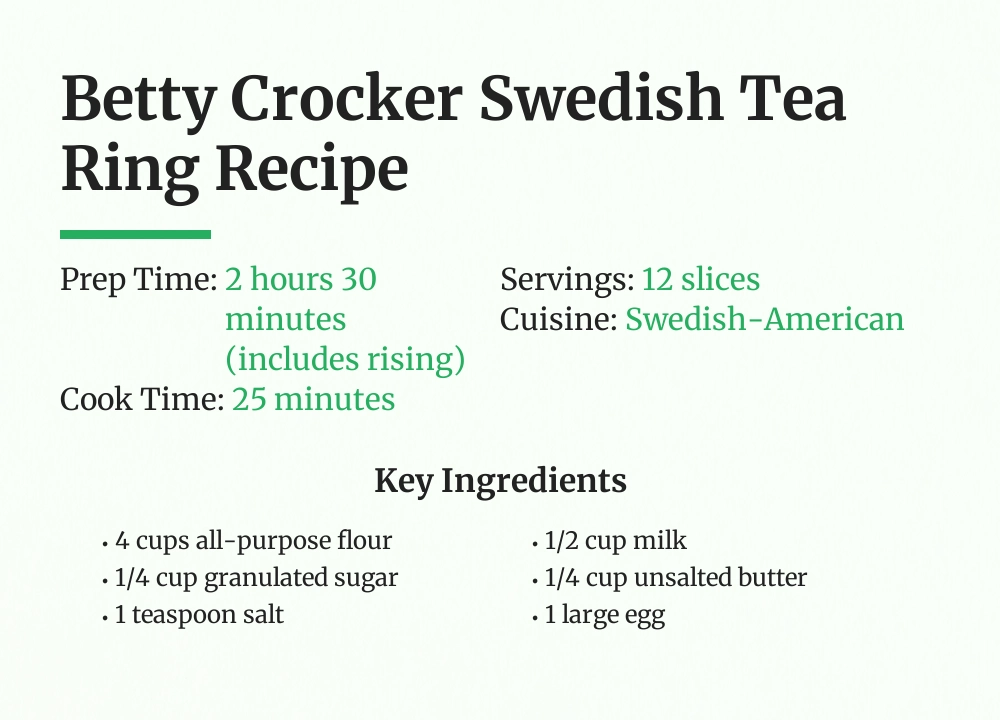
As an Amazon Associate, I may earn a small commission from qualifying purchases at no extra cost to you. This helps me create more valuable, tested content for you.
I recall the first time I helped my grandmother prepare this pastry for Christmas morning. The scent of yeast and cinnamon filled her kitchen, creating a memory that stays with me decades later. If you have ever wanted to recreate a classic holiday treat that feels both special and approachable, this guide will walk you through every step. The Betty Crocker Swedish Tea Ring is a hand-shaped, filled yeast bread, often adorned with a drizzle of icing and nuts, making it a centerpiece for festive gatherings.
This recipe yields a soft, sweet dough rolled with a cinnamon-brown sugar mixture, formed into a ring, and baked until golden. It serves as a versatile option for breakfast or dessert, and its visual appeal makes it ideal for sharing. In this article, I will provide the complete recipe, along with detailed analysis from my perspective as a dietician and culinary historian. You will learn about ingredient functions, nutritional values, and how to adapt it for various diets, ensuring you can master this tradition in your own home.
How to Make Betty Crocker Swedish Tea Ring Recipe
This section covers the core recipe, which I have tested multiple times to refine the process. Follow these steps for a consistent outcome, and refer to the later sections for deeper insights into each component.
Recipe Details
- Prep Time: 2 hours 30 minutes (includes rising)
- Cook Time: 25 minutes
- Servings: 12 slices
- Course: Breakfast, Dessert
- Cuisine: Swedish-American
- Diet: Vegetarian
Ingredients
- 4 cups all-purpose flour
- 1/4 cup granulated sugar
- 1 teaspoon salt
- 1 package active dry yeast
- 1/2 cup warm water (110°F)
- 1/2 cup milk
- 1/4 cup unsalted butter
- 1 large egg
- 1/2 cup light brown sugar
- 2 teaspoons ground cinnamon
- 1/4 cup softened butter for filling
- 1/2 cup raisins
- 1/2 cup chopped walnuts
- 1 cup confectioners’ sugar
- 1-2 tablespoons milk for glaze
- 1/2 teaspoon almond extract
Instructions
- In a small bowl, dissolve the active dry yeast in warm water and let it sit for 5 minutes until frothy.
- Heat the milk and 1/4 cup butter in a saucepan until warm but not boiling, then allow it to cool slightly.
- In a large mixing bowl, combine flour, granulated sugar, and salt. Add the yeast mixture, warm milk mixture, and egg. Stir until a dough forms.
- Turn the dough onto a floured surface and knead for 8-10 minutes until smooth and elastic. Place in a greased bowl, cover, and let rise in a warm place for 1 hour or until doubled.
- Punch down the dough and roll it out on a floured board into a 15×9-inch rectangle. Spread the softened butter over the surface, then sprinkle evenly with brown sugar, cinnamon, raisins, and walnuts.
- Roll the dough tightly from the long edge, pinching the seam to seal. Shape the roll into a circle on a greased baking sheet, joining the ends. Use clean scissors to make cuts around the outer edge at 1-inch intervals, twisting each section slightly to show the filling.
- Cover and let rise again for 30-45 minutes. Preheat oven to 375°F.
- Bake for 20-25 minutes until golden brown. Cool slightly on a wire rack.
- Whisk confectioners’ sugar, milk, and almond extract in a small bowl until smooth, then drizzle over the warm tea ring before serving.
Nutrition
- Calories: 280 kcal
- Protein: 5 g
- Fat: 9 g
- Carbohydrates: 45 g
- Sugar: 22 g
- Fiber: 2 g
- Sodium: 150 mg
- Cholesterol: 30 mg
Cooking Method
This recipe uses a standard baking method in a conventional oven. The dough undergoes two rises to develop texture, and baking at 375°F ensures even cooking without drying out the interior. The ring shape promotes uniform heat distribution, resulting in a tender crumb and crisp edges.
Tools Needed
- Mixing bowls in various sizes
- Measuring cups and spoons
- Baking sheet
- Rolling pin
- Wire rack for cooling
- Clean scissors for shaping
- Saucepan for heating liquids
Ingredient Analysis
Understanding each component helps you make informed substitutions and appreciate the recipe’s structure. I will break down the primary ingredients based on their roles and attributes.
Flour and Yeast
All-purpose flour provides the gluten network that gives the dough elasticity and strength. If you prefer a lighter texture, bread flour with higher protein can be used. Active dry yeast, when activated in warm water, ferments sugars to produce carbon dioxide, causing the dough to rise. This process requires temperatures around 110°F; too hot can kill the yeast, while too cold slows fermentation.
Sweeteners and Spices
Granulated sugar in the dough feeds the yeast and adds tenderness, while brown sugar in the filling contributes moisture and a molasses flavor. Cinnamon, with its warm, aromatic notes, pairs well with the sugars, and its antioxidants offer minor health benefits. Almond extract in the glaze enhances the nutty profile without overwhelming the other flavors.
Fats and Dairy
Butter enriches the dough, providing fat that tenderizes and adds flavor. In the filling, softened butter helps the sugar and spices adhere to the dough. Milk adds protein and lactose, which browns during baking for a golden crust. For a dairy-free version, plant-based alternatives like almond milk and vegan butter work well.
Nuts and Fruits
Walnuts add crunch and omega-3 fatty acids, while raisins offer natural sweetness and fiber. You can substitute with dried cherries or apricots for a tangy twist, or omit nuts for allergy-friendly versions. Toasting the walnuts beforehand can deepen their flavor.
Nutritional Breakdown
As a dietician, I analyze recipes for their macronutrient balance and how they fit into a daily diet. This Swedish Tea Ring is moderate in calories but high in carbohydrates and sugars, making it best enjoyed in moderation. Each slice provides energy from complex carbs in the flour, with fats from butter and nuts contributing to satiety.
The protein content comes mainly from the egg and flour, supporting muscle maintenance. However, the sugar levels, primarily from added sugars, mean this is a treat rather than a everyday food. To reduce sugar impact, pair it with protein-rich foods like eggs or yogurt for a balanced meal. The fiber from raisins and walnuts aids digestion, but overall, it is a celebratory dish with nostalgic value.
Dietary Adaptations
Many readers ask how to modify this recipe for specific needs. Here are practical swaps that maintain the essence of the original while accommodating restrictions.
Gluten-Free Version
Replace all-purpose flour with a gluten-free blend designed for baking, such as one with rice flour and xanthan gum. Ensure the yeast is gluten-free, and knead the dough gently as it may be more fragile. The rising time might be shorter, so watch for doubling in size.
Vegan Adaptation
Use plant-based milk and butter, and substitute the egg with a flax egg (1 tablespoon ground flaxseed mixed with 3 tablespoons water). For the glaze, opt for confectioners’ sugar with almond milk and vegan-friendly extract. Check that the sugar is processed without bone char if strict veganism is a concern.
Low-Sugar Option
Reduce the brown sugar in the filling by half and use a sugar substitute like erythritol. In the dough, decrease granulated sugar slightly, though this may affect yeast activity. The glaze can be made with a sugar-free powdered sweetener and minimal milk.
Cultural and Historical Context
The Swedish Tea Ring has roots in Scandinavian baking traditions, where ring-shaped breads like “kranskaka” are common for holidays. Betty Crocker, an American brand, popularized this version in the mid-20th century, adapting it for home cooks through accessible recipes. It often appears during Christmas, symbolizing unity with its circular shape.
In many families, preparing this on Christmas Eve for the next morning became a ritual, blending Swedish heritage with American convenience. The use of cinnamon and almonds reflects historical trade routes that brought spices to Northern Europe. Today, it remains a staple in holiday cookbooks, evoking nostalgia and continuity across generations.
Common Mistakes and Expert Tips
Based on my experience, avoiding these pitfalls ensures a perfect tea ring every time. I have compiled tips to guide you through potential challenges.
Over-kneading the dough can make it tough; stop when it is smooth and springy. If the dough does not rise, check the yeast expiration and water temperature. When rolling, ensure the filling is evenly distributed to prevent voids. During baking, rotate the sheet halfway for even browning if your oven has hot spots.
For a shiny finish, brush the dough with an egg wash before baking. If the ring browns too quickly, tent it with foil. Store leftovers in an airtight container at room temperature for up to three days, or freeze for longer storage. Reheat gently to restore freshness.
Serving, Pairing and Storage
This tea ring shines as a centerpiece for brunch or dessert. Serve it warm with coffee or tea, complementing the spices. For a festive spread, pair it with savory items like cheesy eggs or bacon burritos to balance the sweetness.
To store, wrap the cooled ring in plastic wrap or place in a sealed container. It can be refrigerated for up to five days or frozen for three months. Thaw at room temperature and reheat in a 300°F oven for 10 minutes. For gifts, package slices in decorative boxes with baking instructions.
The Science of Yeast Breads
Yeast fermentation is a biological process where sugars are converted into alcohol and carbon dioxide, causing the dough to expand. Gluten, formed from flour proteins, traps the gas, creating air pockets. The rising times allow for flavor development through enzymatic activity.
Baking sets the structure by coagulating proteins and gelatinizing starches. The Maillard reaction between sugars and proteins gives the crust its brown color and rich flavor. Understanding this helps troubleshoot issues like dense texture or pale crusts.
Frequently Asked Questions
What is Betty Crocker Swedish Tea Ring recipe?
It is a classic yeast bread recipe featuring a rolled dough filled with cinnamon, sugar, and nuts, shaped into a ring and baked. Originating from Betty Crocker’s cookbooks, it is known for its festive appearance and sweet, spiced flavor.
Why is Betty Crocker Swedish Tea Ring recipe important?
This recipe holds cultural significance as a holiday tradition in many households, symbolizing family gatherings and Christmas celebrations. Its ease of preparation and visual appeal have made it a enduring favorite for decades.
How does Betty Crocker Swedish Tea Ring recipe work?
The recipe relies on yeast leavening to create a light, airy dough. After mixing and rising, the dough is rolled with a filling, shaped, and baked. The ring form ensures even cooking, and the glaze adds moisture and sweetness.
Can I make this recipe ahead of time?
Yes, you can prepare the dough up to the first rise, then refrigerate it overnight. Let it come to room temperature before proceeding. Alternatively, bake the ring fully, freeze it, and reheat before serving.
What are common variations of this tea ring?
Variations include using different fillings like apricot-cherry combinations, adding chocolate chips, or incorporating candied fruit. Some versions top it with coconut or drizzle with caramel for added richness.
How do I know when the dough has risen enough?
The dough should double in size, which typically takes 1-2 hours in a warm environment. To test, gently press a finger into the dough; if the indentation remains, it is ready.
Is this recipe suitable for special diets?
With adaptations, it can be made gluten-free, vegan, or low-sugar. Refer to the Dietary Adaptations section for detailed swaps and considerations based on your needs.
What tools are essential for this recipe?
Key tools include a mixing bowl, baking sheet, and rolling pin. A dough hook on a stand mixer can simplify kneading, but hand-kneading works well. Clean scissors are crucial for the decorative edge cuts.
How can I prevent the filling from leaking during baking?
Avoid overfilling and ensure the dough is rolled tightly with the seam sealed. Chilling the shaped ring briefly before baking can help set the butter, reducing leakage.
What is the best way to serve this tea ring?
Serve it warm or at room temperature, sliced into portions. It pairs wonderfully with hot beverages and can be accompanied by fresh fruit or dairy products for a balanced meal.

