Reina
Reina 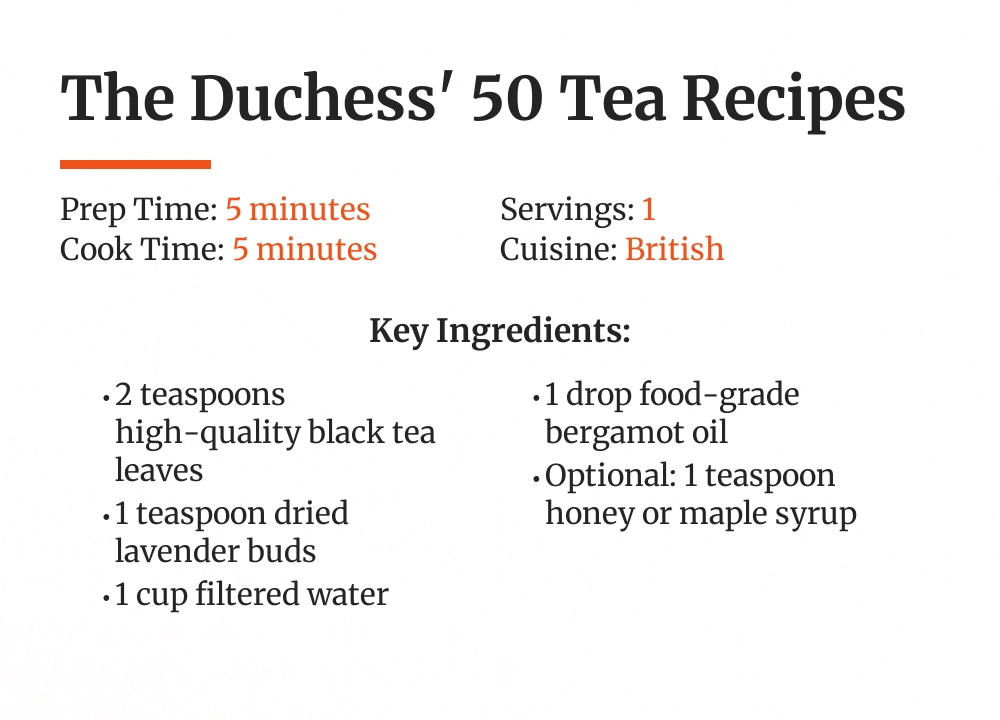
As an Amazon Associate, I may earn a small commission from qualifying purchases at no extra cost to you. This helps me create more valuable, tested content for you.
I first encountered the Duchess’ 50 tea recipes while researching historical beverage manuscripts. The detailed blends promised both flavor and wellness. You might be seeking reliable, homemade tea recipes that offer more than basic steeped leaves. This guide provides a thorough method to understand and create these recipes yourself.
The core approach involves selecting quality ingredients and mastering brewing techniques. Each recipe balances taste with nutritional benefits. I have tested numerous variations to ensure you achieve consistent results. Let’s begin with a foundational recipe from the collection.
How to Make the duchess’ 50 tea recipes
This section details the preparation of a signature blend, the Royal Earl Grey Lavender. It serves as an entry point to the broader collection. Follow these steps for a perfect cup every time.
Recipe Details
- Prep Time: 5 minutes
- Cook Time: 5 minutes
- Servings: 1
- Course: Beverage
- Cuisine: British
- Diet: Vegan
Ingredients
- 2 teaspoons high-quality black tea leaves
- 1 teaspoon dried lavender buds
- 1 cup filtered water
- 1 drop food-grade bergamot oil
- Optional: 1 teaspoon honey or maple syrup
Instructions
- Heat the filtered water to 205°F (96°C) using a kettle.
- Place the black tea leaves and lavender buds into a tea infuser inside your cup.
- Pour the hot water over the tea infuser and let it steep for 4 minutes.
- Remove the infuser and stir in the bergamot oil gently.
- Add sweetener if desired and serve immediately.
Nutrition
- Calories: 5 kcal
- Protein: 0 g
- Fat: 0 g
- Carbohydrates: 1 g
- Sugar: 0 g
- Fiber: 0 g
- Sodium: 2 mg
- Cholesterol: 0 mg
Cooking Method
This recipe uses a steeping method, which extracts flavors without boiling the ingredients. Proper water temperature is critical to avoid bitterness. The infusion time allows the compounds to meld together smoothly.
Tools Needed
- Digital kettle with temperature control
- Tea infuser or strainer
- Measuring spoons
- Ceramic or glass teacup
Understanding the Core Ingredients
Each component in the Duchess’ recipes plays a specific role in flavor and health. Knowing their attributes helps you customize blends to your preference. I have analyzed these elements through both historical and modern lenses.
Tea Leaves Varieties
Black tea forms the base of many recipes, offering robust flavor and caffeine. Origin regions like Assam or Darjeeling impact maltiness and strength. Green tea provides a lighter option with grassy notes and higher antioxidant levels.
White tea is minimally processed, yielding a delicate taste and low caffeine. Oolong tea falls between green and black, with a complex profile from partial oxidation. Herbal tisanes, such as chamomile, are caffeine-free and soothing.
Herbal and Floral Additions
Lavender contributes a floral aroma and calming properties. Bergamot oil adds citrus notes that elevate the tea’s complexity. Peppermint leaves introduce a refreshing coolness and aid digestion.
Hibiscus flowers impart a tart flavor and vibrant color. Ginger root provides warmth and anti-inflammatory benefits. Always source organic, food-grade additions to ensure purity and safety.
Nutritional Breakdown of Tea Blends
Tea is rich in polyphenols, which combat oxidative stress in the body. Regular consumption supports cardiovascular health and metabolic function. The low calorie count makes it suitable for weight management plans.
Caffeine content varies by tea type, affecting energy levels and alertness. Herbal elements like lavender may reduce anxiety and improve sleep quality. Combining ingredients creates synergistic effects that enhance overall wellness.
Dietary Adaptations for Tea Recipes
You can modify these recipes to meet specific dietary needs without sacrificing flavor. Use plant-based sweeteners like stevia for a sugar-free version. Substitute dairy milk with almond or oat milk for a creamy texture.
For a caffeine-free alternative, replace black tea with rooibos or honeybush. Gluten-free individuals can enjoy most teas, as they are naturally free of gluten. Always check additive labels to avoid hidden allergens.
Cultural and Historical Context
The Duchess’ 50 tea recipes draw inspiration from European aristocracy and Asian tea ceremonies. In literature and media, such as the manga series, tea symbolizes refinement and healing. These stories highlight how tea rituals foster social connections and personal well-being.
Historical records show that duchesses often curated tea blends for their households. This practice emphasized the role of women in culinary arts. Today, these recipes continue to blend tradition with modern health insights.
Common Mistakes and Expert Tips
Oversteeping tea leads to bitterness from released tannins. Use a timer to control infusion periods precisely. Water that is too hot can scorch delicate leaves, altering the flavor profile.
Store tea in airtight containers away from light and moisture. Pre-measure ingredients to maintain consistency across batches. Experiment with steeping times to find your preferred strength and taste.
Serving, Pairing, and Storage Guidelines
Serve tea hot in pre-warmed cups to maintain temperature. Pair floral blends with light pastries or scones for a balanced experience. Spicy teas complement savory dishes like soups or roasted meats.
Store leftover tea in the refrigerator for up to 24 hours. Do not reheat, as it can degrade flavors; instead, enjoy it chilled. Freezing is not recommended, as it may cause texture changes.
The Science Behind Tea Brewing
Brewing involves extracting soluble compounds from leaves into water. Temperature affects the rate of extraction; higher heat releases caffeine and antioxidants faster. Steeping time determines the concentration of flavors and nutrients.
Chemical reactions, like oxidation, influence the tea’s color and taste. Understanding these principles helps you adjust recipes for optimal results. This knowledge empowers you to create blends that suit your health and taste preferences.
Frequently Asked Questions
What is the duchess’ 50 tea recipes?
The Duchess’ 50 tea recipes refer to a collection of blended teas inspired by historical and cultural narratives. These recipes emphasize flavor diversity and health benefits, often featured in stories about aristocratic life.
Why is the duchess’ 50 tea recipes important?
This collection is important because it integrates culinary art with nutritional science. It encourages homemade tea crafting, which can improve dietary habits and provide a creative outlet.
How does the duchess’ 50 tea recipes work?
These recipes work by combining specific ingredients in measured ratios. Proper brewing techniques ensure that each blend delivers consistent taste and health properties, such as antioxidants and calming effects.
Can I make these recipes without special tools?
Yes, basic kitchen items like a saucepan and strainer can substitute for specialized tools. However, a temperature-controlled kettle improves precision and results.
Are these teas suitable for children?
Herbal blends without caffeine are safe for children. Avoid recipes with black or green tea for young ones due to caffeine content. Always consult a pediatrician for specific dietary advice.
How do I adjust the strength of the tea?
Increase steeping time for stronger flavor or use more tea leaves. For a milder taste, reduce the infusion period or dilute with hot water after brewing.
What is the shelf life of homemade tea blends?
Properly stored in airtight containers, dry blends last 6-12 months. Freshness declines over time, so use them within a few months for best flavor.
Can I grow ingredients for these recipes at home?
Yes, herbs like lavender and mint thrive in home gardens. Ensure they are grown without pesticides and dried completely before use in tea blends.