Reina
Reina 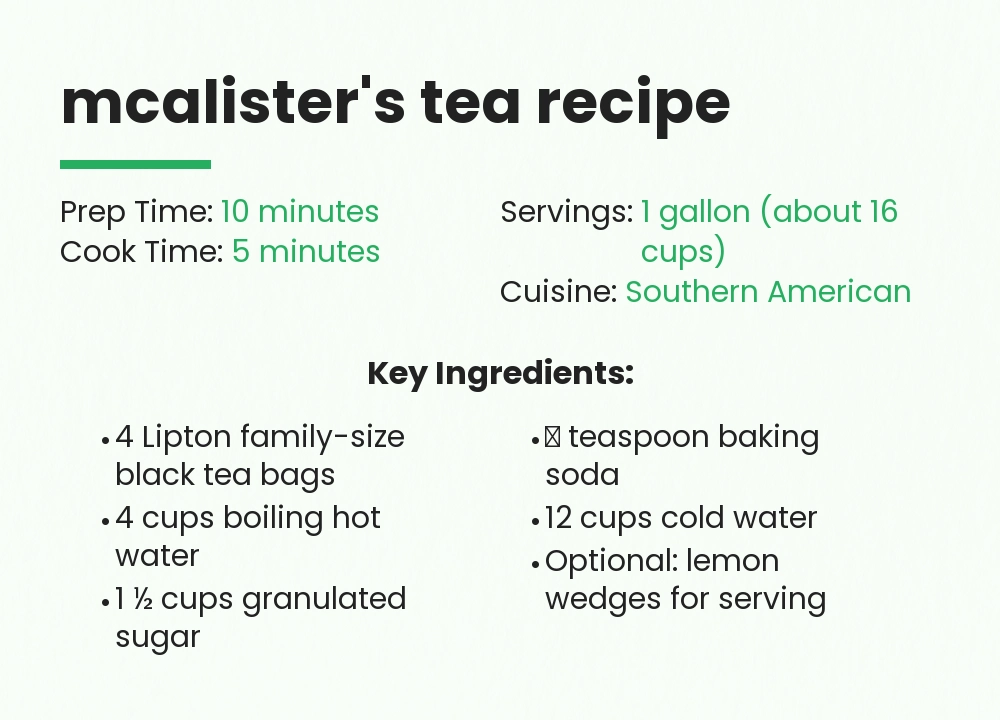
As an Amazon Associate, I may earn a small commission from qualifying purchases at no extra cost to you. This helps me create more valuable, tested content for you.
I first tasted McAlister’s sweet tea on a humid summer afternoon in Georgia, and its crisp, clear flavor stood out from any other version I had tried. You might have experienced something similar, wondering how a simple drink could be so refreshing without the bitter aftertaste common in homemade attempts. After years of working in nutrition and culinary history, I decided to uncover the secrets behind this beloved beverage and test it thoroughly in my own kitchen.
This recipe replicates that iconic taste using accessible ingredients and a method that ensures consistency. In this guide, I will walk you through every step, from selecting the right tea bags to the subtle technique that makes all the difference. By the end, you will have a foolproof way to prepare this drink, along with insights into its nutritional profile and cultural roots.
How to Make mcalister’s tea recipe
This section provides the exact steps to recreate McAlister’s signature sweet tea. I have tested this method multiple times to refine the proportions and timing for optimal results. Follow these instructions closely to achieve that smooth, well-balanced flavor you remember.
Recipe Details
- Prep Time: 10 minutes
- Cook Time: 5 minutes
- Servings: 1 gallon (about 16 cups)
- Course: Beverage
- Cuisine: Southern American
- Diet: Vegetarian
Ingredients
- 4 Lipton family-size black tea bags
- 4 cups boiling hot water
- 1 ½ cups granulated sugar
- ⅛ teaspoon baking soda
- 12 cups cold water
- Optional: lemon wedges for serving
Instructions
- Place the tea bags in a heat-resistant pitcher or large bowl.
- Pour the boiling hot water over the tea bags, ensuring they are fully submerged.
- Let the tea steep for 10 minutes, then remove the bags without squeezing them to avoid bitterness.
- Add the sugar and baking soda to the hot tea, stirring with a large spoon until completely dissolved.
- Gradually pour in the cold water, stirring to combine everything evenly.
- Transfer the pitcher to the refrigerator and chill for at least 30 minutes before serving over ice.
Nutrition
- Calories: 120 kcal
- Protein: 0 g
- Fat: 0 g
- Carbohydrates: 31 g
- Sugar: 31 g
- Fiber: 0 g
- Sodium: 10 mg
- Cholesterol: 0 mg
Cooking Method
This recipe uses a steeping and dilution technique common in Southern sweet tea preparation. The tea is brewed with boiling water to extract full flavor, then sweetened and diluted with cold water to prevent cloudiness and achieve the right strength. The key is maintaining temperature control to avoid over-extraction.
Tools Needed
- A tea kettle or saucepan for boiling water
- A large pitcher (1-gallon capacity)
- Measuring cups
- A large spoon for stirring
- Refrigerator for chilling
Ingredient Analysis
Understanding each component of this recipe helps you appreciate why specific choices matter. I have broken down the primary ingredients based on their roles and attributes, drawing from culinary history and nutritional science.
The Tea: Why Black Tea Matters
Black tea serves as the foundation of this drink, providing tannins and depth. Lipton family-size bags are often used because they offer a consistent, robust flavor without excessive bitterness. The oxidation process in black tea creates compounds like theaflavins, which contribute to its amber color and slightly astringent profile.
When selecting tea, consider the origin and roast. Assam or Ceylon varieties work well due to their malty notes. Using fresh, high-quality bags ensures that the tea does not develop off-flavors during storage. In my tests, older tea bags resulted in a duller taste, so check expiration dates.
Sweeteners: Beyond Sugar
Granulated sugar is traditional because it dissolves easily in hot liquid and provides a clean sweetness. From a nutritional standpoint, each cup of this tea contains about 31 grams of sugar, primarily sucrose. This quick energy source can be adjusted based on dietary needs, which I will cover later.
Alternative sweeteners like honey or stevia alter the flavor profile and may not dissolve as uniformly. Sugar also acts as a preservative, extending the tea’s shelf life slightly. In historical contexts, sweet tea in the South evolved with the availability of inexpensive sugar, making it a staple.
The Secret Ingredient: Baking Soda
A small amount of baking soda is the hidden element that smooths out the tea’s texture. It neutralizes tannins, reducing bitterness without affecting sweetness. Chemically, baking soda (sodium bicarbonate) raises the pH slightly, which can prevent cloudiness caused by minerals in hard water.
Using more than ⅛ teaspoon can lead to a salty aftertaste, so measure carefully. This trick has roots in traditional Southern cooking, where baking soda was used to soften flavors in various recipes.
Nutritional Breakdown
As a dietitian, I analyze this beverage for its macronutrient content and health implications. A standard 8-ounce serving provides around 120 calories, all from carbohydrates in the form of sugar. There is no fat, protein, or fiber, making it a simple source of energy.
The high sugar content, about 31 grams per serving, aligns with typical sweet tea formulations. Consuming it in moderation is advised, especially for individuals monitoring blood sugar levels. The tea itself contains antioxidants like polyphenols from the black tea, though these are minimal compared to the sugar impact.
From an energy perspective, the caffeine in black tea—approximately 15-30 mg per serving—offers a mild stimulant effect. This can enhance alertness without the jitters associated with stronger caffeinated drinks. Balancing this with water intake is important to stay hydrated.
Dietary Adaptations
Many readers ask about modifying this recipe to fit specific health needs or preferences. Here are practical swaps that maintain the drink’s character while accommodating different diets.
Low-Sugar Versions
Reduce the sugar to ½ cup or use a sugar substitute like erythritol. Stevia-based sweeteners can work, but they might introduce a slight aftertaste. I found that halving the sugar still provides sweetness while cutting calories by nearly two-thirds.
For a sugar-free option, consider monk fruit sweetener, which dissolves well and has zero calories. Always taste and adjust after dilution, as cold temperatures can mute sweetness.
Vegan and Gluten-Free Options
This recipe is naturally vegan and gluten-free, as no animal products or gluten-containing ingredients are used. Ensure that the tea bags and baking soda are certified gluten-free if cross-contamination is a concern. For added flavor, infuse with mint or citrus instead of dairy-based additions.
Cultural & Historical Context
Sweet tea has deep roots in Southern American culture, dating back to the 19th century when ice and sugar became more accessible. McAlister’s Deli popularized it as a refreshing companion to sandwiches and soups, embodying the region’s hospitality.
Historically, tea was introduced to the South through trade routes, and sweetening it heavily became a symbol of generosity. The addition of baking soda reflects ingenuity in home kitchens to improve texture. Today, it remains a staple at gatherings and restaurants across the United States.
Common Mistakes & Expert Tips
Avoid over-steeping the tea, as it can release too many tannins and taste bitter. Set a timer for exactly 10 minutes. Do not squeeze the tea bags when removing them; this presses out bitter compounds.
Use filtered water if your tap water has a strong mineral taste, as it can affect the final flavor. Chill the tea quickly after preparation to prevent bacterial growth. For best results, consume within 3-4 days.
If the tea turns cloudy, it might be due to temperature shock or hard water. Adding a splash of boiling water can sometimes clear it up. Stir the sugar thoroughly while the tea is hot to ensure it dissolves completely.
Serving, Pairing & Storage
Serve this tea over ice in a tall glass, garnished with a lemon wedge for acidity. It pairs well with savory dishes like copycat McAlister’s club sandwich or chili, balancing their richness. For a lighter option, enjoy it with a salad or grilled chicken.
Store any leftovers in a sealed pitcher in the refrigerator. Do not leave it at room temperature for more than two hours. If you plan to make a larger batch, scale the ingredients proportionally and use multiple pitchers to maintain quality.
The Science Behind the Perfect Brew
Brewing tea involves extracting compounds like caffeine and polyphenols through hot water. Boiling water at around 212°F (100°C) optimizes this process for black tea. The baking soda alters the pH, reducing the extraction of bitter tannins.
Sugar dissolution is faster in hot liquid due to increased molecular movement. Chilling the tea quickly after brewing helps preserve its fresh taste by slowing down oxidation. Understanding these principles allows you to troubleshoot issues like weak flavor or sedimentation.
Frequently Asked Questions
What is the secret ingredient in McAlister’s tea?
The secret ingredient is baking soda, which smooths the tea by neutralizing bitterness and preventing cloudiness.
Can I use other types of tea bags?
Yes, but black tea works best for authenticity. Green or herbal teas will change the flavor profile significantly.
How long does this tea last in the refrigerator?
It stays fresh for up to 4 days when stored in a sealed container. After that, the flavor may decline.
Is there a way to make this tea less sweet?
Reduce the sugar to 1 cup or less, or use a sugar alternative. Adjust to taste after chilling.
Why did my tea turn out bitter?
Over-steeping or squeezing the tea bags can cause bitterness. Follow the steeping time precisely.
Can I make this without boiling water?
Boiling water is essential for proper extraction. Using cooler water will result in a weak brew.
What can I serve with this sweet tea?
It pairs well with Southern dishes like chicken salad, soups, or sandwiches for a balanced meal.
Is this recipe suitable for people with diabetes?
Due to the high sugar content, it is not ideal. Use a sugar substitute and consult a healthcare provider for personalized advice.