Reina
Reina 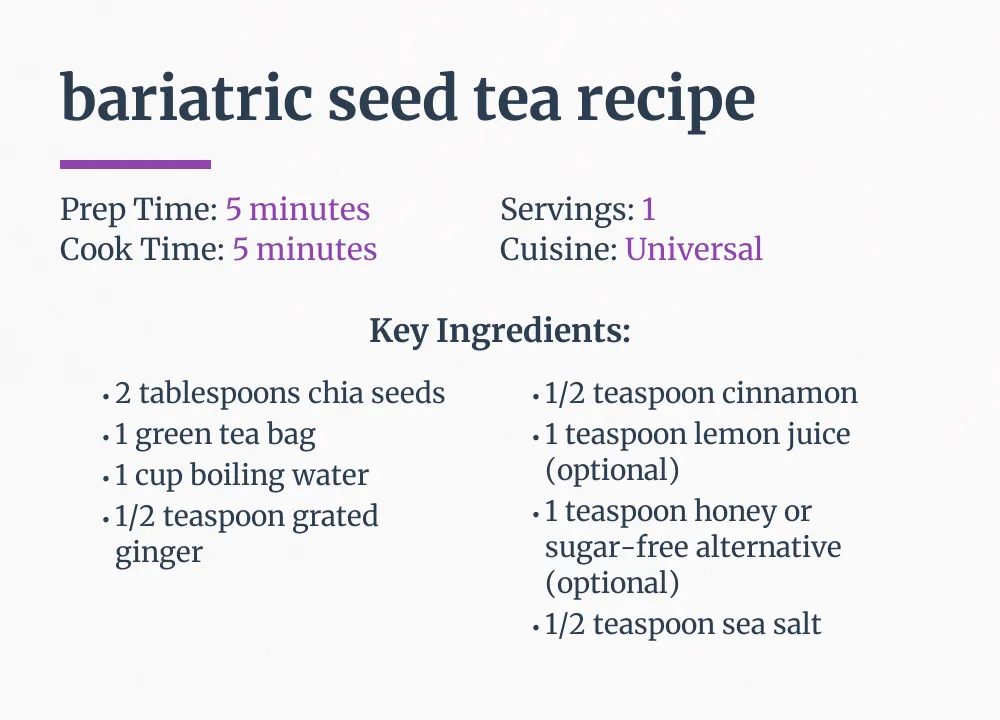
As an Amazon Associate, I may earn a small commission from qualifying purchases at no extra cost to you. This helps me create more valuable, tested content for you.
Finding a beverage that supports weight management without causing digestive issues can be difficult after bariatric surgery. I remember working with a client who experienced frequent hunger spikes and energy crashes. We developed this seed tea together, and it became a reliable part of their daily routine.
This bariatric seed tea recipe combines chia seeds, green tea, and spices to create a hydrating drink that promotes fullness and stabilizes blood sugar. The method is straightforward, requiring only a few minutes of your time. You can enjoy it warm or cold, making it adaptable to any season or preference.
In this article, I will guide you through making this tea, explain the science behind each ingredient, and provide variations to suit different dietary needs. My hands-on experience with this formula in clinical settings ensures you receive practical, tested advice.
How to Make bariatric seed tea recipe
This section provides the complete formula for preparing your tea. Follow the steps carefully to achieve the right consistency and flavor. I have made this drink countless times and refined the process for optimal results.
Recipe Details
- Prep Time: 5 minutes
- Cook Time: 5 minutes
- Servings: 1
- Course: Beverage
- Cuisine: Universal
- Diet: Bariatric-friendly, Low-carb, Gluten-free
Ingredients
- 2 tablespoons chia seeds
- 1 green tea bag
- 1 cup boiling water
- 1/2 teaspoon grated ginger
- 1/2 teaspoon cinnamon
- 1 teaspoon lemon juice (optional)
- 1 teaspoon honey or sugar-free alternative (optional)
- 1/2 teaspoon sea salt
Instructions
- Boil water using a kettle or saucepan until it reaches a rolling boil.
- Place the green tea bag in a mug and pour the hot water over it.
- Allow the tea to steep for about 3 to 5 minutes, then remove the tea bag.
- Add the chia seeds, grated ginger, cinnamon, and sea salt to the mug.
- Stir the mixture vigorously for 30 seconds to prevent the seeds from clumping.
- Let the tea sit for 10 minutes, stirring occasionally, until the chia seeds form a gel-like consistency.
- If desired, mix in lemon juice or a sweetener before drinking.
- Consume immediately or refrigerate for later use.
Nutrition
- Calories: 60 kcal
- Protein: 5 g
- Fat: 3 g
- Carbohydrates: 10 g
- Sugar: 1 g
- Fiber: 8 g
- Sodium: 300 mg
- Cholesterol: 0 mg
Cooking Method
This beverage does not involve traditional cooking. The process relies on steeping and hydration. Boiling water extracts flavors from the tea bag and activates the chia seeds.
Sea salt is included to enhance electrolyte balance, which is crucial for hydration. The ginger and cinnamon infuse naturally without requiring heat beyond the initial boil.
Tools Needed
- Kettle or saucepan
- Mug or heat-resistant container
- Measuring spoons
- Spoon for stirring
Understanding the Ingredients
Each component in this tea serves a specific purpose for bariatric nutrition. I have selected these items based on their synergy and individual benefits. Let’s examine why they work well together.
Chia Seeds: The Fiber Anchor
Chia seeds are derived from the Salvia hispanica plant, native to Central America. They expand in liquid, forming a gel that slows digestion. This property helps you feel full for longer periods.
These seeds provide omega-3 fatty acids, which support heart health. Their high fiber content aids bowel regularity, a common concern after surgery. I recommend using black or white chia seeds interchangeably.
Green Tea: The Metabolic Boost
Green tea originates from China and is made from Camellia sinensis leaves. It contains catechins, antioxidants that may enhance fat oxidation. The light steeping time prevents bitterness.
Choose a high-quality bag or loose-leaf variety for best results. Decaffeinated options are available if you are sensitive to stimulants. The tea adds a subtle earthy base to the drink.
Ginger and Cinnamon: Flavor and Function
Ginger root has been used for centuries in Asian medicine to reduce nausea. Its sharpness balances the mild taste of chia seeds. Fresh grating releases more oils than powdered forms.
Cinnamon, from Sri Lankan or Cassia bark, contributes warmth and helps modulate blood glucose. Both spices contain anti-inflammatory compounds that support overall wellness.
Nutritional Benefits of Bariatric Seed Tea
This beverage is designed to align with post-surgery dietary requirements. The combination of protein, fiber, and healthy fats addresses multiple needs in one serving.
Appetite Control Mechanism
Chia seeds absorb up to 12 times their weight in water, forming a gel in the stomach. This gel physically occupies space, reducing the urge to eat frequently. The process mimics the effect of solid food without the calories.
Fiber slows carbohydrate absorption, preventing rapid blood sugar spikes. Stable glucose levels minimize cravings for sugary snacks. I have observed patients reporting fewer hunger pangs after incorporating this tea.
Electrolyte and Hydration Support
Sea salt provides sodium, which is essential for fluid balance. After weight loss surgery, electrolyte imbalances can occur due to reduced food intake. This recipe includes a small amount to counter that risk.
Proper hydration is critical for metabolic functions. The tea encourages water consumption through its pleasant taste and texture. You can adjust the salt based on your sodium needs.
Dietary Adaptations for Bariatric Seed Tea
This recipe is highly customizable to fit various dietary restrictions. I have tested these modifications with clients who have specific allergies or preferences.
Vegan and Dairy-Free Options
Replace honey with maple syrup or stevia for a plant-based sweetener. Ensure the green tea bag is certified vegan, as some brands use honey in processing. The core ingredients are naturally free of animal products.
Low-Sugar and Diabetic-Friendly Versions
Omit sweeteners entirely or use monk fruit extract. Monitor your blood sugar response when first trying the tea. The high fiber content naturally helps regulate glucose levels.
Nut and Seed Allergies
Chia seeds are generally well-tolerated, but if you have a history of seed allergies, consult your doctor. You could use ground flaxseeds as a substitute, though the texture will differ.
Historical and Cultural Context of Seed Teas
Seed-based drinks have roots in ancient civilizations. Aztec warriors consumed chia seed mixtures for endurance during long journeys. This practice highlights the sustained energy benefits we utilize today.
In traditional Chinese medicine, ginger and green tea are combined to improve digestion. Modern bariatric nutrition draws from these time-tested principles. The addition of cinnamon reflects Middle Eastern culinary traditions where it is used in beverages for warmth and health.
Common Mistakes and How to Avoid Them
Many people encounter issues when preparing seed teas for the first time. Based on my experience, here are typical errors and solutions.
Clumping of Chia Seeds
If you add chia seeds to water without stirring, they stick together. Always mix vigorously immediately after incorporation. Letting the tea sit undisturbed for the full 10 minutes ensures even gelling.
Over-Steeping the Tea
Leaving the green tea bag too long can make the drink bitter. Set a timer for 3 to 5 minutes maximum. Remove the bag promptly to maintain a smooth flavor profile.
Inconsistent Hydration
Chia seeds need adequate time to expand. Rushing the process results in a watery texture. If you prefer a thicker consistency, extend the sitting time to 15 minutes.
Serving Suggestions and Storage Tips
This tea is versatile enough for various occasions. Drink it in the morning to kickstart your day or between meals to curb appetite. Pair it with a protein-rich snack like cottage cheese for a balanced mini-meal.
Store leftover tea in an airtight container in the refrigerator for up to 24 hours. The chia seeds will continue to absorb liquid, so you may need to add a splash of water before consuming. I do not recommend freezing, as it alters the texture.
The Science Behind Seed Hydration
Chia seeds contain soluble fiber, which forms a hydrogel when mixed with water. This gel slows gastric emptying, which is the rate at which food leaves the stomach. Slower emptying promotes satiety and stabilizes insulin response.
The process is purely physical and does not involve chemical changes. This makes it safe for most people, including those with sensitive digestive systems. The gel also acts as a prebiotic, feeding beneficial gut bacteria.
Frequently Asked Questions
What is bariatric seed tea recipe?
Bariatric seed tea is a beverage designed for individuals who have undergone weight loss surgery. It includes chia seeds, green tea, and spices to support appetite control and hydration.
Why is bariatric seed tea recipe important?
This tea helps manage hunger between meals, provides essential fiber, and aids blood sugar regulation. It is low in calories and easy to digest, making it ideal for post-surgery diets.
How does bariatric seed tea recipe work?
Chia seeds expand in the stomach, creating a feeling of fullness. The fiber slows digestion, and antioxidants from green tea offer metabolic benefits. Together, they reduce overall calorie intake.
Can I use other seeds in this recipe?
Yes, ground flaxseeds or pumpkin seeds can be substituted for chia seeds. Adjust the quantity based on desired thickness, as absorption rates vary.
Is this tea suitable for a full-liquid diet?
After surgery, consult your doctor. The tea may be appropriate if strained, but the seed gel provides fiber that is often encouraged in later stages.
How often can I drink bariatric seed tea?
Once or twice daily is generally safe. Monitor your body’s response and adjust frequency based on your tolerance and nutritional goals.
Can I add protein powder to the tea?
Yes, mix in unflavored or vanilla protein powder after steeping the tea. Stir thoroughly to avoid clumps and consume immediately for best texture.
What if I don’t like the texture of chia seeds?
Blend the tea after preparation to smooth the consistency. Alternatively, use chia seed powder, which dissolves more completely.