Reina
Reina 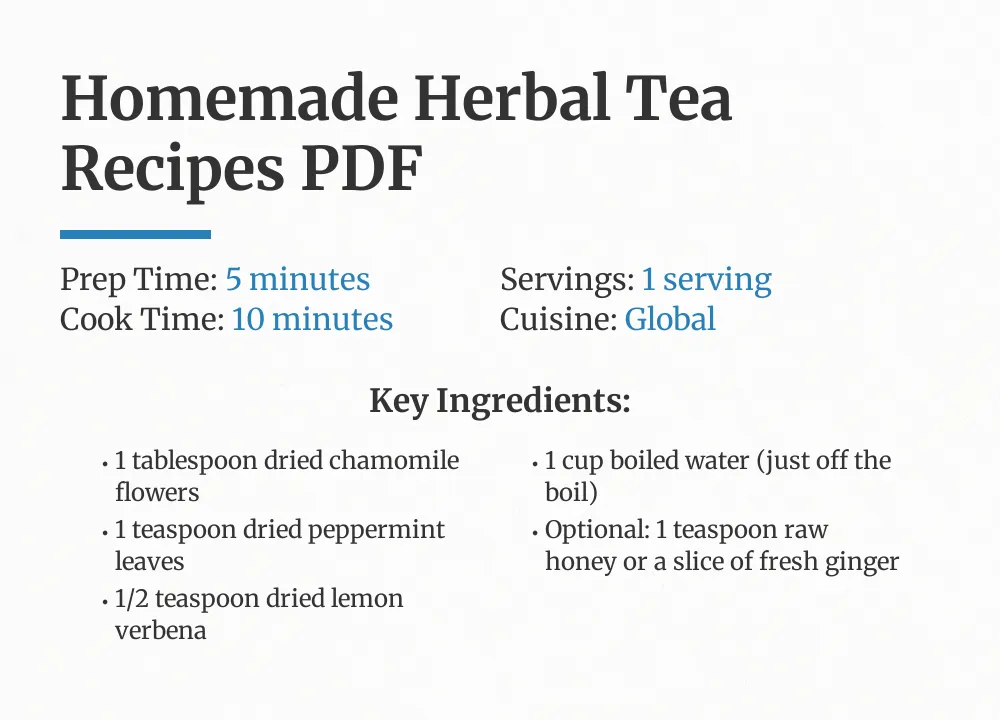
As an Amazon Associate, I may earn a small commission from qualifying purchases at no extra cost to you. This helps me create more valuable, tested content for you.
You might have considered buying herbal teas for their health claims, only to find the ingredients list includes artificial flavors or excessive sweeteners. Creating your own blends ensures you know exactly what goes into your cup. I have spent years studying nutrition and the historical use of botanicals, and I want to share that knowledge with you.
This guide provides a detailed method for crafting your own herbal tea recipes, which you can compile into a personal PDF for future use. We will start with a foundational recipe, then expand into the science, history, and practical techniques behind herbal infusions. My goal is to equip you with the confidence to become a seasoned tea enthusiast in your own kitchen.
How to Make Homemade Herbal Tea Recipes PDF
This section details a basic, versatile herbal tea blend. It serves as a template you can adapt for your PDF collection. I developed this recipe to support calm digestion, using herbs I frequently keep in my pantry.
Recipe Details
- Prep Time: 5 minutes
- Cook Time: 10 minutes
- Servings: 1 serving
- Course: Beverage
- Cuisine: Global
- Diet: Vegan, Gluten-Free
Ingredients
- 1 tablespoon dried chamomile flowers
- 1 teaspoon dried peppermint leaves
- 1/2 teaspoon dried lemon verbena
- 1 cup boiled water (just off the boil)
- Optional: 1 teaspoon raw honey or a slice of fresh ginger
Instructions
- Place the dried chamomile, peppermint, and lemon verbena into a reusable tea infuser or a disposable tea filter.
- Heat water until it reaches a rolling boil, then let it cool for 30 seconds to about 200°F (93°C) to preserve delicate herb oils.
- Pour the hot water over the herbs in a mug or teapot. Cover the vessel to trap steam and volatile compounds.
- Allow the blend to steep for 5 to 7 minutes, depending on your desired strength. Remove the infuser and enjoy.
Nutrition
- Calories: 5 kcal
- Protein: 0 g
- Fat: 0 g
- Carbohydrates: 1 g
- Sugar: 0 g
- Fiber: 0 g
- Sodium: 5 mg
- Cholesterol: 0 mg
Cooking Method
This recipe uses an infusion method, where hot water extracts flavors and beneficial compounds from the plant material. It is different from a decoction, which involves simmering harder materials like roots or bark. Infusion is ideal for leaves and flowers.
Tools Needed
- A kettle or pot to boil water
- A reusable tea infuser, disposable tea filter, or French press
- A mug or teapot with a lid
- A scale or measuring spoons for accuracy
The Botanical Foundation of Herbal Teas
Understanding the plants you use is the first step toward creating effective and delicious teas. Each herb carries a unique profile of volatile oils, flavonoids, and tannins that dictate its flavor and effect on the body.
Selecting and Sourcing Quality Herbs
The quality of your dried herbs directly impacts the final drink. I prefer to source from reputable bay area small businesses or certified organic bulk herbs online to ensure purity and potency. Look for herbs that are vibrant in color and aromatic.
Common Herbs and Their Primary Attributes
Chamomile, for instance, offers apple-like notes and is renowned for its calming properties. Peppermint provides a cooling sensation that can aid digestion. Bitter herbs like dandelion root support liver function but require a decoction to extract their full benefits.
Building a Balanced Herbal Blend
A successful blend considers taste, aroma, and purpose. I often combine a base herb (like chamomile), a supporting herb for flavor (like peppermint), and a modifier for complexity (like lemon verbena). Dried berries can add a touch of natural sweetness and tartness.
Nutritional Science of Herbal Infusions
From a dietary perspective, herbal teas contribute to hydration and can provide trace minerals and antioxidants. They are naturally free of calories, caffeine, and sugar unless additives are included.
How Herbal Compounds Interact with the Body
When you consume an herbal tea, the hot water acts as a solvent, pulling compounds like menthol from peppermint or apigenin from chamomile into the liquid. These compounds then interact with your system; menthol can trigger cold-sensitive receptors, creating a cooling effect, while apigenin may bind to certain receptors in the brain to promote relaxation.
Addressing Specific Health Goals
While I avoid medical claims, historical and modern use points to general benefits. A tea with ginger and fennel may soothe an upset stomach. A blend with hibiscus and rose hips is rich in vitamin C. It is important to view these teas as part of a holistic lifestyle, not a cure-all.
Historical and Cultural Context of Herbal Teas
The practice of steeping plants in water predates recorded history. Nearly every culture has a tradition of using local botanicals for both beverage and remedy. The term “tisane,” often used interchangeably with herbal tea, has roots in European folk medicine.
In my research, I’ve found that many classic blends were developed through community knowledge, passed down through generations. What we now consider an everyday infusion might have been a prized regional secret centuries ago. This history adds a layer of connection to the simple act of making tea.
Advanced Brewing Techniques and Expert Tips
Mastering the brew is what separates a good tea from a great one. Water temperature, steeping time, and even the vessel you use can alter the final result dramatically.
Infusion vs. Decoction
As mentioned in the recipe, infusion uses hot water for delicate parts. Decoction involves simmering tougher herbs like roots, bark, or seeds for 15-20 minutes to break down their cell walls. For a blend containing both, you might decoct the hard ingredients first, then pour that liquid over the delicate herbs to infuse.
Common Mistakes to Avoid
Using boiling water on delicate flowers can scorch them, creating a bitter taste. Over-steeping can also draw out excessive tannins, making the tea astringent. Another common error is using stale herbs; their medicinal and flavorful oils degrade over time.
Practical Tips for Perfect Tea Every Time
Always pre-warm your mug or teapot with hot water before brewing. Use fresh, filtered cold water for boiling, as tap water minerals can affect flavor. For a fun herbal spritzer, let your brew cool completely and mix it with bubbly water over ice.
Dietary Adaptations and Recipe Variations
The basic recipe is inherently vegan and gluten-free. Adapting it for other needs is straightforward.
Low-Sugar and Sweetener-Free Options
If you avoid sweeteners, rely on naturally sweet herbs like licorice root or stevia leaf. Adding a cinnamon stick during the steep can also impart sweetness without sugar. For a berry-flavored tea without sugar, use dried berries like hibiscus or rose hips.
Creating Your Own Signature Blends
Start with the core recipe and experiment. Add a pinch of basil for an intriguing savory note. Incorporate floral elements like lavender or rose petals. For an energy blend without caffeine, try herbs like ginseng or rosemary, but research any herb’s properties thoroughly before regular consumption.
Serving, Storage, and Batch Preparation
Herbal tea is best consumed fresh, but you can prepare it in advance for convenience.
To store a batch, let the tea cool to room temperature and keep it in a sealed jar in the refrigerator for up to 3 days. For a concentrated everyday infusion, you can make a strong brew and store it as a cube in ice trays, then melt one cube in hot water for a quick single serving. Always label your blends with the date and ingredients.
Frequently Asked Questions
What is a homemade herbal tea recipes PDF?
A homemade herbal tea recipes PDF is a digital document that compiles instructions, ingredient lists, and guidance for creating your own herbal tea blends. It serves as a personalized reference guide that you can create, print, or save.
Why is creating a PDF for herbal tea recipes important?
Compiling your recipes into a PDF creates an organized, portable resource. It allows you to track successful blends, note personal adjustments, and easily share your creations with others, ensuring consistency and preserving your knowledge.
How does the process of making herbal tea from a PDF work?
You use the PDF as a guide. It provides specific recipes with measured ingredients and steps. You source the herbs, follow the brewing instructions for desired strength, and enjoy the tea. The PDF consolidates all necessary information in one place.
What are the best herbs to start with for a beginner?
Begin with mild, common herbs like chamomile, peppermint, and lemon balm. They are easy to find, simple to blend, and have gentle, pleasant flavors that are unlikely to cause adverse reactions.
Can I use fresh herbs instead of dried?
Yes, but you will need to use approximately three times the volume of fresh herbs compared to dried, as fresh plants contain more water. The flavor profile may also be slightly brighter and more subtle.
How should I store my dried herb blends?
Store dried herb blends in airtight glass jars away from direct light, heat, and moisture. A cool, dark cupboard is ideal. Properly stored, most blends will retain their potency for 6 to 12 months.
Are there any herbs I should avoid?
Yes, some herbs can interact with medications or are not suitable for certain health conditions or pregnancy. Always research each herb’s safety profile and consult with a healthcare provider if you have specific health concerns.
What is the difference between a tea infusion and a decoction?
An infusion is made by steeping delicate plant parts like leaves and flowers in hot water. A decoction involves simmering tougher parts like roots, bark, and seeds in boiling water to extract their compounds more effectively.