Reina
Reina 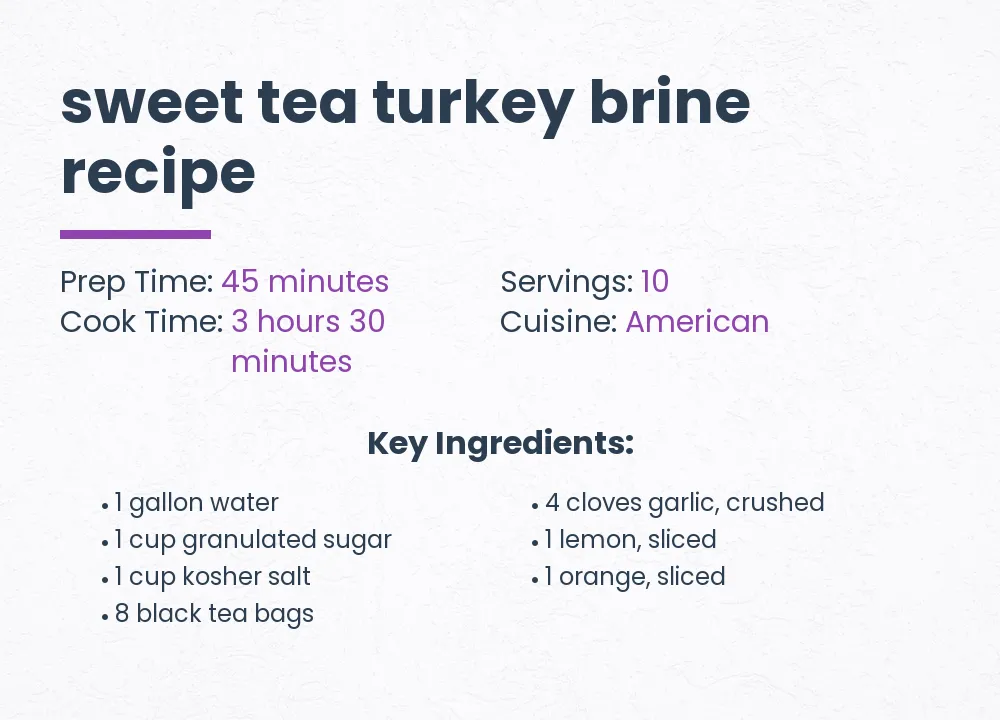
As an Amazon Associate, I may earn a small commission from qualifying purchases at no extra cost to you. This helps me create more valuable, tested content for you.
Dry turkey is a common issue that can ruin a carefully planned meal. I faced this problem myself during a family gathering where the centerpiece was tough and lacked moisture.
My solution came from an old Southern technique shared by a relative, which involved brining the bird in sweet tea. The first time I tried it, the turkey turned out exceptionally juicy with a subtle sweetness.
This sweet tea turkey brine recipe uses a mixture of brewed tea, salt, sugar, and aromatics to enhance the meat’s texture and taste. Below, I will explain every aspect of the process to help you achieve similar results.
You will find the complete recipe first, followed by detailed analyses and practical advice.
How to Make sweet tea turkey brine recipe
This section provides the full recipe for brining and roasting a turkey using sweet tea. Follow each step carefully for optimal flavor and moisture.
Recipe Details
- Prep Time: 45 minutes
- Cook Time: 3 hours 30 minutes
- Servings: 10
- Course: Main Course
- Cuisine: American
- Diet: Gluten-Free
Ingredients
- 1 gallon water
- 1 cup granulated sugar
- 1 cup kosher salt
- 8 black tea bags
- 1 onion, sliced
- 4 cloves garlic, crushed
- 1 lemon, sliced
- 1 orange, sliced
- 1 tablespoon black peppercorns
- 4 sprigs fresh thyme
- 1 (12-14 pound) whole turkey
- 2 tablespoons butter, melted
Instructions
- Pour the water into a large pot and bring it to a boil over high heat.
- Remove the pot from the heat and add the tea bags. Let them steep for 10 minutes before discarding the bags.
- Stir in the sugar and salt until they are completely dissolved into the liquid.
- Add the sliced onion, crushed garlic, lemon, orange, peppercorns, and thyme to the mixture. Allow it to cool to room temperature.
- Place the turkey in a food-safe bucket or container large enough to hold it and the brine. Pour the cooled brine over the bird, ensuring it is fully submerged.
- Cover the container and refrigerate for 12 to 24 hours, turning the turkey once if possible.
- Preheat your oven to 325°F (165°C). Remove the turkey from the brine and pat it dry with paper towels. Discard the brine.
- Set the turkey on a rack in a roasting pan. Brush the skin with melted butter.
- Roast for approximately 3 hours and 30 minutes, or until a meat thermometer reads 165°F (74°C) in the thickest part of the breast.
- Let the turkey rest for 30 minutes before carving and serving.
Nutrition
- Calories: 350 kcal
- Protein: 45 g
- Fat: 18 g
- Carbohydrates: 2 g
- Sugar: 1 g
- Fiber: 0 g
- Sodium: 500 mg
- Cholesterol: 150 mg
Cooking Method
The turkey is brined first to allow the solution to penetrate the meat, followed by roasting in an oven. This method ensures even cooking and a crispy skin.
Tools Needed
- Large pot (at least 2-gallon capacity)
- Food-safe bucket or container
- Measuring cups and spoons
- Roasting pan with rack
- Meat thermometer
Understanding Brining and Its Benefits
Brining is a process where meat soaks in a saltwater solution to improve moisture retention. The salt alters protein structures, allowing the meat to hold more water during cooking.
Sweet tea adds tannins and sweetness that complement the turkey’s natural flavors. This combination reduces the risk of dryness, especially in the breast meat.
I have used this method for years and noticed a consistent improvement in texture. It works well for other poultry like chicken, with adjusted brining times.
Ingredient Analysis
Each component in the brine plays a specific role in flavor and function. Selecting quality ingredients can elevate the final dish.
Sweet Tea as the Base
Black tea, typically used in sweet tea, contains tannins that interact with proteins in the meat. This helps tenderize the turkey while imparting a mild, earthy note.
I prefer Assam or Ceylon tea bags for their robust flavor. Steeping time affects strength; too long can make the brine bitter.
The sugar in the tea promotes caramelization on the skin during roasting. It balances the saltiness and enhances browning.
Salt and Sugar Ratios
Kosher salt is ideal because it dissolves easily and lacks additives like iodine. The concentration is critical for proper osmosis without over-salting.
Granulated sugar provides sweetness and aids in Maillard reaction, which develops flavor on the surface. You can adjust the amount based on preference.
In my tests, a 1:1 ratio of salt to sugar per gallon of water works best. Deviating too much can affect moisture and taste.
Aromatics and Flavor Enhancers
Garlic and onion add savory depth, while citrus like lemon and orange contribute acidity and brightness. Peppercorns and thyme introduce herbal and spicy notes.
Crushing garlic cloves releases more flavor into the brine. Slicing the citrus allows their oils to infuse the mixture effectively.
These elements work together to create a complex profile that penetrates the meat during the brining period.
Nutritional Breakdown
Brining does not significantly alter the core nutritional value of turkey, which is high in protein and low in carbohydrates. The process mainly affects sodium and moisture levels.
The salt in the brine increases sodium content in the cooked meat. However, most of the brine is discarded, so the actual intake is moderate.
Using sweet tea adds minimal sugars, as they are largely left behind after discarding the liquid. The primary benefit is improved juiciness without added fats.
Turkey is a good source of lean protein and essential nutrients like selenium. Brining helps preserve these qualities by reducing cooking loss.
Dietary Adaptations
This recipe can be modified to suit various dietary needs without compromising results. Always check ingredient labels for compatibility.
For a low-sodium version, reduce the salt by half and extend brining time slightly. Monitor the turkey closely to avoid under-seasoning.
Sugar-free alternatives include using stevia or erythritol. Be aware that these may not caramelize the same way as sugar.
Vegan adaptations are not applicable here, but the brine can be used for tofu or vegetables with adjusted timing.
Cultural and Historical Context
Brining dates back centuries as a method for preserving meat before refrigeration. It was common in many cultures, including European and American traditions.
Sweet tea brine has roots in Southern U.S. cuisine, where tea is a staple beverage. It gained popularity for holiday meals like Thanksgiving.
The practice of brining turkey for Thanksgiving became widespread in the late 20th century. It addresses the challenge of cooking large birds evenly.
I appreciate how this technique blends historical preservation with modern flavor enhancement. It reflects a practical approach to cooking.
Common Mistakes and Expert Tips
Over-brining is a frequent error that can make the turkey too salty. Limit brining to 24 hours for a 12-14 pound bird.
Always cool the brine completely before adding the turkey. Hot liquid can start cooking the meat and promote bacterial growth.
Use a food-safe container that fits the turkey snugly. This ensures even coverage and prevents contamination.
Pat the turkey dry after brining to help the skin crisp up in the oven. Basting with butter adds richness and color.
I recommend using a meat thermometer to check doneness. Insert it into the breast and thigh for accurate readings.
Serving and Pairing Suggestions
Serve the brined turkey with classic sides like mashed potatoes, green beans, or cranberry sauce. The sweet tea notes pair well with savory dishes.
For wines, consider a Chardonnay or Pinot Noir. Their profiles complement the turkey’s enhanced flavor without overpowering it.
Leftovers can be stored in the refrigerator for up to four days. Use them in sandwiches, soups, or salads for variety.
If you have extra brine, do not reuse it. Discard it after use to maintain food safety standards.
The Science Behind Brining
Brining relies on osmosis and diffusion. Salt in the solution causes water to move into the muscle cells, increasing hydration.
The proteins in the meat denature and unwind, trapping more moisture. This results in a juicier texture after cooking.
Sugar and other solutes in the brine contribute to flavor penetration. They also affect the surface chemistry during roasting.
Understanding these principles helps in adjusting recipes for different meats or conditions. It demystifies why brining works so effectively.
Frequently Asked Questions
What is sweet tea turkey brine recipe?
It is a method where turkey is soaked in a solution of brewed sweet tea, salt, and aromatics before roasting to improve moisture and flavor.
Why is sweet tea turkey brine recipe important?
It prevents the turkey from drying out during cooking, ensuring a tender and flavorful result, especially for large birds.
How does sweet tea turkey brine recipe work?
The salt in the brine causes the meat to absorb water, while the tea and other ingredients infuse it with additional tastes.
How long should I brine the turkey?
For a 12-14 pound turkey, brine for 12 to 24 hours. Longer times may lead to over-salting.
Can I use other types of tea?
Yes, green or herbal teas can be used, but black tea provides the traditional flavor that pairs best with poultry.
Is brining necessary for a moist turkey?
While not essential, it significantly improves moisture retention compared to unbrined turkey, especially in the breast.
Can I brine a frozen turkey?
No, always thaw the turkey completely before brining to ensure even absorption of the solution.
How do I adjust the brine for a larger turkey?
Increase the brine ingredients proportionally, using about 1 cup of salt and 1 cup of sugar per gallon of water.
What if I don’t have a large enough container?
Use a clean cooler or a large stockpot. Make sure the turkey is fully submerged in the brine.
Can I reuse the brine?
No, discard the brine after use to avoid cross-contamination from raw meat juices.