 Reina
Reina 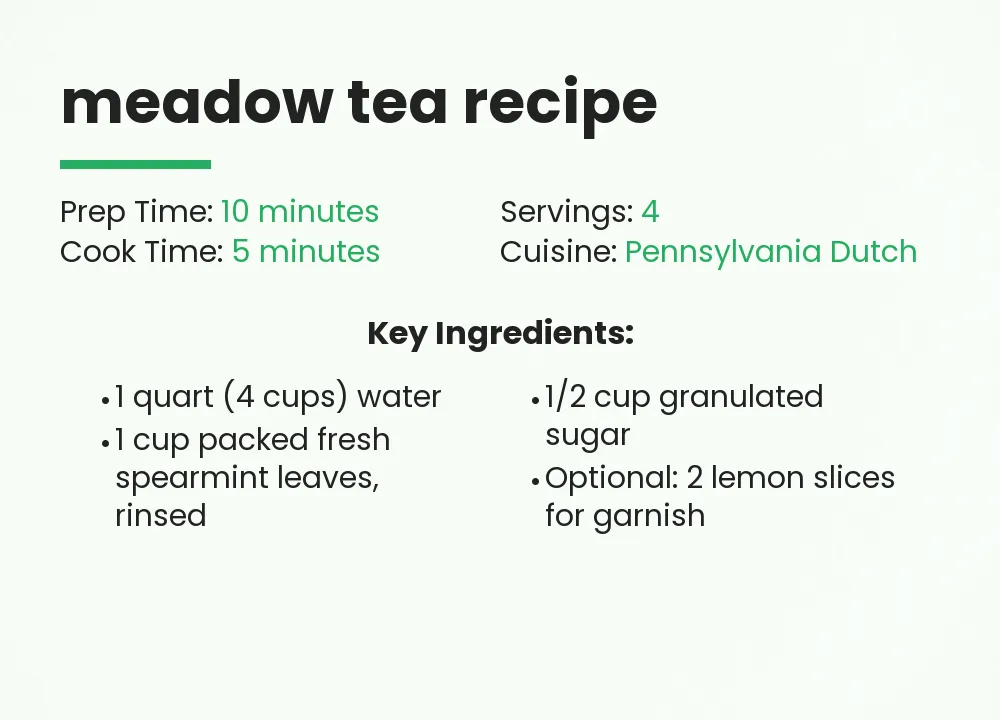
As an Amazon Associate, I may earn a small commission from qualifying purchases at no extra cost to you. This helps me create more valuable, tested content for you.
When the summer heat bears down, nothing cuts through the humidity like a glass of chilled meadow tea. I recall helping my grandmother gather mint from her garden in Lancaster County, the scent clinging to my hands as we prepared this simple, revitalizing drink. It was more than a beverage; it was a ritual that connected us to the land and community.
This recipe captures that essence, using fresh mint, water, and sugar to create a staple of Pennsylvania Dutch culture. Below, I will guide you through making it, along with deep insights into its history, nutrition, and variations to suit any diet.
How to Make meadow tea recipe
This section provides a straightforward method to prepare meadow tea. Follow these steps for a consistent, flavorful result every time.
Recipe Details
- Prep Time: 10 minutes
- Cook Time: 5 minutes
- Servings: 4
- Course: Beverage
- Cuisine: Pennsylvania Dutch
- Diet: Vegan
Ingredients
- 1 quart (4 cups) water
- 1 cup packed fresh spearmint leaves, rinsed
- 1/2 cup granulated sugar
- Optional: 2 lemon slices for garnish
Instructions
- Place the water in a medium pot and bring it to a boil over high heat.
- Once boiling, remove the pot from the heat source and add the rinsed mint leaves.
- Cover the pot and let the mixture steep for 10 to 15 minutes, depending on how strong you prefer the mint flavor.
- Strain the liquid into a pitcher, pressing the leaves to extract all flavor.
- Stir in the sugar until it fully dissolves.
- Allow the tea to cool to room temperature, then refrigerate for at least 1 hour before serving over ice.
Nutrition
- Calories: 97 kcal
- Protein: 0 g
- Fat: 0 g
- Carbohydrates: 25 g
- Sugar: 25 g
- Fiber: 0 g
- Sodium: 5 mg
- Cholesterol: 0 mg
Cooking Method
This recipe uses a steeping technique, where boiling water extracts flavors from the mint without prolonged cooking. This preserves the herb’s volatile oils, which give the tea its aromatic quality.
Tools Needed
- Medium-sized pot
- Fine-mesh strainer
- Pitcher or container for storage
- Measuring cups
What Is Meadow Tea?
Meadow tea is a non-caffeinated herbal infusion made primarily from fresh mint leaves, water, and sweetener. It originated in Amish and Mennonite communities in Pennsylvania, where it is served chilled as a summer refreshment. The name reflects the practice of foraging mint from meadows or cultivating it in home gardens.
Unlike traditional teas from the Camellia sinensis plant, this drink relies on the natural oils in mint for its crisp, clean taste. It is often compared to iced mint tea but has a distinct cultural background tied to rural life.
The Historical Roots of Meadow Tea
Meadow tea has deep connections to the Pennsylvania Dutch, including Amish and Mennonite groups who settled in regions like Lancaster County. These communities valued self-sufficiency, growing herbs in kitchen gardens for culinary and medicinal use.
The drink emerged as a practical way to use abundant mint during summer months. It was typically prepared in large batches and stored in cool cellars or freezers for later consumption. This tradition highlights a resourceful approach to seasonal ingredients.
Cultural Significance in Amish Life
In Amish households, meadow tea is more than a beverage; it symbolizes hospitality and simplicity. It is commonly served at gatherings, church events, and family meals. The recipe is passed down through generations, often without written instructions, emphasizing oral tradition.
The use of spearmint, which thrives in Pennsylvania’s climate, underscores the community’s reliance on local flora. This connection to the environment is a hallmark of their lifestyle.
Nutritional Analysis of Meadow Tea
From a dietary perspective, meadow tea offers hydration with minimal calories if sugar is moderated. Mint leaves contain menthol, which can aid digestion and provide a cooling sensation. The primary nutritional components come from the sweetener used.
Health Benefits of Mint
Spearmint and other mint varieties are rich in antioxidants like rosmarinic acid, which may reduce inflammation. The act of sipping a cold, mint-infused drink can also promote relaxation and alleviate minor stomach discomfort.
However, the sugar content should be monitored, as excessive intake can offset these benefits. I often recommend adjusting sweeteners based on individual health goals.
Breaking Down the Macronutrients
Per serving, the tea provides carbohydrates solely from sugar, with no fat or protein. The mint contributes trace amounts of vitamins A and C, but the overall nutritional profile is light, making it suitable for a low-calorie diet when prepared with less sweetener.
Ingredient Deep Dive
Understanding each component ensures you can customize the tea to your taste and dietary needs.
Selecting the Right Mint
Spearmint is the traditional choice for meadow tea due to its sweet, mild flavor. Other varieties like peppermint have a sharper, more intense taste that can overwhelm the drink. When foraging or purchasing, look for vibrant, unblemished leaves.
The essential oils in mint are most potent when harvested in the morning after dew has dried. Rinsing the leaves removes dirt without crushing them, which preserves their aroma.
Water Quality and Its Impact
Using filtered water improves the tea’s clarity and taste, as chlorine in tap water can impart off-flavors. The mineral content in hard water might also affect how the mint oils infuse.
Sweeteners and Alternatives
Granulated sugar dissolves easily and provides a neutral sweetness. For a different profile, honey or maple syrup can be used, though they may alter the flavor. Sugar-free options like stevia are effective for reducing calories.
Dietary Adaptations
This recipe is inherently vegan, but it can be modified for specific needs without losing its character.
Low-Sugar Version
Reduce the sugar to 1/4 cup or use a natural substitute like monk fruit sweetener. The mint’s inherent flavor will still shine through, making it refreshing even with less sweetness.
Gluten-Free and Allergen Notes
All ingredients are naturally gluten-free. Ensure that any alternative sweeteners are certified gluten-free if cross-contamination is a concern.
Common Mistakes and Expert Tips
Oversteeping the mint can lead to a bitter taste. I recommend setting a timer for 10 minutes and tasting periodically. Another error is adding sugar before straining, which can make the tea cloudy.
For the best results, use a glass container to store the tea, as plastic can absorb flavors. If you have an abundance of mint, freeze steeped liquid in ice cube trays for later use.
Serving Suggestions and Storage
Serve meadow tea over ice with a lemon slice for acidity. It pairs well with light summer meals like salads or grilled vegetables. To store, keep it refrigerated in a sealed container for up to 5 days.
For longer preservation, freeze the tea in batches. Thaw it in the refrigerator overnight before serving.
The Science Behind Steeping
Steeping involves heat transferring flavor compounds from the mint into the water. Menthol and other oils are soluble in hot water, but prolonged exposure to high temperatures can degrade them. This is why we remove the pot from heat immediately after adding the mint.
Frequently Asked Questions
What is meadow tea recipe?
It is a method for making a chilled herbal tea using fresh mint, water, and sugar, steeped together to create a refreshing drink.
Why is meadow tea recipe important?
It preserves a cultural tradition and offers a natural, hydrating beverage option that can be adapted for various dietary preferences.
How does meadow tea recipe work?
Boiling water extracts flavors from mint leaves through steeping, and sugar is added for sweetness, resulting in a balanced, aromatic tea.
Can I use dried mint instead of fresh?
Yes, but use one-third the amount, as dried mint is more concentrated. The flavor may be less vibrant.
How long can I store meadow tea?
It keeps well in the refrigerator for up to 5 days. For longer storage, freeze it in airtight containers.
Is meadow tea caffeine-free?
Absolutely, since it is made from mint leaves and not tea plants, it contains no caffeine.
What type of mint works best?
Spearmint is ideal for its mild sweetness, but any garden mint like apple mint can be used based on availability.
Can I make this without sugar?
Yes, omit the sugar or use a zero-calorie sweetener. The mint will still provide a refreshing taste.
Why is it called meadow tea?
The name comes from the practice of harvesting wild mint from meadows, common in rural Pennsylvania.
How can I enhance the flavor?
Add citrus like lemon or orange slices during steeping, or incorporate other herbs like lemon balm for complexity.

