
I recall the first time I steeped a cup of tea after reading about it in a manhwa. The process felt transformative, much like the stories within those pages. This guide will help you recreate that experience with a foundational recipe.
You can start brewing immediately using common kitchen items. The method below serves as a base for exploring numerous variations.
How to Make 50 Tea Recipes Manhwa
This recipe embodies the core principles found in the manhwa, focusing on balance and simplicity. It uses black tea as a starting point for its versatility.
Recipe Details
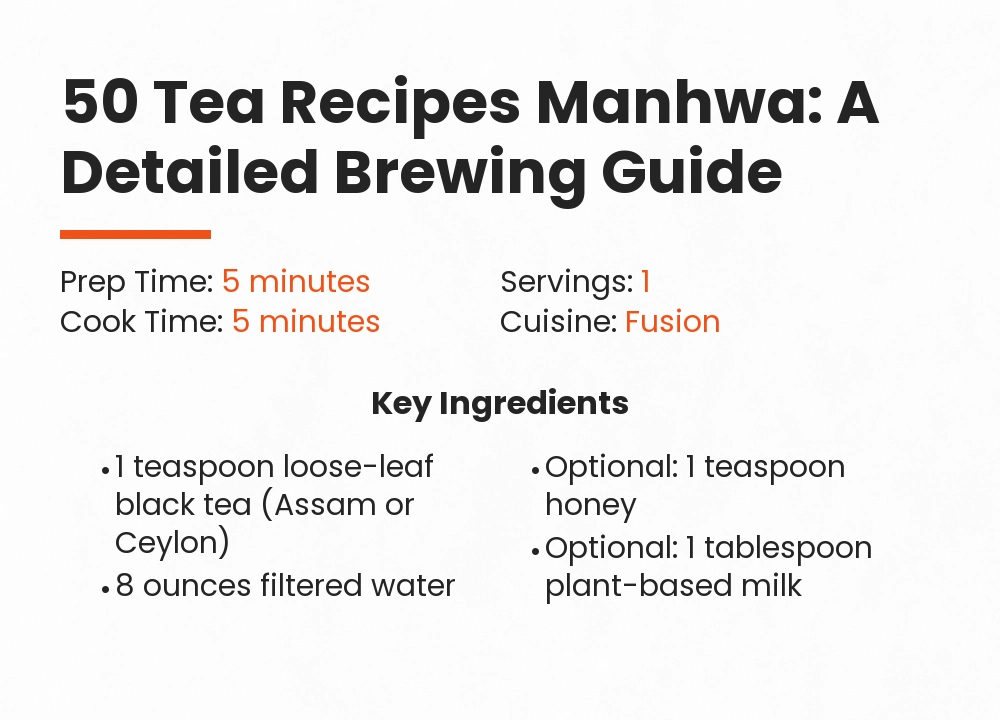
- Prep Time: 5 minutes
- Cook Time: 5 minutes
- Servings: 1
- Course: Beverage
- Cuisine: Fusion
- Diet: Vegan
Ingredients
- 1 teaspoon loose-leaf black tea (Assam or Ceylon)
- 8 ounces filtered water
- Optional: 1 teaspoon honey
- Optional: 1 tablespoon plant-based milk
Instructions
- Heat water in a kettle until it reaches 200°F (93°C).
- Place the tea leaves into an infuser inside your cup.
- Pour the hot water over the leaves gently.
- Allow the tea to steep for 4 minutes for full flavor.
- Remove the infuser to stop the brewing process.
- Stir in honey or milk if you prefer a modified taste.
- Serve the tea while it is hot for the best aroma.
Nutrition
- Calories: 2 kcal
- Protein: 0 g
- Fat: 0 g
- Carbohydrates: 0.5 g
- Sugar: 0 g
- Fiber: 0 g
- Sodium: 5 mg
- Cholesterol: 0 mg
Cooking Method
Brewing is the primary technique used here. It involves extracting flavors through controlled steeping.
Tools Needed
- Digital kettle or thermometer
- Tea infuser or strainer
- Ceramic or glass cup
- Measuring spoons
Understanding the Core Ingredients
Each element in tea preparation contributes to the final cup. Selecting high-quality components ensures a better result.
Tea Leaves
Black tea originates from regions like India and Sri Lanka. Its leaves undergo full oxidation, which develops robust flavors.
Assam varieties often have malty notes, while Ceylon offers citrus hints. The oxidation level affects caffeine content and taste strength.
Loose-leaf forms retain more essential oils than bagged versions. This results in a richer aroma and more complex profile.
Water Quality
Filtered water with low mineral content is ideal for brewing. Impurities can alter the tea’s natural taste significantly.
Water temperature varies by tea type. Green teas require cooler temperatures around 175°F to prevent bitterness.
Using freshly drawn water avoids flat tastes from reboiled liquids. Oxygen in new water helps release flavors during steeping.
Additives and Sweeteners
Honey provides a natural sweetness with floral undertones. It dissolves best in warm liquid rather than hot to preserve enzymes.
Plant-based milks like oat or almond add creaminess without dairy. They pair well with strong black teas for a smooth texture.
Lemon juice can brighten the flavor but may cause curdling in milk teas. Add it after brewing to avoid chemical reactions.
Health Benefits of Tea
Regular tea consumption links to several positive health outcomes. The polyphenols in tea act as powerful antioxidants.
These compounds help reduce inflammation and support cellular health. Black tea contains theaflavins, which may aid heart function.
Caffeine in tea provides a gradual energy increase without jitters. L-theanine promotes relaxation while maintaining mental clarity.
Drinking tea without sweeteners contributes to hydration and low calorie intake. It can be part of a weight management plan when consumed plain.
Customizing for Dietary Needs
Most tea bases are naturally free from gluten and animal products. Adjustments come into play with additives and preparation methods.
Vegan and Dairy-Free Options
Replace cow’s milk with soy, coconut, or rice milk. These alternatives froth well for lattes and do not alter brewing chemistry.
Agave syrup or maple syrup can substitute honey for strict vegan diets. They have similar sweetness levels and dissolve easily.
Low-Sugar and Keto Adaptations
Stevia or monk fruit sweeteners provide sweetness without carbohydrates. They are heat-stable and do not impact blood sugar levels.
Brewing tea with spices like cinnamon enhances flavor without added sugar. This method works well for iced tea versions too.
The Story Behind Tea and the Manhwa
Tea culture has deep roots in Asian and European history. The beverage spread from China to Korea and beyond over centuries.
Manhwa like The Duchess’ 50 Tea Recipes blend this history with modern storytelling. The protagonist often uses tea to navigate social situations.
Platforms such as MangaDex host official translations for global readers. These stories highlight tea’s role in diplomacy and personal care.
Korean tea traditions emphasize mindfulness and natural ingredients. This aligns with the manhwa’s focus on recipe authenticity and character development.
Avoiding Pitfalls in Tea Brewing
Many beginners encounter common issues that affect tea quality. Recognizing these early improves your technique quickly.
Over-Steeping and Bitterness
Leaving tea leaves in water too long releases excessive tannins. This causes astringency and masks subtle flavors.
Set a timer for the recommended steeping duration. Taste the tea at intervals to find your preferred strength.
Incorrect Water Temperature
Boiling water can scorch delicate green or white teas. Use a thermometer to achieve precision for each variety.
If you lack a thermometer, boil water and let it sit for 30 seconds before pouring. This slightly lowers the temperature for sensitive leaves.
Enhancing Your Tea Experience
Tea pairs well with light snacks that complement its profile. Buttery scones or plain biscuits allow the tea’s notes to shine.
Store loose-leaf tea in opaque, airtight containers away from heat. This preserves freshness and prevents flavor loss from light exposure.
Serve tea in pre-warmed cups to maintain temperature longer. Add garnishes like mint leaves for visual appeal and aroma.
Experiment with cold brewing for a less acidic iced tea. Steep leaves in cold water for 8-12 hours in the refrigerator.
How Temperature and Time Affect Tea
Heat energy breaks down cell walls in tea leaves during steeping. This process releases flavors, colors, and compounds into the water.
Higher temperatures extract faster but can burn delicate leaves. Cooler temperatures require longer times for full extraction.
The size of tea particles influences steeping time. Finely ground teas infuse quickly, while whole leaves need more time.
Understanding these variables allows you to adjust recipes for consistency. It also helps in creating custom blends inspired by manhwa narratives.
Frequently Asked Questions
What is 50 tea recipes manhwa?
It is a Korean comic series centered on a duchess who shares various tea recipes. The story combines culinary arts with character-driven plots.
Why is this manhwa significant for tea enthusiasts?
The series introduces readers to global tea traditions and brewing methods. It serves as an educational tool wrapped in entertainment.
How can I modify tea recipes for health restrictions?
Start with a base tea that fits your diet, such as herbal blends for caffeine-free options. Adjust sweeteners and milks according to your needs.
What equipment improves tea brewing accuracy?
A temperature-controlled kettle and a scale for measuring leaves yield consistent results. These tools help replicate manhwa-inspired recipes precisely.
Can I use tea bags instead of loose leaves?
Yes, but reduce steeping time as bagged tea often contains finer particles. The flavor may be less complex compared to whole leaves.
How does water quality impact the final brew?
Minerals in hard water can make tea taste metallic or cloudy. Using filtered or spring water ensures a cleaner flavor profile.
Are there caffeine-free alternatives in these recipes?
Herbal teas like chamomile or rooibos offer similar brewing experiences without caffeine. They work well with the same preparation methods.
What is the best way to store tea long-term?
Keep tea in a cool, dark place in sealed containers. Avoid exposure to moisture, strong odors, or direct sunlight to maintain freshness.